
Remember me









Over the past year, EB-5 stakeholders have focused heavily on the September 30, 2026 grandfathering deadline, and for good reason: Filing before that date preserves eligibility under the current statutory framework even if Congress lets the Regional Center program expire. In other words, Regional Center-based EB-5 petitions filed on or before September 30, 2026 will continue to be adjudicated under existing law despite any lapse in program authorization.
This has created a surge in demand and a corresponding sense of urgency among stakeholders, as many view this deadline as a critical safeguard against future legislative uncertainty. At the same time, it has prompted more strategic planning around timing, visa availability, and processing expectations, particularly given the evolving adjudication landscape we are seeing today.
But there is another date, just three months later, that EB-5 investors should not overlook: January 1, 2027.
While the market debates the true (non?) impact of the grandfathering deadline, a major statutory change is quietly approaching, and it is one that will materially increase the cost of participating in the EB-5 program, whether made through a Regional Center or not.
January 1, 2027 is the date on which the U.S. government is required to increase the EB-5 minimum investment amounts to account for inflation. Unlike past changes, this is not a policy choice or discretionary adjustment, but rather, it is an automatic statutory requirement.
 The Statute Is Clear: Investment Amounts Will Increase
The governing statute, implemented as part of the EB-5 Reform and Integrity Act of 2022 (“RIA”), statute 8 U.S.C. § 1153(b)(5)(C)(iii), leaves no room for discretion:
“Beginning on January 1, 2027 […] the amount […] shall automatically adjust […] based on the cumulative annual percentage change in the […] unadjusted consumer price index for all urban consumers.”
The statute further clarifies that the non-TEA investment amount, currently set at $1,050,000, be adjusted first, after which the TEA amount is set at 75% of that adjusted figure, with both amounts then rounded down to the nearest $50,000.
The operative word is “shall.” Not discretionary. Not optional. A mandatory recalibration built directly into the statute.
What Will the New Investment Amounts Be?The adjustment is tied to the Consumer Price Index for All Urban Consumers (CPI-U), published by the Bureau of Labor Statistics. CPI-U measures inflation: how much prices have increased over time. The statute mandates looking at cumulative inflation from January 1, 2022 through the adjustment date, which will first be January 1, 2027.

That means several years of already-recorded inflation are “locked in” to the upcoming increase. Remember how high prices went up following the end of COVID? And this is without considering the next eight months of pressure stemming from higher oil prices in the wake of the Iranian conflict.
Therefore, even without speculating about future inflation, we already know (1) inflation since 2022 has been substantial; and (2) that historical data alone will drive a meaningful increase in EB-5 thresholds. While the precise figures will depend on inflation data through 2026, several market analyses have tried to model a likely range that provides a useful framework.
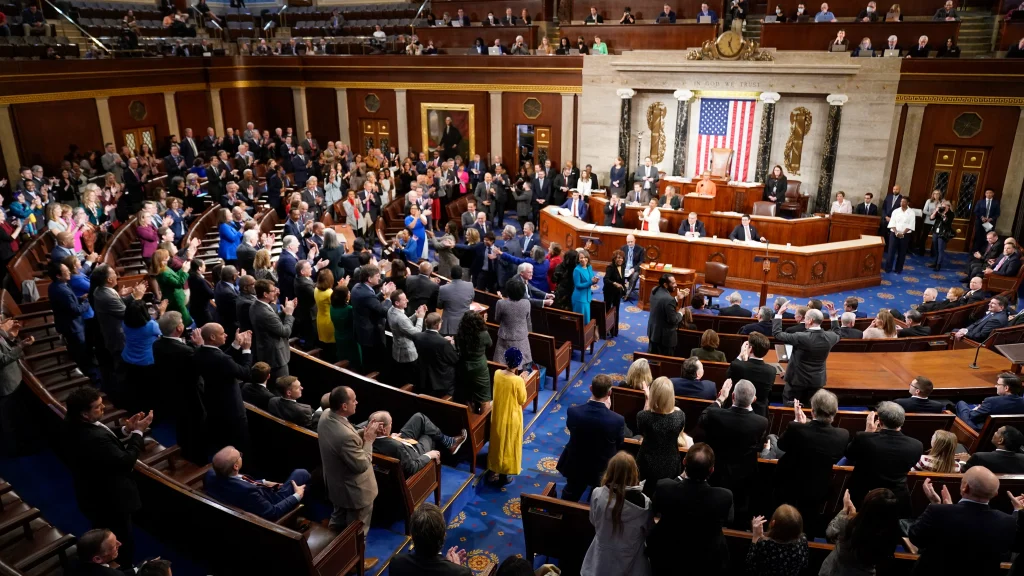 American Congress
For instance, Ismael Fernandez, President of Greengate Consulting, notes that: “A cumulative CPI-U inflation of approximately 16.6% over the last four years suggests that the next EB-5 reset would produce minimum investments of about $1.2 million for standard projects and $900,000 for TEA projects. These figures likely represent the floor for the upcoming adjustment, with further increases dependent on inflation over the next year.”
Adam Greene, of Peachtree Group, comes to a similar projection, but leaves room for an increase up to $937,500 for TEA projects.
These are projections, not certainties. The final figures will ultimately depend on the CPI-U data available at the time of adjustment. Nevertheless, the precise number is not the point.
What matters, and what the statute makes clear, is that the minimum investment amount will increase, and it will do so in a way that affects investors in concrete ways.
Why This Matters More Than People ThinkAs the required investment amount rises, the overall feasibility of EB-5 diminishes for many prospective investors. The EB-5 conversation often assumes that investors are ultra-high-net-worth individuals who can easily absorb increases in capital requirements, but that assumption is often incorrect.
Many EB-5 investors piece together their investment through life savings, rely on family gifts, and/or utilize loan structures to reach the threshold. For these investors, the difference between $800,000 and $900,000+ can be decisive.
A higher investment amount necessarily increases the financial burden on EB-5 investors in very real, practical ways.
For those relying on financing, it often means larger loans, which carry higher interest obligations and more burdensome repayment terms, increasing overall financial risk. For others, it may require additional time to accumulate the necessary funds through salary or business income.
Even modest increases can have a real impact. For example, an individual earning $100,000 per year and saving 20% annually would need approximately five additional years to accumulate an extra $100,000. In other cases, investors may need to seek larger gifts from family members, which can already be a difficult ask.
Beyond individual finances, rising demand will also affect the market itself. Another underappreciated issue for investors is the availability of qualifying EB-5 projects.
As the market approaches both the grandfathering deadline and the January 1, 2027 investment adjustment, more investors will be rushing to invest and file within the current framework. That surge in demand will inevitably place pressure on the supply of compliant, well-structured projects.
Investors should be mindful that not all projects will be positioned to accommodate this demand. Projects that have already secured TEA designation and filed their I-956F will likely become more competitive and fill quickly.
At the same time, developers may be slower to bring new projects to market given the uncertainty surrounding timing, pricing, and future investment levels. The result is a tightening market: fewer available projects at the current investment level and increased competition among those that remain.
Layered on top of these dynamics is broader program future uncertainty. The January 1, 2027 adjustment does not exist in isolation, but rather it is part of a broader landscape of uncertainty surrounding the future of the EB-5 Regional Center program.
If and when the program is next reauthorized, it is unclear what legislative changes may be introduced, whether source of funds rules will become more restrictive, or how adjudication trends may evolve.
This creates a dual pressure on investors: not only are investment amounts expected to increase, but the requirements for qualifying those investments may also become more stringent.
Implications for InvestorsThe cost increase applies to all EB-5 investors, but its weight falls unevenly. Investors born in India and China already face visa backlogs that can stretch decades.
For them, EB-5 is often one of the few realistic pathways to lawful permanent residence within a reasonable timeframe. Rising investment thresholds, layered on top of an already constrained visa queue, add a further variable to an already complex calculation.
Final Thought: The Timeline AheadThe EB-5 conversation today is dominated by one deadline, but just months later, the program is set to become more expensive and possibly more restrictive. The exact numbers remain uncertain. The direction does not.
Comments (0)