
Remember me

Whether you’ve been monitoring your hairline’s slow retreat, or just noticing some increased shedding in the shower, hair loss is a very real—and very common—thing. Thankfully, today's treatment landscape is deeper than ever, spanning supplements, red-light therapy and a bevy of over-the-counter and prescription medications. So no, you don’t have to resign yourself to rocking a power donut (but if you do, rock on).
One brand taking a more tailored approach is Happy Head, which offers customized hair-loss treatments build around an at-home DNA test. With so many hair loss companies out there promising miracle regrowth, we figured we’d put together a quick, non-exhaustive explainer on what Happy Head has to offer, how it works, and who it might make sense for.
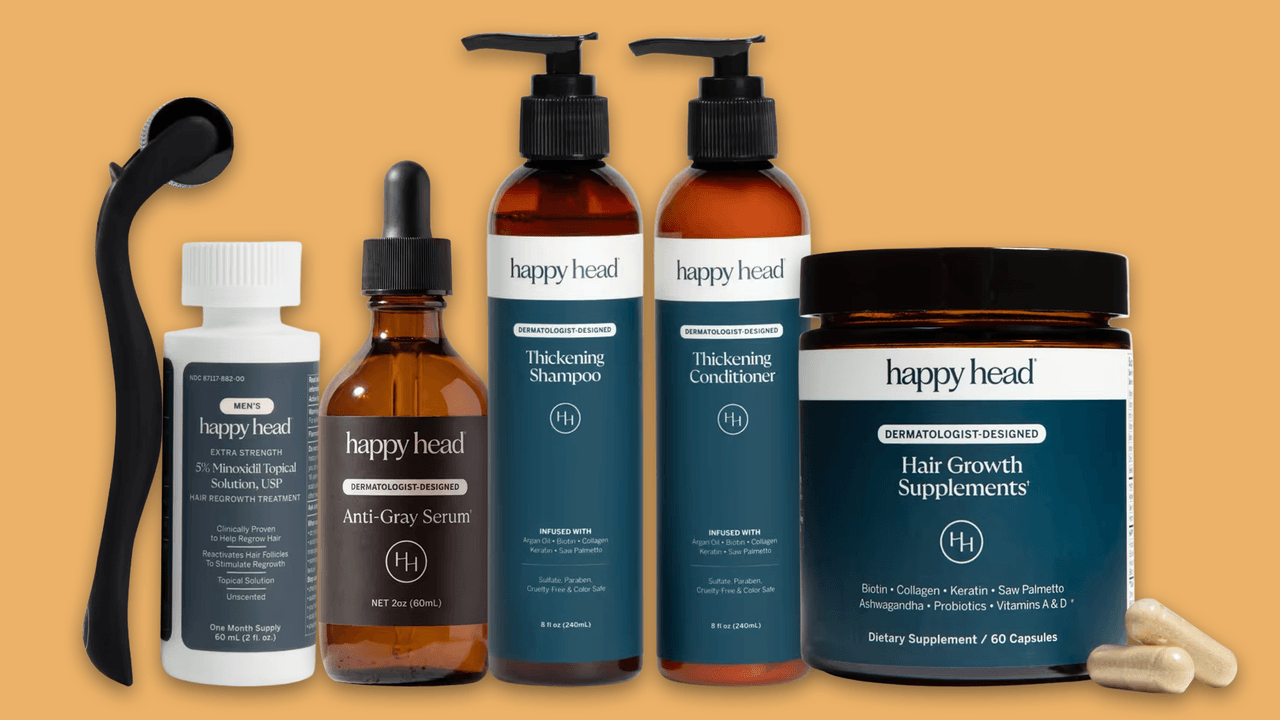
What to Shop from Happy HeadThe Red-Light HelmetHappy Head Advanced Laser Helmet Hair Growth System
Read moreThe Scalp SerumHappy Head Hair Serum
Read moreThe Shower SaversHappy Head Thickening Shampoo and Conditioner
Read moreThe Daily DriverHappy Head Hair Growth Supplements
Read moreA more personalized approach to hair lossOne of the cornerstones of Happy Head's prescription hair loss medication offerings is an at-home DNA test, which aims to analyze how your hair may respond to various hair loss treatments, including prescription and over-the-counter medications and supplements. The results can also surface broader factors like nutrition and lifestyle habits that can play a role in hair health.
If you're not interested in going the DNA route, you can totally skip it and go straight to a consultation. But otherwise, the process itself is pretty straightforward: You just take the test, send it back, and then wait for the lab to send you your results, which typically takes around two or three weeks.
The medications, and how the plan comes together
Once your results are in (or if you choose to skip the DNA test), you'll consult with one of Happy Head's in-house board-certified dermatologists to map out a treatment plan. From there, you'll see the usual suspects when it comes to hair loss, with a few notable additions that aren't as common.
You've got oral and topical minoxidil, commonly used to help stimulate blood flow to the scalp, along with oral and topical finasteride, which works by reducing levels of DHT, the testosterone derivative linked to baldness (we've covered both in depth).


Comments (0)