
Remember me
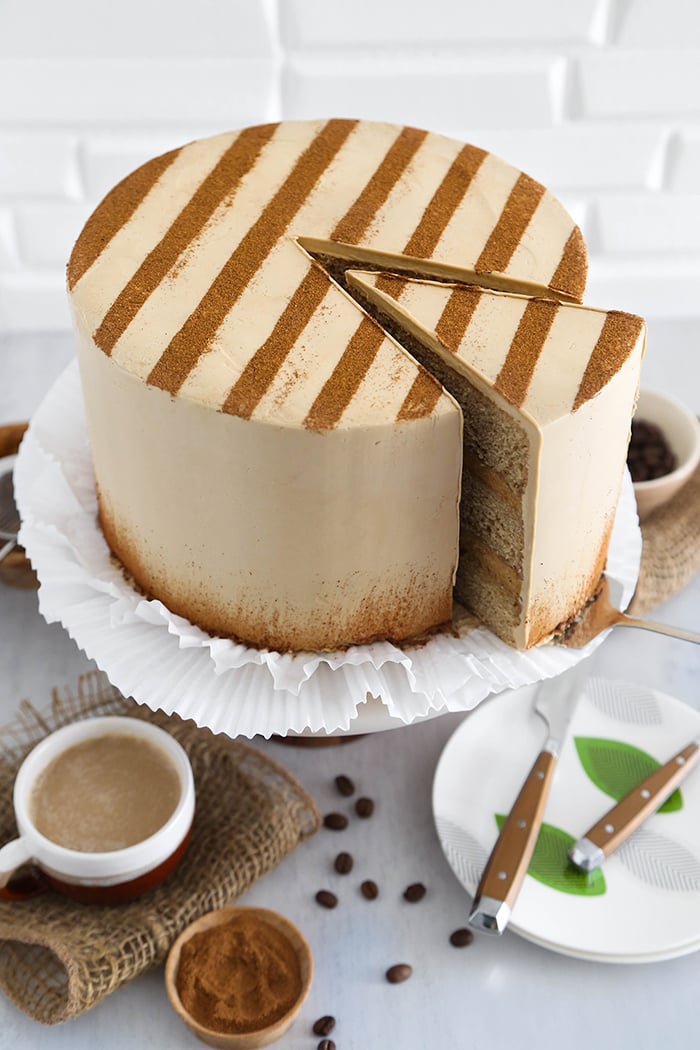

Brown Butter Espresso Cake is a coffeehouse-inspired layer cake with espresso cream filling and silky Swiss meringue buttercream. It combines the subtle notes of coffee with the warm nutty flavors of brown butter. They’re unexpectedly perfect together!

The first time I made cake layers using brown butter, the flavor really surprised me. I expected a little extra richness and that signature nutty flavor, but what came through was something different. It was a roasty-toasty aroma that reminded me of the notes in my favorite espresso drink. I couldn’t stop thinking about it. So, I decided to try the two flavors together. Turns out, espresso + brown butter = a truly unique coffee cake!
This espresso cake is the result of that little experiment. Brown butter cake layers are infused with espresso, then they’re filled with a soft and fluffy coffee cream. It’s all covered in a smooth espresso Swiss meringue buttercream. The finished cake is so nice – not overly sweet and has the subtle notes found in espresso along with the warmth of brown butter.
 How to Brown Butter (Step-by-Step)
First things first. We’ve got to brown some butter for those fluffy cake layers. Browning butter is a simple technique that transforms ordinary butter into something deeply nutty and aromatic. It’s pretty easy to master, but needs your full attention. I’ll walk you through exactly what to look for at each stage.
 Melt the Butter
Place the butter in a light-colored saucepan over medium heat. A stainless pan will make it easy to judge how brown the butter is getting as it cooks. As it melts, the butter will begin to bubble and sputter. This is water cooking off. It’s completely normal, so just let it do its thing.
Watch for Foam and Color ChangeAfter a few minutes, the bubbling will quiet down and the butter will become foamy. Beneath the foam, the milk solids begin to toast and turn golden brown. Stir and swirl the pan occasionally and keep a close eye. Keeping the milk solids moving helps keep them from burning – this can happen quickly.
 Remove from Heat and Pour
Once the butter smells nutty and you see browned bits at the bottom, remove it from the heat immediately. Pour it into a heatproof bowl to stop the cooking (leaving it in the hot pan can cause burning).
 Let It Re-Solidify
Let the browned butter cool and return to a softened, spreadable consistency before using. You can speed this process in the refrigerator/freezer, or allow it to cool at room temperature over several hours. The color of the browned butter will lighten as it cools and firms. Re-firming the butter allows the butter to cream properly with sugar, just like regular butter.
Helpful Tips for Browning Butter Use unsalted butter. Salted butter will become too salty as it cooks down. Use a light-colored pan so you can see the butter changing color. Stay close by. Butter can go from perfectly browned to burnt in no time flat! Look for golden brown specks on the bottom. That’s your visual cue that it’s ready. Trust your nose. It should smell warm and fragrant; nutty, and almost caramel-like. Brown Butter Espresso Cake Layers
Measure the Dry Ingredients
Brown Butter Espresso Cake Layers
Measure the Dry Ingredients
Whisk together the flour, cornstarch, espresso powder, cinnamon, baking powder, baking soda, and salt in a medium bowl. As for espresso powder, my grocery store carries DeLallo and I use it often, but I also use and recommend King Arthur Baking‘s espresso powder.
You may be tempted to skip the cornstarch, but it’s an important ingredient in this cake. It keeps the crumb fine and soft and helps the layers bake up even and level. That means no leveling or trimming (no waste!).
 Cream the Brown Butter and Sugar
Start with the browned butter that has been cooled back to a soft, spreadable consistency. Beat it until creamy, then add the sugar and mix until light and fluffy. Add the oil and vanilla, mixing until smooth. Then add the eggs one at a time, beating well after each addition. Scrape down the bowl as needed to keep the batter evenly mixed.
 Alternate Wet and Dry Ingredients
With the mixer on low speed, add the dry ingredients in three additions, alternating with a whole milk and heavy cream mixture. Begin and end with the dry ingredients, mixing just until combined.
 Bake the Brown Butter Espresso Cake Layers
Divide the batter evenly between three prepared 8-inch pans and smooth the tops. Bake at 325°F for 30–32 minutes, or until a toothpick inserted in the center comes out clean. As I mentioned earlier, the layers will bake up level, so there’s no need to trim. Turn out on wire racks and cool completely.
 Make the 3-Ingredient Coffee Cream Filling
This easy filling comes together in minutes. Combine heavy cream with instant vanilla pudding mix and espresso powder, then whip until thick and fluffy. It’s light yet stable, and adds a creamy coffee flavor between each layer without being overly sweet.
 Make the Espresso Swiss Meringue Buttercream
If you’re new to making Swiss Meringue Buttercream, you can find a video of the process in this blog post. It’s more of an intermediate level recipe, but if you follow the video, along with the visual cues in the instructions, you’ll do fine.
For coffee-flavored Swiss meringue buttercream, dissolve instant espresso powder in hot water and let it cool. Prepare the Swiss meringue buttercream using the standard method: warm the egg whites and sugar over simmering water, whip to stiff peaks in a standing mixer, then beat in butter until smooth and silky. Finish by mixing in the reconstituted espresso and vanilla. This addition adds both color and flavor the buttercream.
 Add the Cinnamon Stripe Finish
Who else loves a sprinkle of cinnamon on their cappuccino foam? I couldn’t resist a stencil on top, much like the ones the baristas use at my favorite local café. If you’re not a fan of cinnamon you could use unsweet cocoa powder instead.
To get started, apply a thin crumb coat of buttercream to the cake and chill briefly to set. Then add a final smooth layer of buttercream, using a bench scraper or cake smoother for clean edges. This will create a smooth surface – your canvas – on which to stencil.
Wrap a strip of parchment paper around the top edge of the cake. It should stick naturally to the chilled cake. Then, lay 1-inch wide parchment strips across the top of the cake, spacing them evenly. Dust cinnamon over the exposed surface, then carefully lift the strips to reveal the pattern. Finish by dry brushing a little cinnamon around the base of the cake. Optional, but I like it!
 Brown Butter Espresso Cake Baking Notes & FAQs
Can I make this espresso cake ahead of time?
Brown Butter Espresso Cake Baking Notes & FAQs
Can I make this espresso cake ahead of time? If You Like Coffee Desserts…
Here are a few more of my favorite coffee-forward recipes to try:
Tiramisu Cupcakes – soft, coffee-infused cupcakes topped with rich mascarpone cream for a classic tiramisu-inspired treat Layered Espresso Martini Mousse – a sophisticated dessert with espresso gelée, espresso-chocolate mousse, and whipped cream, served in cocktail glasses Classic Opera Cake – the classic French layer cake with almond sponge, coffee syrup, buttercream, and chocolate ganache Whipped Tiramisu Dalgona Coffee – a playful, tiramisu-inspired take on the whipped coffee trend, served with crisp savoiardi cookies
This cake has been one of my favorite explorations in pairing flavors – brown butter and espresso, who knew? (Or am I just late to the game?) I can’t wait to try this combination in other desserts. I’ve already jotted down ideas for a brown butter-espresso brownie – YES.
As for this coffeehouse-style cake, it’s one that I’ll make when I want something cozy yet a little refined. Make it as a special treat for your book club, for your next brunch or for a special ending to a dinner party. Above all make it for the coffee enthusiast in your life!
Related recipe: Coffee Cupcakes with Salted Coffee Buttercream
 Brown Butter Espresso Cake
Heather Baird
This bakery-style brown butter espresso cake has soft, even layers, a fluffy coffee cream filling, and silky espresso Swiss meringue buttercream. It's finished with a cinnamon stripe stencil design for a coffeehouse-inspired look.This recipe uses instant espresso powder that imparts concentrated coffee flavor. Look for it in the baking aisle at your local grocery store. It's also available for purchase online – see blog post for shopping links.
Brown Butter Espresso Cake
Heather Baird
This bakery-style brown butter espresso cake has soft, even layers, a fluffy coffee cream filling, and silky espresso Swiss meringue buttercream. It's finished with a cinnamon stripe stencil design for a coffeehouse-inspired look.This recipe uses instant espresso powder that imparts concentrated coffee flavor. Look for it in the baking aisle at your local grocery store. It's also available for purchase online – see blog post for shopping links.
Prep Time 1 hour hr
Cook Time 30 minutes mins
Chill/Cool Time 2 hours hrs 30 minutes mins
Total Time 4 hours hrs
8 inch round cake pans (3)
parchment paper
Light-colored saucepan
Cake turntable (optional)
Small sieve (for cinnamon dusting)
Brown Butter Espresso Cake Layers10 tablespoons unsalted butter2 2/3 cups granulated sugar1/2 cup vegetable oil2 1/2 teaspoons vanilla extract5 large eggs room temperature3 1/2 cups all-purpose flour1 1/2 tablespoons cornstarch2 tablespoons instant espresso powder1 1/2 teaspoons ground cinnamon1 teaspoon baking powder3/4 teaspoon fine grain sea salt1/2 teaspoon baking soda1 1/4 cups whole milk room temperature1/4 cup heavy cream room temperatureEspresso Swiss Meringue Buttercream3 tablespoons instant espresso powder2 tablespoons hot water5 large egg whites1 cup granulated sugar2 cups unsalted butter room temperature1 tablespoon vanilla extract1/4 teaspoon fine grain sea saltCinnamon Stencil Décor1/4 cup ground cinnamon1- inch wide parchment paper strips Make the Brown ButterPlace butter in a light-colored saucepan over medium heat.
Cook, stirring and swirling often, until the butter foams and milk solids turn golden brown, 5–8 minutes.
Immediately pour into a heatproof bowl.
Chill in the freezer until just set but still soft (similar to softened butter), 20–30 minutes.
Make the Cake LayersPreheat oven to 325°F. Grease and line three 8-inch round cake pans with parchment circles.
Beat cooled brown butter on medium-low speed until creamy, about 1 minute.
Add sugar and beat until light and fluffy, 3–4 minutes.
Mix in oil and vanilla until smooth.
Add eggs one at a time, mixing well after each addition.
In a bowl, whisk together flour, cornstarch, espresso powder, cinnamon, baking powder, salt, and baking soda.
In a large glass measure with a pour spout, combine milk and cream.
Add dry ingredients to the batter alternately with milk mixture, beginning and ending with dry ingredients. Mix just until combined and no dry streaks remain.
Divide batter evenly among pans (about 2 1/3 cups each).
Bake 30–32 minutes, or until a toothpick comes out clean.
Cool in pans 10 minutes, then turn out onto racks to cool completely.
Make the Espresso Cream FillingPlace heavy cream in a large mixing bowl.
In a separate smaller bowl, whisk together pudding mix and espresso powder.
Add dry mixture to cream and mix on low speed until combined.
Increase speed to high and whip until thick and fluffy.
Assemble the CakePlace one cake layer on a serving plate, platter, or cake stand. (No leveling needed if layers baked evenly.)
Spread half of the filling evenly on top.
Add second cake layer and spread remaining filling.
Top with final cake layer.
Cover and refrigerate while preparing the buttercream.
Make the Espresso Swiss Meringue ButtercreamDissolve espresso powder in hot water; let cool.
In a large heatproof bowl, whisk together egg whites and sugar.
Bring a saucepan filled 1/3 full of water to a simmer and place the heatproof bowl on top. Whisk until mixture is hot to touch, reaches 110°F and sugar is dissolved. (Test by rubbing the mixture between your fingers – if granules remain, keep whisking.)
Once smooth, transfer to a stand mixer and whip on high speed until stiff, glossy peaks form and bowl is cool to the touch. If the bowl is still warm, transfer to the refrigerator for 10 minutes to cool.
Switch to paddle attachment. Add butter one piece at a time, mixing on medium-low speed. The mixture will deflate and may curdle. This is normal.
Once incorporated, beat on high until smooth and fluffy, about 5 minutes.
Mix in vanilla, espresso mixture, and salt.
Frost the CakeApply a thin crumb coat to the top and sides of the cake, and chill 10 minutes.
Frost with a final smooth layer. Use a cake smoother or bench scraper to achieve perfectly even surface.
DecorateLay the 1-inch wide parchment strips evenly across the top of the cake.
Dust cinnamon over the exposed surface using a sieve.
Carefully remove strips to reveal a striped pattern.
Brush remaining cinnamon using a dry pastry brush in upward motions around the base of the cake.
Store cake in the refrigerator. Bring to room temperature before serving for best flavor and texture.
Use a light-colored pan when browning butter so you can see the color change. Re-solidifying the brown butter is important, it must be soft like regular butter for proper creaming. Espresso powder varies in strength. Adjust slightly to taste if needed. The filling is soft and fluffy, so keep cake refrigerated until serving for best structure. Swiss meringue buttercream may look curdled during mixing, just keep beating and it will come together. For best flavor at room temperature let the cake sit out 30–45 minutes before serving.