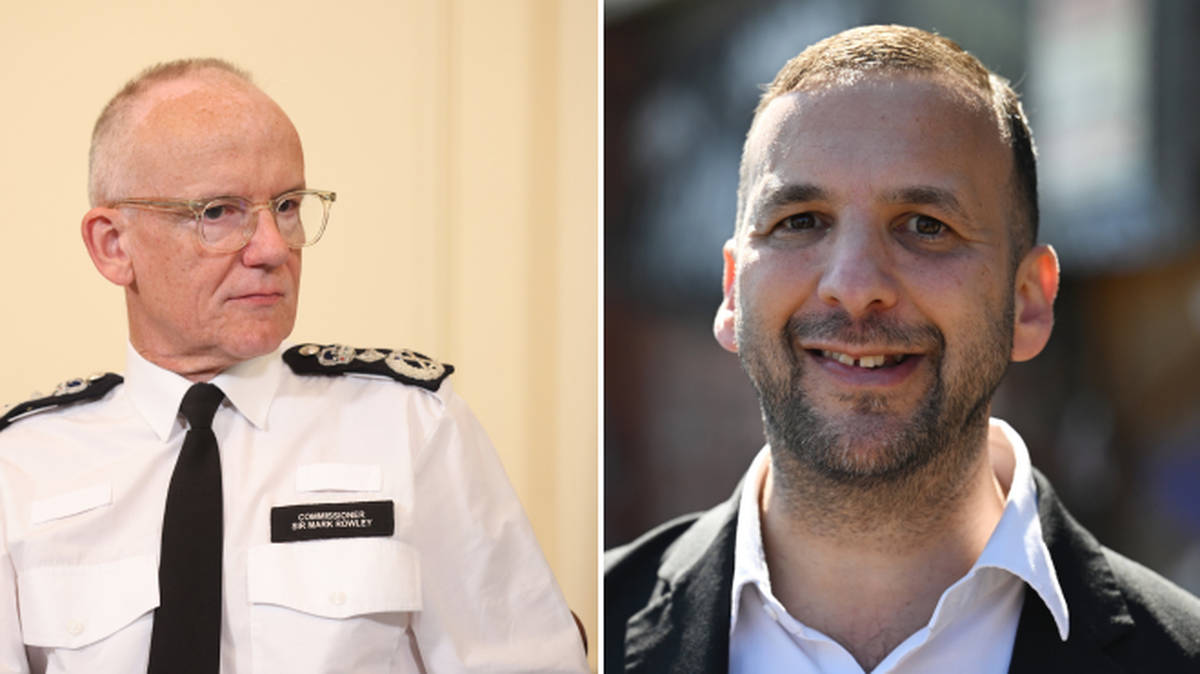
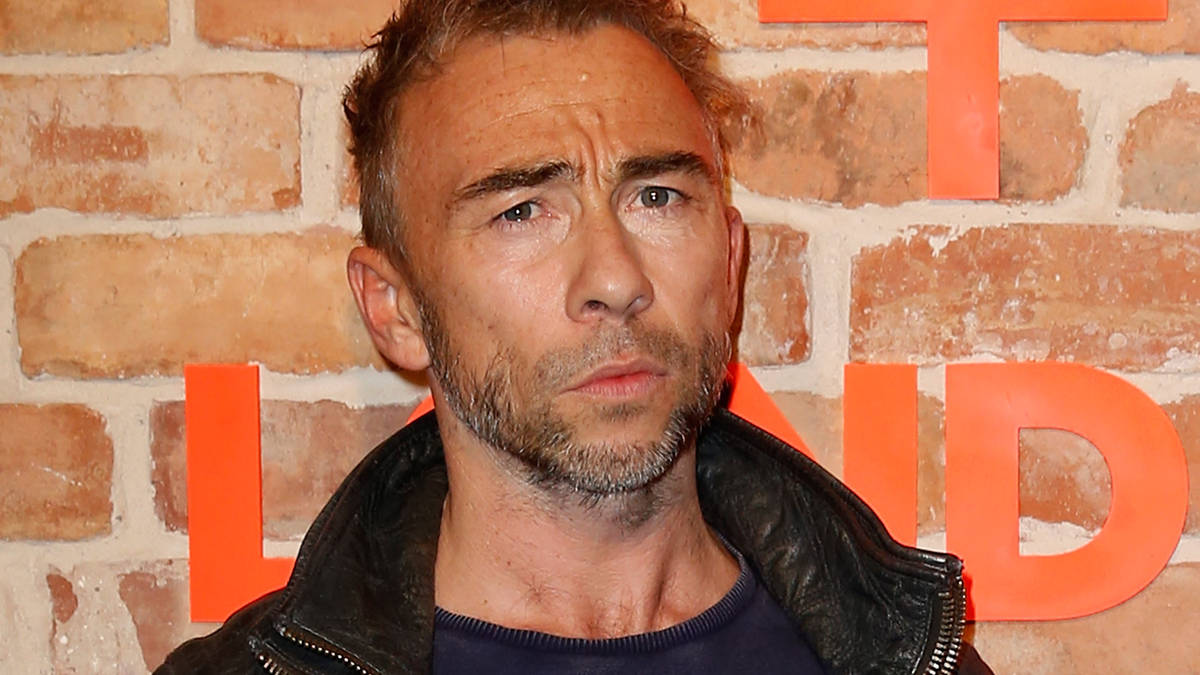
The stabbing of Jews in Golders Green proves we’re still ignoring the cause, writes Rabbi Jonathan Hughes
Shloime Rand, 34 - gentle, refined, thoughtful, incapable of harming a fly - was attacked in Golders Green. His crime was simple: he is a Jew.Thank God, he survived. Another Jewish man in his 70s was also knifed and survived. But survival is not the same as safety. A community that once felt stable now feels exposed and that fear is not irrational. It is a normal response to a reality we have been too slow to confront.For me, this is not distant. My in-laws live in Golders Green. My wife grew up there. My late grandmother lived there. I spent a year there myself while studying law at University College London. This is not just a place; it is part of my life. The idea that a quiet husband and father can be stabbed there for being visibly Jewish is not just disturbing, it represents a breakdown in the most basic expectation any citizen should have: that they can walk their streets without being targeted for who they are.And yet, listen carefully to how this is being discussed. We are told this is about protests, about chants, about tensions linked to events thousands of miles away. We are told the answer lies in more policing, more surveillance, stronger statements from politicians. These responses are not wrong, but they are profoundly insufficient. They deal with the aftermath, not the origin. The effect rather than the cause.What we are witnessing in Britain today is the radicalisation of young people into an ideology that dehumanises Jews and, in its most dangerous form, this increasingly draws on Islamist extremism, where hatred is moralised and violence can be reframed as justice. Once that cancerous mindset takes hold, the journey from rhetoric to violence is not surprising; it is inevitable.This is no longer simply about foreign policy, protest culture, or political disagreement. It is about a worldview in which Jews are stripped of individuality and recast as a collective enemy; an avatar at which hostility and even violence can be presented as morally legitimate.This is how the ground shifts and I see it happening in real time. As part of my work with the charity I founded called The Abraham Effect, I take non-Jewish students to Auschwitz. Standing there, confronted with the physical evidence of where hatred leads, one truth becomes unavoidable: atrocities do not begin with violence. They begin with ideas; ideas that are tolerated, repeated and eventually normalised until they no longer feel extreme.That is exactly where we are now. Language that once would have been condemned is now excused. Slogans that carry the echo of violence are repeated without consequence. Institutions that should provide moral leadership too often retreat into ambiguity, as though clarity itself has become controversial.Through my work with The Abraham Effect, I visit schools and universities and meet young people who are intelligent and articulate, yet fundamentally misinformed. They have absorbed narratives that are simplistic, distorted and emotionally charged. Since these narratives are rarely challenged with seriousness, they begin to solidify into belief systems. At that point, the danger escalates.Because radicalisation is not static. It develops. It deepens. It moves from thought to justification and from justification to action. By the time a man is stabbed in Golders Green, the process that led to that moment has already long taken root.This is why the current response is inadequate. You cannot police your way out of an idea. You cannot issue a statement strong enough to undo months or years of ideological conditioning. You cannot install enough cameras to monitor what is forming in the minds of young people.If we are serious about preventing further violence, then intervention must take place where the problem begins: in classrooms, in youth movements, in Mosques linked to extremism and on university campuses, where ideas are shaped and identities are formed. Young people must be equipped not only with information, but with the moral clarity to recognise when rhetoric crosses into dehumanisation and when activism mutates into justification for harm.And this is where a deeper failure becomes evident. This cannot be left to Jews to fix. When antisemitism spreads, it is not a niche concern; it is a test of the society in which it appears. Non-Jewish educators, leaders and institutions must take responsibility for confronting it, clearly and consistently, rather than treating it as someone else’s problem or softening their response out of discomfort.Discomfort is not the danger; complacency is. There is a directive in the Torah (Leviticus 19:17): “You shall not hate your brother in your heart”. We should adopt this message as the unofficial eleventh commandment: thou shalt not hate. It is simple in formulation but demanding in practice because it requires the courage to confront hatred even when it is unpopular, even when it risks criticism, even when it forces difficult conversations. Right now, that courage is too often absent. And in that vacuum, harmful ideas are not merely expressed; they are allowed to grow.The stabbing of Shloime Rand must be understood not as an isolated incident but as a warning. It demonstrates with brutal clarity what happens when early-stage radicalisation is ignored or minimised. If we continue to focus on the visible manifestations of Jew hatred while avoiding its underlying causes, we will find ourselves responding to further attacks that we claim to find shocking but which, in truth, we have failed to prevent. We are not short of knowledge. We understand how hatred develops and where it leads. What is missing is the collective will to intervene early, decisively and consistently.On a recent Holocaust education trip, I walked alongside a non-Jewish 17-year-old at Birkenau. As we stood beside the train tracks that once carried a million Jews to their deaths, he asked questions likely shaped by ideas he had absorbed online. We spoke openly and honestly and, by the end of the conversation, those prejudices had been dismantled.That is what intervention looks like. That is how you stop this. Because the next time a young person encounters those same ideas, someone must be there to challenge them. If not, we should not be surprised when words harden into belief, belief turns into action, and action turns into violence.And the next victim may not survive.____________________Rabbi Jonathan Hughes is the founder and CEO of the Abraham Effect.LBC Opinion provides a platform for diverse opinions on current affairs and matters of public interest.The views expressed are those of the authors and do not necessarily reflect the official LBC position.To contact us email opinion@lbc.co.uk