Missing a tooth is more common than most people realise.
About 178 million Americans are missing at least one tooth — and millions of them are still using old school solutions that only mask the problem. Slipping dentures during meals. Bridges that involve shaving down healthy neighboring teeth. Or gaps that are just left untreated.
The truth?
Did you know there is a permanent solution for missing teeth that most people have never explored — it could change the way people look, eat and feel about their smile every single day.
What’s Covered in This Guide:
What Is a Missing Teeth Solution?
Why Dental Implants Lead the Pack
How Implants Compare to Dentures and Bridges
Are You a Good Candidate?
What the Process Actually Looks Like
Long-Term Care Tips for Implants
What Is a Missing Teeth Solution?
A missing teeth solution refers to any dental procedure used to replace one or more teeth that are lost or damaged — ideally forever, comfortably, and with a natural appearance.
Some solutions are temporary. Some are uncomfortable right off the bat. Others have hidden maintenance and adjustments that continue to add up over time. When it comes to permanent solutions for missing teeth, dental implants are by far the best option.
To learn more about this missing teeth solution, consulting a qualified Houston dental implant specialist is the best first step. Dental implants are different than dentures or bridges because they replace the root of the tooth.
They are built to last a lifetime.
Why Dental Implants Lead the Pack
Ok but why are dental implants favoured over all other missing teeth solutions by dentists across the globe?
Because the results are hard to argue with.
The overall average success rate for dental implants is around 97%. They don’t slip, slide, or need adhesive like dentures. Implants look, feel and function just like natural teeth — with none of the disadvantages of other tooth replacement options.
Here is what makes implants stand out as a missing teeth solution:
They preserve the jawbone, which starts deteriorating the moment a tooth is lost
They don’t put pressure on neighbouring teeth the way bridges do
They restore full natural biting and chewing strength
It’s a permanent solution — not a Band-Aid that needs revisiting every few years
Pretty impressive, right?
Statistics agree. Dental implants can last 25 years or more with proper care. That means they are one of the most economical solutions for missing teeth in the long run — even if the initial cost is higher than alternatives like dentures.
How Implants Compare to Dentures and Bridges
Here is the thing about dentures and bridges…
They were built for a different era of dentistry.
Dentures rest on top of the gum. They slip. They slide. Up to 1 in 5 denture wearers require adjustments to the fit of their dentures every three years because of natural changes in the mouth. Who wants all that upkeep? It can get expensive — in time and money.
Bridges require permanently grinding down healthy teeth on either side of the gap. Two perfectly good teeth damaged just to replace one lost tooth.
Implants require none of that.
Implants are individual units that are directly and permanently attached to the jawbone. There are no adjacent teeth affected. No glue. No retreatment appointments. No sliding at supper time.
Implants are just the best choice for the majority of patients missing teeth. Period.
Are You a Good Candidate?
Here is the good news…
Most adults dealing with missing teeth are strong candidates for dental implants.
Almost 70% of adults aged 35–44 have lost at least one permanent tooth due to gum disease, decay or injury. And the WHO says about 23% of adults aged 60 and older suffer from full tooth loss. Those are plenty of people who could really take advantage of this missing teeth solution.
Strong candidates typically have these things in common:
One or more missing teeth
A fully developed jawbone
Adequate bone density to support the implant post
No active, untreated gum disease
Non-smoking habits, or a willingness to quit during the healing period
Patients with some bone loss may still be candidates. A specialist will evaluate bone density and — if necessary — suggest a bone graft procedure.
Booking a consultation is the only way to be certain. Don’t rule out implants until speaking to a qualified professional.
What the Process Actually Looks Like
The idea of getting an implant sounds intimidating to a lot of people.
It really isn’t.
The process is well-structured and broken into clear stages:
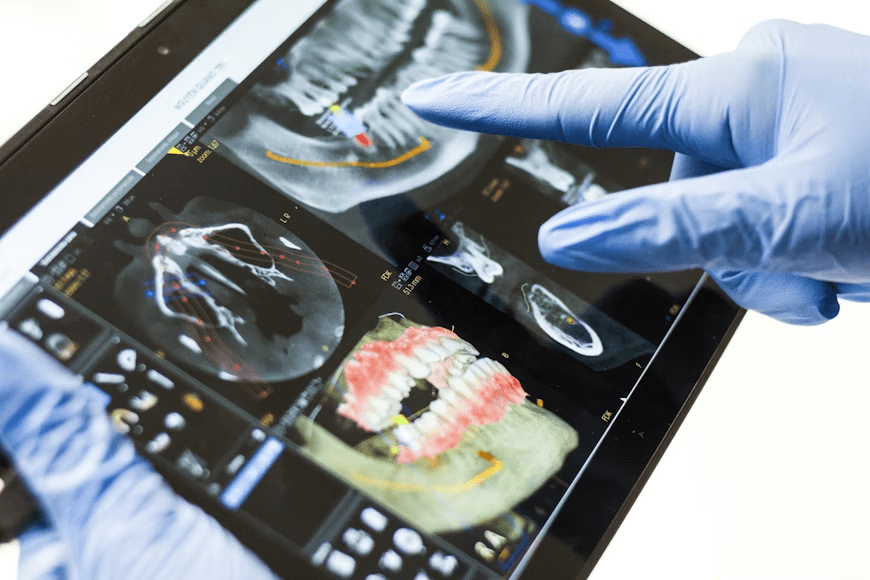
Consultation and imaging — X-rays and scans map the jawbone in full detail
Implant placement — A small titanium post is inserted into the jawbone under local anaesthetic
Healing period — The implant integrates with bone for several months (called osseointegration)
Abutment fitting — A small connector piece is attached to the top of the implant
Crown placement — A custom-made crown is secured on top for completion
Patients usually find that it’s far more comfortable than anticipated. Thanks to advancements in minimally invasive technology, this procedure has become tolerable — even for those with dental anxiety.
The end result? A permanent, natural-looking tooth that functions exactly like the real thing.
Long-Term Care Tips for Implants
Here is a common misconception about dental implants…
A lot of people assume they require complicated, special-purpose care routines to maintain.
They don’t. Implants are cared for in basically the same way as natural teeth. The daily routine could not be easier:
Brush twice daily using a soft-bristled toothbrush
Floss around the implant once a day
Rinse with an antibacterial mouthwash
Attend a dental check-up every six months
There is one condition that can occur and that is peri-implantitis — a gum disease that develops when plaque accumulates around the implant. This is easily preventable with good hygiene habits. A dentist will catch any early signs during regular check-ups.
With the right care in place, a dental implant can genuinely last a lifetime.
The Takeaway
Dental implants are the most effective missing teeth solution available today.
They restore appearance, function, and confidence in a way that no other treatment comes close to matching. The success rates are the highest of any procedure in dentistry. The longevity is unparalleled. And the daily experience of living with implants is virtually indistinguishable from having all natural teeth.
To quickly recap:
Implants replace the root and
the crown — not just the visible surface
The average success rate sits at an impressive 97%
Properly maintained implants can last 25 years or more
Dentures and bridges can’t compete on longevity, comfort, or function
The majority of adults with missing teeth are strong candidates
For anyone whose missing teeth have been impacting quality of life, confidence, or the ability to eat and speak comfortably — this missing teeth solution is worth looking into.










Comments (0)