Remember me





There was a certain moral sniffiness to reviews of Joan Didion’s Notes to John (Fourth Estate), but the text itself – memos for her husband summarising her exchanges with a wise and brilliant psychoanalyst, Roger MacKinnon – has a candour which refutes any charges of exploitation. I also greatly admired Jenny Uglow’s A Year with Gilbert White (Faber & Faber), a lovely progress through and around the naturalist’s famous diary. White can make the arrival of some semi-obscure bird or the hibernation habits of his tortoise into enthralling and weighty matters.
Margaret DrabbleJohn H Goldthorpe’s The Making of a Sociologist (Routledge) traces his journey from the coalface of South Yorkshire and Wath Grammar School through his early days in local journalism to Oxbridge, a fitting trajectory for a scholar renowned for his studies of social mobility. It’s full of echoes of my parents’ childhood. Intrepid Women: Adventures in Anthropology (Bodleian Library), edited by Julia Nicholson, celebrates the wilder journeys of six pioneering women anthropologists in the early years of the last century. Gloriously illustrated, the book is based on a powerful and moving exhibition held at Oxford’s Pitt Rivers Museum in 2019. I’m also in the middle of Richard Holmes’s The Boundless Deep (William Collins), an account of the younger Tennyson which is as readable and scholarly and entertaining as one would expect.
David LammyAs foreign secretary and now as Deputy Prime Minister, I’ve kept coming back to Zbig: The Life of Zbigniew Brzezinski (Bloomsbury), Edward Luce’s excellent biography of the American grand strategist, national security adviser and academic, known in the Beltway as Zbig. Politics at its heart is about rivalries, and Luce charts brilliantly the lifelong political and intellectual competition between Brzezinski and Henry Kissinger. These two 20th-century outsiders who became the ultimate insiders were more than just a Democrat and a Republican. For Kissinger, geopolitics was ultimately about great powers – in our time the United States, Russia and China – and the balance between them. For Brzezinski it was quite the opposite. Smaller nations, whether Serbia, his native Poland, Israel, Taiwan or Ukraine, are the real geopolitical pivots, playing decisive rather than pliant roles in history. This debate, with different players, lives on across Washington and shapes the superpower’s factions and decisions – and our world with it.
Zadie SmithFour books I loved: the novels Perfection (Fitzcarraldo) by Vincenzo Latronico, Flesh (Jonathan Cape) by David Szalay, A Truce That Is Not Peace (Fourth Estate) by Miriam Toews and the essays Putting Myself Together (Picador) by Jamaica Kincaid. All very curious and idiosyncratic and enjoyable.

Treat yourself or a friend this Christmas to a New Statesman subscription for just £2
Jonathan FranzenThe best, and also the most hilarious, new novel I’ve read in the past year is Halle Butler’s Banal Nightmare (Weidenfeld & Nicolson). As its title indicates, the book is ostensibly about nothing much – the petty rivalries and minor misadventures of some no-longer-so-young old friends in “the Midwestern town of X” – but nothing much, when taken extremely seriously by the characters themselves, is the key ingredient of great comedy. Butler’s eye is so sharp and her ear so keen that her novel ends up conveying almost everything there is to know about being lost in our particular historical moment. She manages the feat of savagely skewering her characters while rendering each of them with love and sympathy. And the book, unlike so many novels these days, has a genuine third act.
Alastair CampbellMy book of the year is If Russia Wins (Atlantic), by the German military scholar Carlo Masala. It is part geopolitical analysis, part novel, and as the title suggests it envisages what might happen if Vladimir Putin is allowed to declare victory in Ukraine. A small Estonian town and a tiny island are taken over by Russian troops in 2028, provoking widespread international concern. However, the political and diplomatic tensions all too evident in 2025 play out in often unexpected ways.
Geoff DyerBack living in England again, my two favourite books this year are both about Albion. Philip Hoare’s William Blake and the Sea Monsters of Love (Fourth Estate) is an appropriately ecstatic, kaleidoscopic and intimately vast engagement with our great and practical visionary. More down to Earth – how could it not be? – Ken Worpole’s Brightening from the East (Little Toller) is a consistently thoughtful and stimulating collection of often moving essays considering the shifting sands and currents of the landscapes of national identity.
Slavoj ŽižekIt is a shame the engineer and philosopher Jean-Pierre Dupuy is not better known in the English domain. He has proposed a unique theory of catastrophes – ecological, military and social – focusing on how we refuse to take them seriously although we know they will happen, on how we renormalise them once they happen and on what is the best strategy to cope with them. In Vertiges: Penser avec Borges (Éditions du Seuil), Dupuy provides a popular overview of his entire work, clarifying his concepts through references to Jorge Luis Borges’s stories. It is a book of the year in a quite literal sense: it should be read urgently by everyone who wants to understand the mess we are in today.
Howard JacobsonIn a year in which there has been little to love and less to find funny, James Hanning’s The Bookseller of Hay (Little, Brown) restored my belief in humans and hilarity. It tells the story of Richard Booth, who styled himself king of Hay-on-Wye on the grounds that he had opened so many bookshops there. I can think of no better justification for royalty. Prue Shaw’s Dante: The Essential Commedia (WW Norton) also makes you want to go on living. At last, the greatest of all Italian poets and everything you need to know about him in one fat volume of lucidity and lightly worn learning. To read and reread Shaw’s Dante I will stay at home, wrapped in a rug, throughout the winter.
Rowan WilliamsMolly McNett’s moving, accomplished debut novel, Child of These Tears (Slant Books), tells the story of an English child kidnapped by Native Americans in the early 18th century. Innovative and polyphonic, it touches on ideas about language, identity, faith and family. From another small US outfit, The Journal of Joy (SVS Press) by Nicolae Steinhardt, a combative Romanian intellectual, describes his unusual religious conversion. Written during and after years of imprisonment and torture in the postwar period, this is witty, fierce, provoking stuff.
Sarah HallAs one of the judges for the 2025 Forward Prizes, I’ve had a full-on year of reading poetry collections. The variety of entries was wonderful and it was quite a journey through the wild ecosystem of contemporary poetry. For the first time ever – and recognising the need for cultural collegiality and new value systems – the main prize for best collection was shared by two writers: Karen Solie for Wellwater (Picador) and Vidyan Ravinthiran for Avidyā (Bloodaxe). The former tackles environmental breakdown, corporate control, inheritance and family; the latter migration, war, mythology and belonging. Both are lyrical, humorous, astute and beautiful. Where politics obfuscates and fails to tackle issues honestly, poems are often far deadlier, more truthful and exacting. I can’t think of two more artful commentaries on today’s world or two more inviting entryways into modern poetry.
Ian BostridgeMatthew Bell’s new biography Goethe: A Life in Ideas (Princeton University Press) takes us deep into the mind of a colossus of world literature, so influential on the likes of George Eliot and Matthew Arnold and sadly neglected by English readers today. Bell blows away the cobwebby myth of Goethe as the liberal patron saint of the Weimar Republic. A convinced individualist, he was nevertheless a staunch supporter of authoritarian government. Bell’s analyses of Faust, of the novel Elective Affinities and of the sublime lyric poetry are acute, and he installs Goethe as an unlikely and significant influence on the evolutionary thought of Darwin. Whether I liked Goethe any more at the end – a man who seems to have assumed an Olympian self-image from an early age – is another matter.
Adam ThirlwellThe books that most absorbed me came from the US and France. From America there were two works of non-fiction that I had meant to read for months. When the Clock Broke (Penguin) by John Ganz is so terrifying, so convincing in its depiction of the 1980s I absorbed as a child, so unusually stylish in its sentences, that it haunted me long afterwards. Becca Rothfeld’s essays in All Things Are Too Small (Virago) felt like jagged responses to the same contemporary emergency. I loved her ruthless, impatient thinking, her ferocious attention. And then, from France, two books that did obsessive things to truth and narrative. I found Neige Sinno’s Sad Tiger (Seven Stories Press) overwhelming, not just in the horror she is describing but the courage of her book’s composition. And Emmanuel Carrère’s Kolkhoze (Pol), just out in France, is a major achievement: a history of his family and of his relationship to his mother that hovers between fiction and reality, and may be the best book he has written.
 Actress Claudia Cardinale and director Federico Fellini, on the set of the movie 8½, circa 1963. Photo by Archive Photos/Moviepix/Getty Images
Helen DeWitt
Actress Claudia Cardinale and director Federico Fellini, on the set of the movie 8½, circa 1963. Photo by Archive Photos/Moviepix/Getty Images
Helen DeWitt
I loved Francesco Piccolo’s La bella confusione (Einaudi), about the year when Federico Fellini made 8½ and Luchino Visconti made The Leopard, with Claudia Cardinale starring in both films (and having to travel between sets, changing her hair colour each time). Since Cardinale has just died, I imagine many readers will be interested – but so far it’s only available in Italian and French.
Blake MorrisonIf I allowed myself to recommend friends, I’d choose Graham Swift’s Twelve Post-War Tales (Scribner) and Zachary Leader’s biography Ellmann’s Joyce (Harvard University Press). Instead, I’ll go for, first, Helen Garner’s collected diaries, How to End a Story (Weidenfeld & Nicolson), an intimate set of reflections on writing, love, friendship, ethics, landscape and the torments of a failing marriage: “Writing about my life is the only thing that makes it possible for me to live it,” she says. Second, The Poems of Seamus Heaney (Faber & Faber), a superbly edited 1,296-page compilation which turns up many uncollected and unpublished poems. The last poem he wrote spoke of “Energy, balance, outbreak/At play”; that’s his gift all the way through.
Jeremy CorbynI’ve just finished Andreas Malm’s The Destruction of Palestine Is the Destruction of the Earth (Verso), which alerts us all to the under-examined environmental damage of the genocide in Gaza and the extractive ideologies that have fuelled it. Peter Oborne’s Complicit (OR Books) is an utterly damning and devastating indictment of Britain’s complicity in genocide, a masterclass in truth-telling. I hope it will prove essential in bringing about justice for the Palestinian people. My other reading highlights from this year include The Women of Biafra (Abibiman) by Onyeka Nwelue, The Sailor Who Fell from Grace with the Sea (Vintage Classics) by Yukio Mishima and Pereira Maintains: A Testimony (Modern Classics) by Antonio Tabucchi.
Sathnam SangheraMy paperback of the year was the The Wide Wide Sea (Penguin) by Hampton Sides. I’ve been thinking a lot about the incredible and complex journeys that drove the British empire for my second children’s book on this history, and there is no more fascinating journey than Captain Cook’s final one, recounted here, which culminated in his death. Sides does an extraordinary job of conveying the excitement of the age of exploration, but does not shrink from describing the harrowing effects these adventures sometimes had on the indigenous peoples. The prose is delicious and the whole thing is as compelling as a murder mystery.
John MullanAmong the many Jane Austen-related books marking the 250th anniversary of her birth, I most enjoyed Janet Todd’s Living with Jane Austen (Cambridge University Press), part memoir, part literary criticism. It does justice to something often said but rarely explained: how, with rereading, Austen’s novels acquire fresh significance at different stages of our lives. I was gripped by Annie Ernaux’s The Other Girl (Fitzcarraldo), translated by Alison L Strayer. It is the minutely self-controlled account of a family secret: that the author had a sister, who had died before she was born. A short book, repaying slow reading. I’m also in the middle of Helen Garner’s collected diaries, How to End a Story (Weidenfeld & Nicolson): flinty brilliance.
Ephraim MirvisIn a year when war, enmity and polarisation have loomed large, Eli Sharabi’s Hostage (Swift) struck me as far more than harrowing testimony. It is a powerful reminder of why we must never surrender our cherished values. Taken captive on 7 October, starved, beaten and tortured in the dungeons beneath Gaza for 491 days, Sharabi could have emerged consumed by hatred. Instead, he chose to retain his dignity and humanity. This first published account by a released Israeli hostage is an inspirational source of resilience, fortitude and hope against the odds.
Andrea WulfI read some wonderful novels this year, and one of my favourites was Sarah Hall’s Helm (Faber & Faber). I devoured it. At its heart is Helm, Britain’s only named wind which blows against the south-west slope of the Cross Fell in Cumbria. Hall spins a tale that stretches across millennia – from a Neolithic healer and a Victorian meteorologist to a 21st-century researcher who investigates airborne microplastics. Each strand has its own distinctive voice, bound together by the presence of the wind – and, of course, Hall’s mesmerising prose. It’s a magnificent novel – wonderfully strange, expansive and eerily atmospheric.
Frances WilsonPatricia Lockwood is a wildcard writer of preternatural ability who does not make life easy for her readers. I read her Covid fever-dream Will There Ever Be Another You (Bloomsbury Circus) three times before I felt on solid ground, and then realised that if I felt on solid ground I had misread it. By altering fiction’s space-time continuum, Lockwood gives us a novel in free-fall: fasten your seatbelt and enjoy the flight. My non-fiction book of the year is Anne Enright’s peerlessly witty, insightful and generous essay collection, Attention (Jonathan Cape). Her reflections on Angela Carter, Helen Garner and Toni Morrison are second to none, but her brilliant analysis of the Alice Munro revelations is the jewel in the crown.
Tim ParksThomas Peermohamed Lambert’s Shibboleth (Europa) is a daring, surprising and, above all, funny novel. The premise is simple. Edward, a young Oxford undergraduate, hasn’t appreciated the magical traction of having family from the African archipelago of Zanzibar, until, that is, an assortment of crazy and colourful friends encourage him to milk the fact for all it’s worth, which turns out to be quite a lot. Lambert has all the ebullience and sometimes the wit of early Evelyn Waugh. I can’t think of anyone who’s made such joyful hay out of the gloomy solemnities of identity politics.
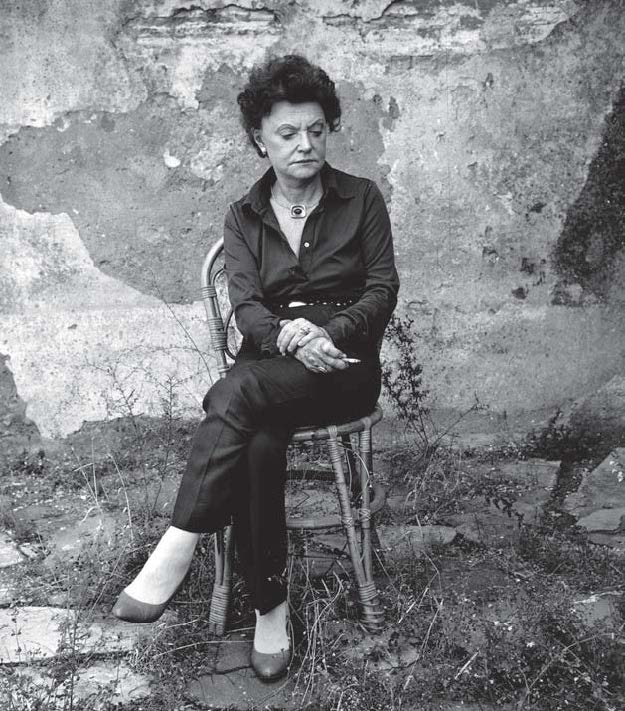 Muriel Spark’s life was as scandalous as the lives of her characters. Photo by Dmitri Kasterine/ Camera Press
Lyndall Gordon
Muriel Spark’s life was as scandalous as the lives of her characters. Photo by Dmitri Kasterine/ Camera Press
Lyndall Gordon
Muriel Spark wakes her reader with jolts of clarity. But in Electric Spark: The Enigma of Muriel Spark (Bloomsbury), Frances Wilson brings out the murkier “stranger” who lights the fuse. It’s a feat of counter-detection, as the biographer pits an “enigma” against the public image. I’m intrigued by Spark’s mad fancy that TS Eliot was speaking to her through his works and blurbs. Then too, in choosing men, Spark did not just misjudge; she was a “magnet for mediocrity”, and relished its unmasking, like the pisseur de copie in A Far Cry from Kensington. Wilson is a brilliant match for Spark, offering flashes of insight.
Sudhir HazareesinghJohn Cassidy’s Capitalism and Its Critics (Allen Lane) is a sweeping overview of the intellectual challenges to modern capitalism from the 18th century to the present. Established critics from Marxist as well as conservative traditions mingle with lesser-known figures such as the feminist Anna Wheeler, environmentalist JC Kumarappa and economic theorist Samir Amin. The sobering conclusion is that while structural crises and mass inequality remain endemic to capitalism, it is also remarkably adaptable and looks set to continue to dominate modernity. I was also absorbed by Michael Braddick’s Christopher Hill: The Life of a Radical Historian (Verso), which reconstructs the life and works of one of the most brilliant historians of his generation. Last, I salute the publication of Édouard Glissant’s Poetics of Relation (Penguin Classics) – the most powerful work of this Antillean thinker. This seminal text offers meditations on language, colonialism and slavery in the pursuit of his revolutionary theory of universalism through diversity and creolisation.
Jacqueline RoseIn the face of a genocide that has rendered many speechless, the outpouring of writing from Gaza has shown a people who will not be silenced, who have managed to go on living even in a world that can feel devoid of life. Two books recently circulated by the new Palfest Bookshelf beautifully make the point. Batool Abu Akleen, who has been writing and winning poetry prizes since the age of 15, has now begun to translate herself into English. In her bilingual collection 48kg (Tenement Press), she shows us the hell of Gaza sinking into the innermost recesses of the self: “I pour the mixture into my heart/Until it blackens./This is how I cook my own grief.”
In the anthology Voices of Resistance: Diaries of Genocide (Comma Press), she takes her place alongside three other writers, Sondos Sabra, Nahil Mohana and Ala’a Obaid, who each live or have lived in Gaza, who use the diary form to record the worst with stripped-back simplicity, day by day. This is writing against atrocity, every line a pitch for freedom. In the words of Sabra, it involves walking “on a taut thread, balancing in mid-air”.
 A still from Siri Kaur’s visual exploration of the mother-daughter relationship, Sistermoon (Void). Photo by Siri Kaur, published by Void
Nicola Sturgeon
A still from Siri Kaur’s visual exploration of the mother-daughter relationship, Sistermoon (Void). Photo by Siri Kaur, published by Void
Nicola Sturgeon
Mother Mary Comes to Me (Hamish Hamilton), Arundhati Roy’s outstanding memoir is my book of the year. Roy’s life story is remarkable and her account of it – rooted in her troubled relationship with her mother – affords us a real appreciation of the writer she became. In her non-fiction, as in her novels, she stands up for the values intrinsic to her view of the world. Back in my preferred world of fiction, I loved Audition (Fern Press) by Katie Kitamura, Atmosphere (Hutchinson Heinemann) by Taylor Jenkins Reid, Fundamentally (Weidenfeld & Nicolson) by Nussaibah Younis, and Deadline (Macmillan) by Steph McGovern – all women writers at the top of their game and some drawing on vast professional experience to entertain and enlighten us.
Homi K BhabhaKiran Desai’s novel The Loneliness of Sonia and Sunny (Hamish Hamilton) is an exploration of the shadow-lines of the migrant experience crafted in a mélange of realism, surrealism, comedy and mysticism. The scene shifts are fast and funny; the mood shifts poignant and precarious. The eponymous lovers only meet halfway through the novel, but Desai’s timing is perfect. These world-weary protagonists must first work through their privileged cosmopolitanism before they discover, in Desai’s wisdom, that the cure for loneliness isn’t company; it is empathy. This is one for the ages. My non-fiction pick is Scott Anderson’s King of Kings (Hutchinson Heinemann), which retells the history of Iran’s Islamic Revolution with an eye on our times. Throwing new light on the vanity and venality of a government of kings and courtiers, Anderson casts a long shadow: on the tycoons and tyrants in our midst who rule by fiat and live by larceny.
Ian BurumaDaniel Kehlmann’s The Director (riverrun) is a superb novel based on the experiences of GW Pabst, one of the finest directors of his time, in Hitler’s Third Reich. The twisted story of an artist’s compromises with a brutal regime is, alas, a timeless one, as well as timely. Pabst was not a Nazi, just a man who allowed himself to be corrupted to make his art. Equally timely is Mark Mazower’s On Antisemitism (Allen Lane). His historical analysis of the uses of anti-Semitism is a corrective to those who believe this form of bigotry is monolithic and unchanging. Like so many -isms, anti-Semitism can be a political tool to promote all manner of causes: left, right, or even a combination of both.
Richard DawkinsIn The End of Woke (Little, Brown), Andrew Doyle, pitch-perfect ventriloquist of the immortal Titania McGrath, here writes as himself: writes beautifully, trenchantly, near-irrefutably. Please hum your way hastily over the author’s one blind spot: his underestimation of the vindictive, mendacious awfulness of Donald Trump. The book is otherwise superb, its author fluent, humorous, acutely observant and enviably well-read. His demolition of cancel culture uncovers a priceless quotation, including an especially nasty use of the N-word, from the uncancelled racist Karl Marx. He exposes the homophobic hijacking of “LGB” by “T”. The chapter on gender wars almost had me rushing into the street to read choice passages to random strangers. The book’s recurring theme, epitomised by the section on George Orwell, is Doyle’s love affair with liberty, the freedom to speak and even think, without being bullied, sacked or arrested for heresy against the modish orthodoxy.
Andrew MotionIn a strong year for biography (Richard Holmes on young Tennyson, Francesca Wade on Gertrude Stein, Frances Wilson on Muriel Spark), Nathan Kernan’s A Day Like Any Other: The Life of James Schuyler (FSG) deserves special praise. Partly because it at last fulfils a promise made a long time ago (it was commissioned in 2003, Schuyler having died in 1991), partly because it’s written with exceptional sympathy and understanding, and partly because Schuyler’s poetry looks better and better as it continues its posthumous existence. The energetically digressive style of his longer poems (“The Morning of the Poem” in particular), and casual-seeming but actually thrilling tension of his best shorter pieces, are both a triumphant vindication of the New York School aesthetic, and – quite simply – deeply intriguing and enjoyable. Kernan does justice to their intimacy as well as their unassertive grandeur, while telling a life story that is as amusing and melancholic as the poems themselves.
Lucy Hughes-HallettHeroism and horror alternate in The Last Days of Budapest (Bloomsbury), Adam LeBor’s engrossing history of Hungary in the Second World War. LeBor combines a judicious account of a nation’s collapse with individual stories woven together with dazzling skill. Courageous resisters, vacillating politicians, the feral teenaged killers of the Arrow Cross, aristocratic ladies turning to espionage: this is a hellish vision of civilisational breakdown, and an unputdownable book. William Blake and the Sea Monsters of Love (Fourth Estate), Philip Hoare’s fabulously idiosyncratic compendium of memories, serendipitous reading, scholarly biography and wild imaginings is beautiful and gripping, with its disparate parts ingeniously linked by poetic affinities and personal relationships.
Ayaan Hirsi AliIn Never Again? (Constable), Jake Wallis Simons shows how criticism of Israel often turns into open hatred of Jews. If you want to understand anti-Semitism in modern Britain, pick up this book. The Builder’s Stone (Wicked Son) by Melanie Phillips traces the West’s strength to its Jewish roots. Read this book for a sweeping view of Western civilisation and what we can learn from the Jewish experience.
Ahdaf SoueifPalestine Is Everywhere (Silver Press), edited by Skye Arundhati Thomas, is a constantly surprising collection of diary entries, photographs, poems, radical analysis and fragments of testimony collected by phone, many from Gaza, with people speaking “because they know silence will finish what the bombs have started”. To read Naseej: Life-Weavings of Palestine (Pluto), edited by Arpan Roy and Noura Salahaldeen, is to visit many of the vibrant communities for whom Palestine was home before the establishment of Israel in 1948: Africans, Arab Jews, Armenians, Indians, Romanies. Both books offer a heart-breaking reckoning with what colonists have cost the world and a vision full of hope for the future.
Marina WarnerThe art historian Paul Taylor asks sharp, entertaining questions in How Images Mean: Iconography and Meta-Iconography (Paul Holberton). Don’t be misled by the subtitle, which doesn’t convey the sparkling intellectual enquiry and marvellous array of images and juxtapositions in the book: African and Oceanic sculptures and masks, aboriginal paintings, art from classical Greece, Renaissance Italy, India and more. Having begun as a philosopher, the author is now the Warburg’s curator of photographic collections and looks at (and after) a dizzying number of pictures. He resets our lenses beyond Eurasia to probe the mysteries of representation. Whitney Chadwick‘s Women Artists and the Surrealist Movement (Thames & Hudson) has now been splendidly reissued. When it first appeared in 1985, the book was a revelation. Her subjects, including Leonora Carrington and Ithell Colquhoun, were pretty much unknown. They suffered from neglect in their lifetimes. Chadwick was crucial to breaking the silence.
Erica WagnerMy novel of the year is Daniel Kehlmann’s The Director (riverrun), in an elegant translation by Ross Benjamin. This gripping fable is based on the life of film director GW Pabst. It marries compelling narrative with a necessary examination of complicity. The great Robert Caro turns 90 this year and he’s still at work on the fifth volume of his life of Lyndon B Johnson. His first book, The Power Broker (Penguin Audio) – a biography of Robert Moses that sits on the shelf of every politician of note – was published 51 years ago, but was finally released on audiobook this year. Trust me: the 65 hours fly by.
Robert ServiceWhat a man Russia lost in Alexei Navalny, and what a writer. His book Patriot (Vintage) mixes memoir with diary and in this sensitive translation is the most extraordinary Russian autobiography of recent times.Navalny tells of his boyhood and early manhood, giving a vivid account of the crazy turns of Russian life in the 1980s and 1990s. He goes on to describe – with self-deprecation and humour – the Kafkaesque rigours of Vladimir Putin’s prisons. He never succumbed to despair even after being poisoned with novichok. Although he perished in a penal colony in 2024, his message from the grave remains a powerful challenge to corruption and autocracy.
David CrystalFor me it was two language books – one looking backwards in time, the other forwards. One can’t go further back than Laura Spinney’s philological detective story Proto: How One Ancient Language Went Global (William Collins). The title refers to proto-Indo-European, the source of most languages of Europe and Asia. By contrast, Adam Aleksic’s Algospeak (Ebury Press) has its sights on the future, looking at how social media is transforming language. The “Algo” in the title stands for “algorithms”, and the book explains what’s actually going on linguistically when people Tik and Tok.
David KynastonTwo contrasting books on sport. David Goldblatt’s Injury Time: Football in a State of Emergency (Mudlark) strips away any lingering illusions that the English game still has a soul. The research is stunning, the presentation authoritative, the effect depressing. Altogether mellower reading is Scyld Berry’s 500 Declared: The Joys of Covering 500 Cricket Tests (Bloomsbury Sport). It does exactly what it says on the tin. Anecdotal, humorous, reflective, it has the therapeutic qualities of the most lasting cricket literature.
Richard HolmesWhat We Can Know (Jonathan Cape) is a fine, thought-provoking novel by Ian McEwan. It held me as an ingenuous literary thriller (a lost manuscript, a secret love affair, a hidden murder), but then completely haunted me as a brilliant saturnine meditation on the delusions of historical memory, and of biography itself. Frankly, I thought there was nothing much to be said after The Prime of Miss Jean Brodie, but in Electric Spark: The Enigma of Muriel Spark (Bloomsbury) Frances Wilson blows vivid new life into the fading Spark through the energy of her research, the wit of her literary gossip and the sheer gusto of her style.
Anne ApplebaumIf you are a historian, or if you like to think about history, then the best book of the year has to be Ian McEwan’s new novel, What We Can Know (Jonathan Cape). The protagonists – historians of the future who both envy us and misunderstand us – should force us to think differently about what we really know about the past. Read it alongside The Director (riverrun) by Daniel Kehlmann, which imagines the chain of events that could have led an anti-Nazi film director to return to Nazi Germany. This exploration of the mentality of collaboration, or why people work for political systems they know are evil, is a story with direct European, American and, indeed, international echoes in our time.
John GrayThe most memorable book I read this year was published in 1844. William Makepeace Thackeray’s novel The Luck of Barry Lyndon is the story, mostly told by Barry himself, of an Irish adventurer, who after being deprived of his inheritance seeks his fortune as a soldier, deserter, gambler and confidence man, who marries a wealthy widow, only to ruin himself through extravagant spending in pursuit of a peerage.
I discovered the novel by watching Stanley Kubrick’s sublime Barry Lyndon (1975), rereleased this year. With every scene a revelatory painting, Kubrick tells Barry’s story as a struggle against fate, ending with him losing a leg in a duel, going into exile and living on a small annuity awarded by his wife. Contemplative and lyrical, the film shows how even a failed life can be beautiful.
The book’s ending is more ironic. After his financial ruin, Barry spends the rest of his days in Fleet Prison. Cared for by his mother, he dies after nearly two decades of “alcoholic imbecility”, which the anonymous narrator of the epilogue describes as Barry’s “happiest years”. Practically forgotten, Thackeray’s novel is utterly modern in its blend of comedy, tragedy and the inescapably absurd.
Helen LewisI can’t honestly say that 2025 was a vintage year for books: I slogged through Nicola Sturgeon’s memoir, mildly enjoyed Chimamanda Ngozi Adichie’s first novel in 12 years and liked the new Cormoran Strike more than most of my friends, who found it far too long. I felt guilty about inhaling Sarah Vine’s indiscreet memoir, found the new Mick Herron underwhelming and was wearied by Percival Everett’s James (Picador), which won this year’s Pulitzer for fiction. Thank God, then, for Suzanne O’Sullivan’s The Age of Diagnosis (Hodder), and Tony Tulathimutte’s short story collection Rejection (Fourth Estate). Both capture something about modern life: O’Sullivan wonders if over-medicalisation is harming rather than helping those diagnosed with conditions such as ADHD and long Covid, while Tulathimutte perfectly recreates the horror of a group chat gone wrong. I also loved Ian Leslie’s John & Paul: A Love Story in Songs (Faber & Faber), but he’s a friend, so I’m biased.
Jonathan BateOvid has long been my favourite classical poet, but living in an increasingly imperial US, I have been turning to the world-weariness of Horace, abetted by Peter Stothard’s highly readable Horace: Poet on a Volcano (Yale University Press). Meanwhile, I’m writing a ludicrously overambitious history of the garden from Eden to the present, so am on the lookout for books that dig some of the terrain so well that I don’t have to: Michael Gilson’s fascinating Behind the Privet Hedge (Reaktion Books) has spared me from spending too much time in suburbia. A colleague recently suggested to me that in the university world we have now passed “peak woke” – if that is so, the satire of Thomas Peermohamed Lambert’s very-far-from-Brideshead Oxford novel Shibboleth (Europa) may soon seem dated, but it is very funny nonetheless.
Anne McElvoyJenny Erpenbeck’s writings make her the most accessible and evocative chronicler of post-Wall Germany, the graduate of a generation whose youth was spent in a country which stopped existing three and a half decades ago when unification dawned in 1990. In her essay collection Things That Disappear (Granta), Erpenbeck’s experience of impermanence captures the anxious undertow and reluctant trade-offs of urban modernity. Absences loom large in her cityscape, from the demolished icon of socialist glitz in the heart of East Berlin to the corner cafés ousted by identical chains. Erpenbeck can be mirthful as well as mordant – with a neat auto-fiction joke at the end about whether Roland Barthes’s “death of the author” thesis means that she herself will simply disappear.
Seamus PerryStefan Collini’s Literature and Learning (Oxford University Press), a history of English literature as a university subject in Britain, is a fine and substantial achievement. His approach, he says, is a “commitment to plenitude of empirical detail”, and the book demonstrates a comprehensive grasp of the complex life of the discipline from the late 18th century to its heyday in the Sixties, ranging well beyond the usual focus on Oxford and Cambridge. It is also a delight to read, light on its feet, witty and fresh in its judgements and portraits: spot on to say of FR Leavis that “insisting is his most characteristic mode”, for instance, and no less to hail Terry Eagleton as “a gifted comic writer”. Another book I enjoyed that combined learning and lucidity was On the Law of Speaking Freely by Adam Tomkins (Hart), at once an account of the development of free speech and a stirring exploration of the travails encountered by “this radical and once subversive idea” in our own time.
Sarah BakewellYou know you’re in for something interesting every time you buy a Fitzcarraldo book, but this year two of them stood out for me. Ian Penman’s Erik Satie Three Piece Suite is as wispy and haunting as Satie’s music itself. And Joanna Pocock’s Greyhound spins a memoir around her two epic journeys on America’s legendary buses, one done in 2006 and one in 2023. Her reflections on the changes between those two years are fascinating, and she also sent me in search of older Greyhoundalia: Irma Kurtz’s The Great American Bus Ride (Fourth Estate), about a journey in 1993, and the newly published The Greyhound Diary, written in 1949 by Judy Montagu (Zuleika). I’ve done my time on those iconic buses too, so being lured down that rabbit-hole (or hound-hole) by Pocock was a great pleasure.
Tom WillisThe Kingdom by Yoel Noorali (Book Works) was the funniest book I read all year, standing shoulder to shoulder with winter-gloom-busting PG Wodehouse rereads – it’s filled with tales of men laid low by the constant petty, digital indignities of the 21st century. I howled all along the Tube map with this book. At times, it reminded me of another excellent book about work from this year, Ben Pester’s The Expansion Project (Granta). Also, Flat Earth (Catapult) by Anika Jade Levy was a roaringly contemporary book which, with its wild, witty, limpid lines, revealed to me how I felt about living now. It conjures a lost New York to life. I read it in a single sitting, fevered by its sentences. I have been pressing it into everyone’s hands ever since.
Andrew MarrIan McEwan’s What We Can Know (Jonathan Cape) has the dullest title of any novel published this year but is easily the best I’ve read. The prose is blissfully good, up there with Roth and Bellow in old age and more or less perfect for a literary climate change fable – Britain has become an archipelago of tiny islets, on which white-skinned people are a disdained minority. But this is also a love story and a murder story, the finest bitter chocolate. Kiran Desai’s The Loneliness of Sonia and Sunny (Hamish Hamilton) and Andrew Miller’s The Land in Winter (Sceptre), both shortlisted for the Booker Prize, are also beautiful new novels, and much better than the actual winner, David Szalay’s Flesh (Jonathan Cape).
Jason CowleyGiuliano da Empoli, a former political adviser to Matteo Renzi, is an essayist, novelist and strategist. His latest book, The Hour of the Predator (expertly translated from French by Sam Taylor: Pushkin Press), is a stylish and coolly sceptical study of power politics in an age of disorder, where autocrats, Gulf oligarchs and “tech conquistadors” purse their amoral interests as the so-called liberal world order collapses. Apocalyptic in tone (there is the obligatory section on Machiavelli), it is also smartly observed and very funny. Inflation Is about More Than Money (London Publishing Partnership) by Brian Griffiths is a fascinating book. For Griffiths, a Christian, inflation is “at heart deceit – it is theft by another name, and it produces a culture of deceit”. What might have been a dry work of economic history is elevated by the author’s concern with moral philosophy and social cohesion into something unexpectedly profound.
Michael ProdgerA measure of the importance of Hans Holbein is the near impossibility of picturing the court of Henry VIII through any eyes other than his. One of the countless merits of Elizabeth Goldring’s Holbein: Renaissance Master (Yale University Press), a work of consummate scholarship, is to stress how lucky we were that he came to pictorially philistine England rather than staying on the continent. A dearth of records means that Holbein’s personality remains elusive; not so that of Augustus the Strong. In his detailed and clear-sighted biography (Penguin), Tim Blanning reveals an oversize character but hapless ruler who lost battle after battle and indeed the throne of Poland itself but through his fanatical love of ceramics forced into being the wonders of the Meissen porcelain manufactory.
When I first interviewed Charles Moore about his remarkable biography of Margaret Thatcher, he reminded me that it was not the “official” record of her life, but the “authorised” version. It is tempting to say that it’s such pedantic attention to detail that marks Moore’s work as the definitive work of British political biography this century. But this would be to understate his achievement. Margaret Thatcher (Allen Lane) – published this year in a special centenary edition in a single volume – is not merely authoritative, but epic, capturing the sheer bravura oddness of Britain’s most consequential postwar prime minister and the lost world from which she came – and tried desperately to recreate.
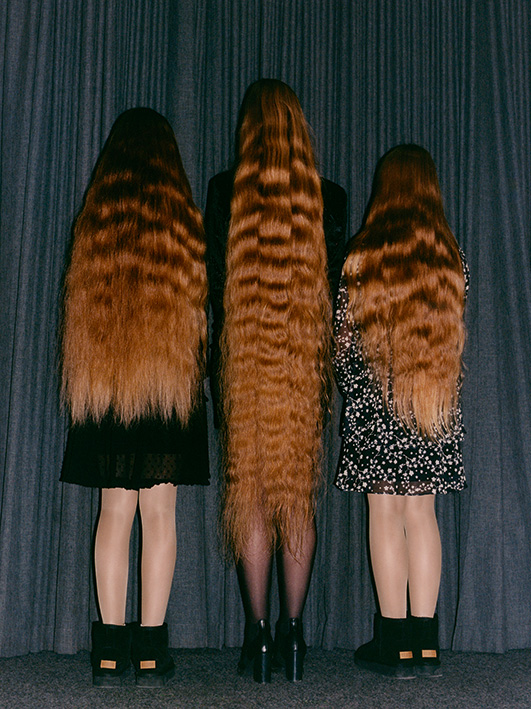 Francesca Allen’s photography puts a lens on Lithuanian teenage pageant culture, Konkursas (Steidl). Photo by Francesca Allen, published by Steidl.De
Gerry Brakus
Francesca Allen’s photography puts a lens on Lithuanian teenage pageant culture, Konkursas (Steidl). Photo by Francesca Allen, published by Steidl.De
Gerry Brakus
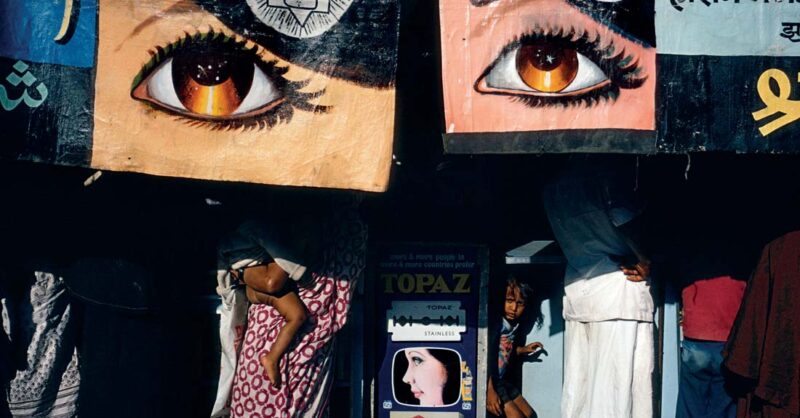
It’s almost impossible to narrow down a year of discoveries, but three art and photography books stayed with me. Siri Kaur’s Sistermoon (Void) is a quiet, attentive look at the mother-daughter relationship and its gradual shifts. Francesca Allen’s Konkursas (Steidl) looks at Lithuanian teenage pageant culture and its meticulous focus on hair. Cécile Poimbœuf-Koizumi and Stephen Ellcock’s Clin d’œil (Chose Commune), composed of images of the eye by numerous artists, is a playful book of fleeting observations. Together they capture what I love most about this medium – its ability to unsettle, invite reflection and shift how I see.
Books recommended by our contributors are available here from bookshop.org
Purchasing a book may earn the NS a commission from Bookshop.org, who support independent bookshops
[Further reading: The book is dead? Long live the book!]
Content from our partnersRelated