
Remember me









 Ed Smith
Ross Creber is one of the instructors at Glenmore Lodge, where he delivers a wide range of backcountry snowsport courses.
Drawing on his many years of experience, here is top advice from Ross to help you maximise enjoyment and stay safe when exploring the Scottish mountains by ski.
 Supplied
The foundation of a successful backcountry day lies in thorough planning. Before you even step outside, commit time to studying weather forecasts, SAIS avalanche reports and SAIS blogs. Avalanche reports highlight where the avalanche problems lie, while blog photos often reveal where the best snow is hiding.
Maps are your best friend—get into the detail. By carefully analysing terrain, you can select slopes that are likely to hold good snow while avoiding avalanche start zones, paths, and runouts. Good planning is about maximising your fun whilst managing the risk.
Conditions dictate the route, not the other way around. There’s no point choosing a dream line and hoping the weather will cooperate. Ideally, you want the wind at your back on high terrain, firm scoured snow for the ascent, and soft fresh snow for the descent.
Ross recommends routes with multiple options rather than committing to something overly ambitious. Flexibility is key, conditions can change quickly, and having alternatives ensures you can adapt as required. Ross admits he’s learned this lesson the hard way on occasions!
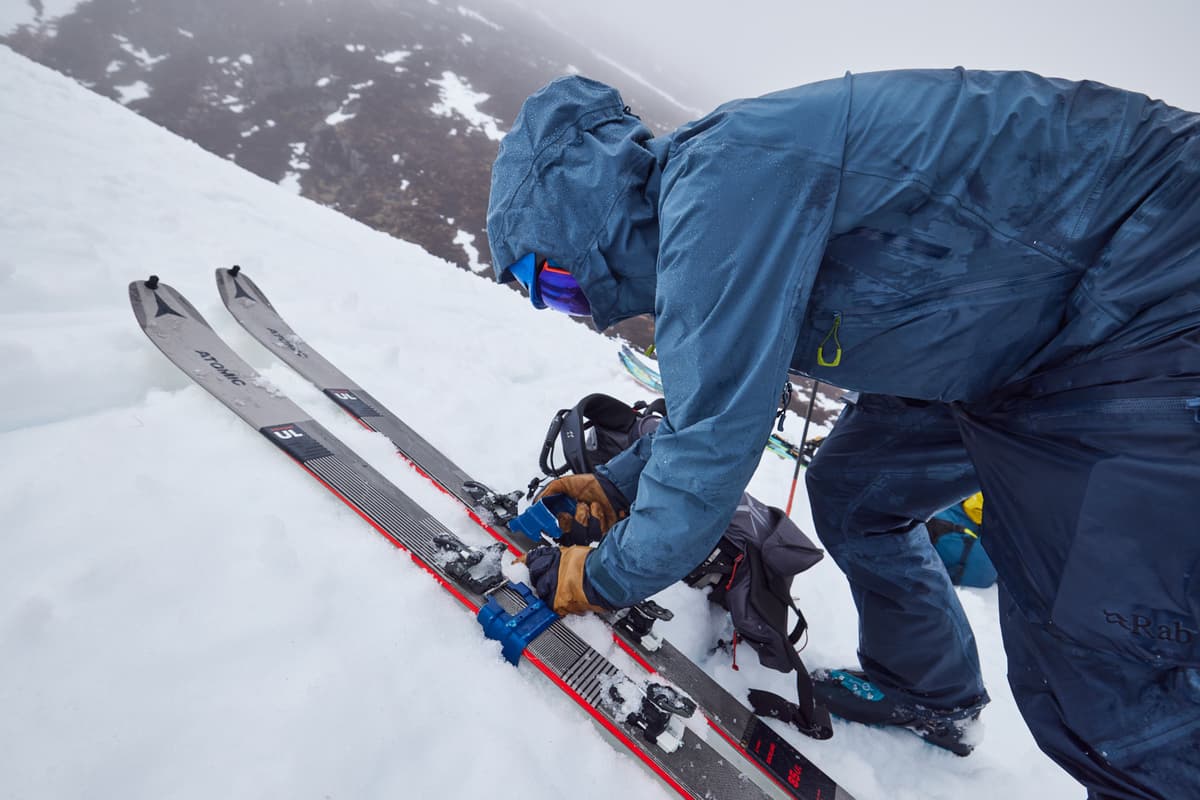
Scottish ski days aren’t always bluebird. Conditions can shift from calm to challenging in minutes. That’s why knowing your gear inside out is essential. Efficient transitions at the summit, quick access to warm layers, and the ability to check your map and descend promptly can make a huge difference.
Practice at home— pack your bag and rehearse those transitions. The more familiar you are, the smoother things will go when the weather turns. READY, STEADY, GO!
We’re not talking moisturiser and suncream – though that matters too! In Scotland, climbing skins take a beating. Wet snow and blizzard conditions can make skins heavy or cause them to lose adhesion.
Ross’s top tips for skin care:
Carry a small microfiber towel to dry ski bases before applying skins. On wet snow, run the edge of a compass or ski pole down the skin to squeeze out water. Pack glide wax for emergency reproofing. Wrap tape around a ski pole—if skins fail, a couple of wraps around the ski midsection will keep you moving.Failing to manage skins can turn a pleasant climb into a miserable slog through knee-deep snow. Preparation is everything.
Plans rely on forecasts – but Scotland’s weather is famously unpredictable. Throughout your journey, observe key factors: wind speed and direction, snow drifting and loading, terrain changes, visibility, and temperature.
For example, you might plan to ski a sunny south-facing slope on spring snow. But if you notice fresh overnight snow and drifting during your approach, that slope could now be hazardous. Spotting these red flags early allows you to adapt before it’s too late.
 Supplied
Recent winters have seen high snowlines, meaning longer approaches. To save energy, avoid walking long distances in ski boots. Sling boots over your pack using Velcro power straps or clip them to skis in an A-frame carry.
Leave trainers in a drybag at the snowline to avoid soggy shoes on the return. For bike access, Ross suggests a clever trick: drape an old pair of jeans over your bike’s top tube, slide a ski into each leg, and secure with ski straps. This keeps weight off your back and prevents skis from rubbing against the tyre.
Backcountry skiing demands a broad skillset, and mistakes can have serious consequences. Key areas include avalanche awareness, navigation and route planning, and ski performance. Expert training in these disciplines builds confidence, improves decision-making, and helps you enjoy the mountains safely.
 Glenmore Lodge | Supplied
Scottish backcountry skiing offers incredible rewards—but it also demands respect. By investing in planning, knowing your gear, observing conditions, and continually developing your skills, you’ll not only stay safe but also make the most of every adventure.
Ross’s advice is clear: preparation and adaptability are your greatest allies. These tips will help you enjoy Scotland’s winter playground to the fullest.