The BMA resident doctors’ committee (RDC) has said the Government has offered to create four times as many specialty training posts as it originally proposed in the NHS 10 year health plan.
The plan would see the Government create 4,000, rather than 1,000, training posts over the next three years – with the extra positions ‘repurposed from ‘locally employed’ roles already present in the health service’, according to the union. The ‘first 1,000 of those training posts’ would be brought forward to start in 2026, it added.
It also proposed pushing through ‘emergency legislation’ early next year that would ‘prioritise UK medical graduates’ for these specialty training roles.
The proposal comes as part of ‘an offer on ending the jobs crisis’ made by the Government to the union in an effort to curb strike action planned for later this month.
The RDC said the Government offered: ‘The increase of specialty training posts over the next three years from the 1,000 announced in the 10 Year Health Plan, to 4,000. These posts will be repurposed from ‘locally employed’ roles already present in the health service.’
As well as this, the offer includes:
Bringing forward 1,000 of the extra training posts to start in 2026;
Emergency legislation ‘in the New Year’ to prioritise UK medical graduates and other doctors with significant experience working in the NHS for specialty training roles;
Making funding mandatory Royal College examination and membership fees for resident doctors.
The BMA said it will consult resident doctor members in England on whether this is sufficient to call off the next period of strikes, scheduled to run from 17 to 22 December. It said it would do so through an online survey for members, closing on Monday 15 December.
If members indicate it is enough to call off these strikes, a formal referendum of resident doctors would follow, giving members time to consider the details of the offer and whether to accept it and end the current dispute.
While it is not known how many of the extra places would be designated for GP posts, statistics released in September revealed competition for GP specialty training posts has reached a record high, with roughly five doctors vying for each available place.
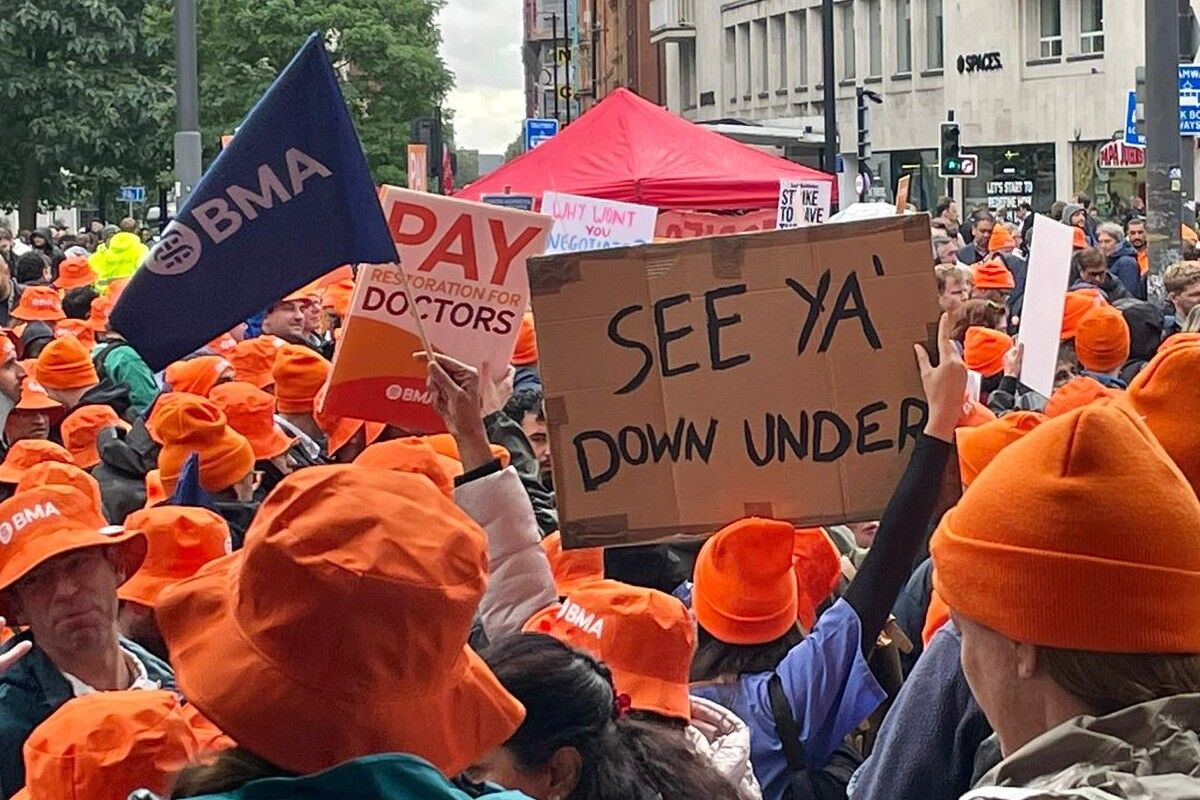
BMA RDC chair Dr Jack Fletcher said: ‘This offer is the result of thousands of resident doctors showing that they are prepared to stand up for their profession and its future. It should not have taken strike action, but make no mistake: it was strike action that got us this far.
‘We have forced the Government to recognise the scale of the problems and to respond with measures on training numbers and prioritisation. However, this offer does not increase the overall number of doctors working in England and does nothing to restore pay for doctors, which remains well within the Government’s power to do.
‘After their strike action succeeded in moving the Government from offering 1,000 training jobs to 4,000, as well as a plan on prioritisation for UK graduates and those who have worked in the NHS for some time, as a member-led organisation we are giving resident doctors their say.
‘If members believe this is enough to call off strike action then we will hold a referendum to end the dispute. But if they give us a clear message that it is not, the Government will have to go further to end industrial action.’
Commenting on the pre-Christmas strikes when they first announced last week, NHS England chief executive Sir Jim Mackey had called them ‘reckless’, ‘calculated’, and a risk to patient safety.









Comments (0)