UK public health officials have identified a new recombinant strain of mpox in an individual who had recently travelled to Asia.
Genomic sequencing showed the strain contained elements of clade Ib and IIb mpox, which the UK Health Security Agency said was not unexpected as both are currently circulating.
But the finding ‘highlights the continued potential for mpox to evolve’ and the importance of ongoing surveillance, UKHSA said.
It comes just weeks after at-risk groups in the UK were urged to take up the offer of mpox vaccination due to the spread of the clade Ib variant in Europe.
The UK Health Security Agency (UKHSA) said there had been small numbers of clade Ib mpox identified in the USA, Spain, Italy, the Netherlands and Portugal which were not associated with travel to countries with known transmission, suggesting community transmission.
Clade Ib mpox, has more severe symptoms than clade II mpox which was responsible for the 2022 global outbreak and appears to be more contagious with outbreaks in several African countries.
Most of the new cases identified in Europe and the USA have been in gay, bisexual and other men who have sex with men, UKHSA officials said.
NHS England announced in January it was expanding access to mpox vaccination for high-risk groups after delivery of new vaccine stocks.
UKHSA said it believed a high proportion of those eligible in the UK have had the vaccine through sexual health clinics, but the cases in Europe highlighted that mpox has not gone away.
Earlier this year mpox was downgraded from a high consequence infectious disease after the Advisory Committee on Dangerous Pathogens found that it no longer met the criteria of a high mortality rate and a lack of available interventions.
But healthcare staff were warned to remain vigilant and vaccination of those most at risk should remain in place, the committee said.
Studies have shown that the vaccine is around 75 to 80% effective in protecting people against clade II mpox.
UKHSA said although there were no studies on vaccine effectiveness against clade Ib mpox, it is expected to confer protection.
Eligible groups for vaccination include:
High-risk gay and bisexual men who have sex with men. Risk is based on history of multiple partners, participating in group sex, attending sex-on-premises venues or based on proxy markers such as recent bacterial sexually transmitted infection (in the past year). It should also include transgender females or gender diverse people assigned male at birth who have equivalent risk.
Other individuals who have frequent close and intimate contact with the network at risk of mpox may also be vaccinated, irrespective of their identified gender. This would include staff who work in GBMSM sex-on-premises venues, such as saunas, if they are regularly exposed to items (e.g. linen) or surfaces likely to be contaminated with body fluids or skin cells.
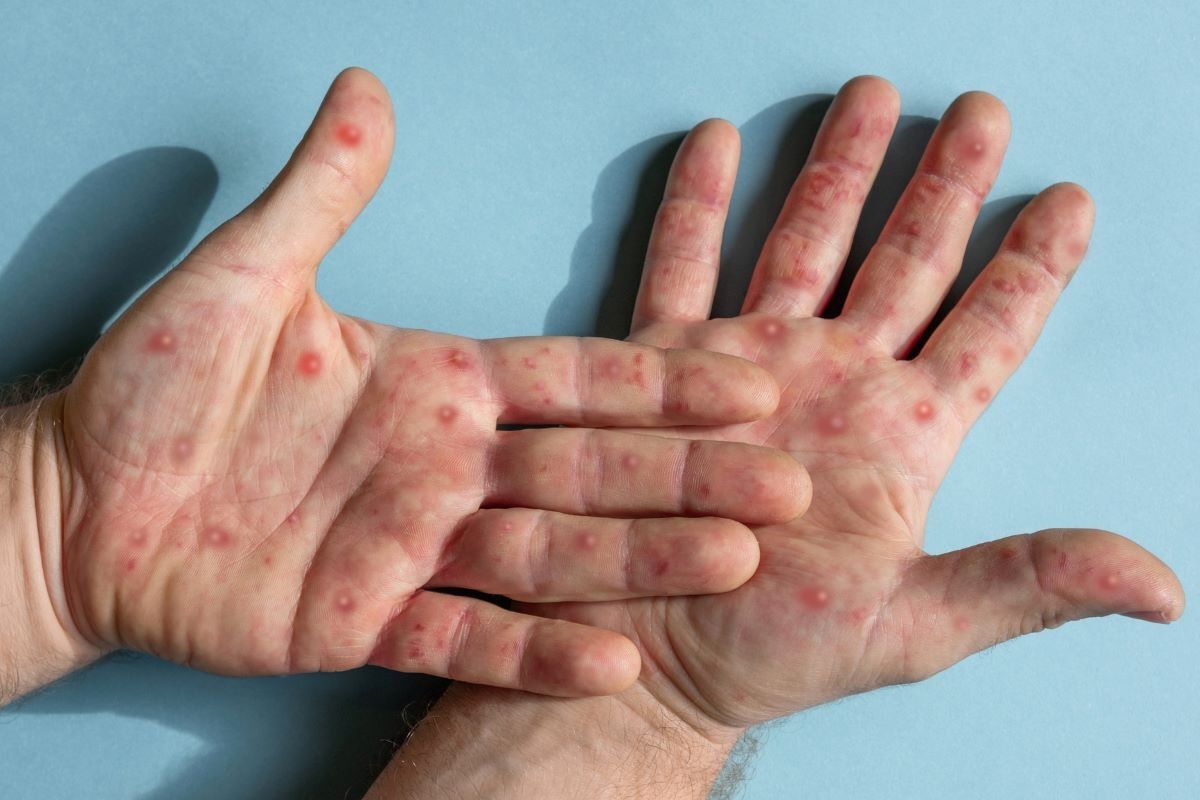
Dr Katy Sinka, head of sexually transmitted infections at UKHSA said although mpox infection is mild for many, it can be severe.
‘Our genomic testing has enabled us to detect this new mpox strain.
‘It’s normal for viruses to evolve, and further analysis will help us understand more about how mpox is changing.
‘Getting vaccinated is a proven effective way to protect yourself against severe disease, so please make sure to get the jab if you are eligible.’









Comments (0)