This week, MAC Cosmetics caught marketing’s biggest white whale.
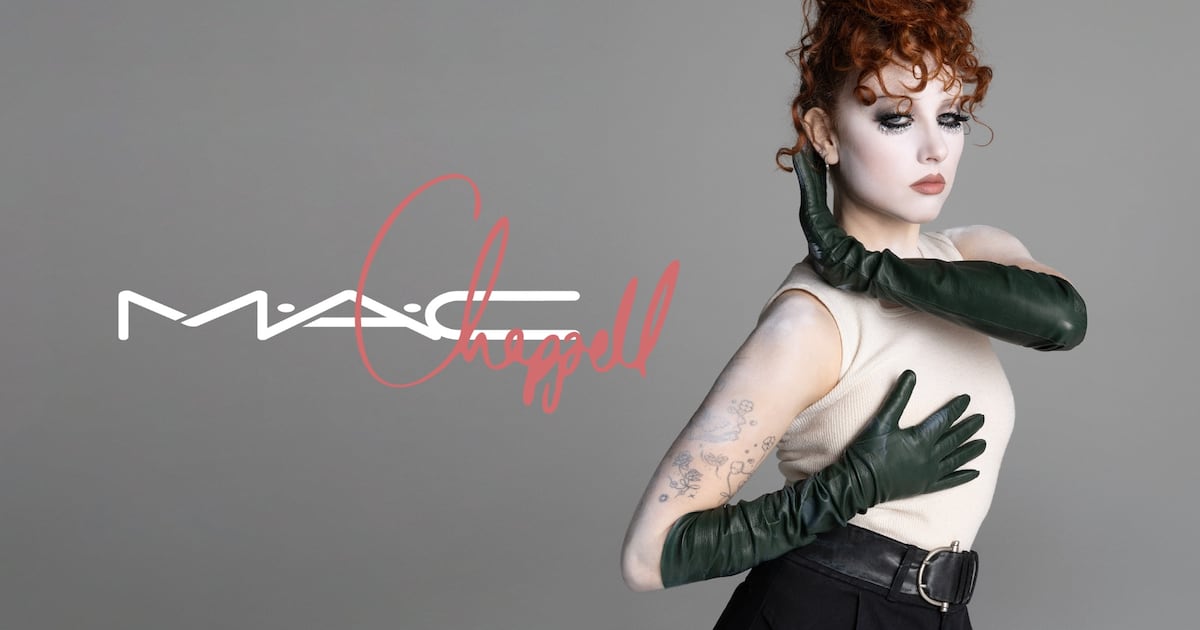
On Monday, the Estée Lauder Companies-owned makeup brand announced Gen Z songstress Chappell Roan as its latest ambassador, a coup considering how outspoken Roan has been in the past about her ultra-high standards for working with brands.
“All the money goes to the world-building, that’s why I am saying no to every fucking brand deal right now, because I’m like ‘Does it fit in this world?’ No, H&M does not fit in this world. Also, fuck H&M,” she told Rolling Stone in an interview last year. “No amount of money is going to [make me] consider working with [anyone]. It has to be 100 percent right.”
In signing Roan, whose real name is Kayleigh Rose Amstutz, MAC will be the first company to leverage her undeniable star power and authenticity — but to several of her fans, Roan’s partnership with MAC explicitly undermines the latter. The comments on Roan’s own announcement post on Instagram were mostly negative, with users claiming that Estée Lauder was on the US Campaign for Palestinian Rights’ boycott, divestment and sanctions list (Roan has been vocal about her support for Palestine), as well as alleging that MAC tests on animals.
To start, the criticism wasn’t entirely fair — or accurate: MAC confirms on its website that it doesn’t test on animals, and while Estée Lauder Companies chairman emeritus Ronald Lauder is a vocal advocate for Israel, the company is not actually on the BDS list. A representative for MAC declined to comment.
If you’re looking at headlines alone, the backlash to Roan’s appointment was just another flashpoint in a long string of social media flare-ups in fashion and beauty marketing this year. There was E.l.f.’s ill-advised campaign with comedian Matt Rife, who had previously joked about domestic violence; American Eagle’s “good jeans” ad with Sydney Sweeney, which was accused of promoting eugenics; and most recently, Valentino’s AI-generated video that featured distorted bodies, which critics called disturbing.
But in today’s marketing landscape, controversy doesn’t necessarily equate to cancellation — sometimes, quite the opposite. Take American Eagle’s Sweeney ad: Though it caused an online uproar so boisterous that even President Donald Trump felt compelled to weigh in, the campaign was actually a major boon for the brand. In a September email, the company’s chief marketing officer Craig Brommers called it “our most successful campaign to date.” In its third quarter, revenue grew 6 percent, beating expectations; president and executive creative director Jennifer Foyle said it also helped boost customer loyalty by 4 percent.
While the volume of the response to the Roan situation is a fraction of what American Eagle faced, the result may prove to be similar. Like with Sweeney and American Eagle, there is an alignment between MAC and Roan: While a Gen Z pop star may not seem like the most natural fit for a conglomerate-owned legacy label, MAC has a history of supporting LGBTQ+ causes, which Roan also made a centrepiece of her own platform. Plus, MAC’s legacy of partnering with musicians — Lady Gaga and Ariana Grande are among its faces — combined with Roan’s signature over-the-top on-stage makeup, from a full face of white foundation topped with hot pink blush to bright blue eyeshadow and gemstones lining the eyes, feels like a natural combination, particularly as the brand is looking to double down on bold colour cosmetics. That’s not to mention MAC gets a halo effect from being the first — and so far, only — brand to convince Roan it’s a worthy partner, a much-needed boost for a brand looking to connect with younger customers and win back its place in the zeitgeist.
And while Roan’s fanbase may be sceptical, the sentiment of the comments on the MAC’s own announcement post? Almost resoundingly positive.


Comments (0)