
Remember me








England's worst councils at dealing with fly-tipping are today named and shamed.
Out of all 295 local authorities in the country, the Daily Mail can reveal 41 of them did not pursue a single criminal prosecution or hand out a fixed penalty notice (FPN) last year – despite recording 110,400 incidents of fly-tipping between them.
The most feckless offender was the London borough of Hounslow, which logged the sixth most incidents nationwide (27,241) but no convictions or FPNs.
The shocking disparity between the level of fly-tipping and the useless prosecution of offenders has caused some experts to argue that the entire investigation and enforcement process needs to be overhauled.
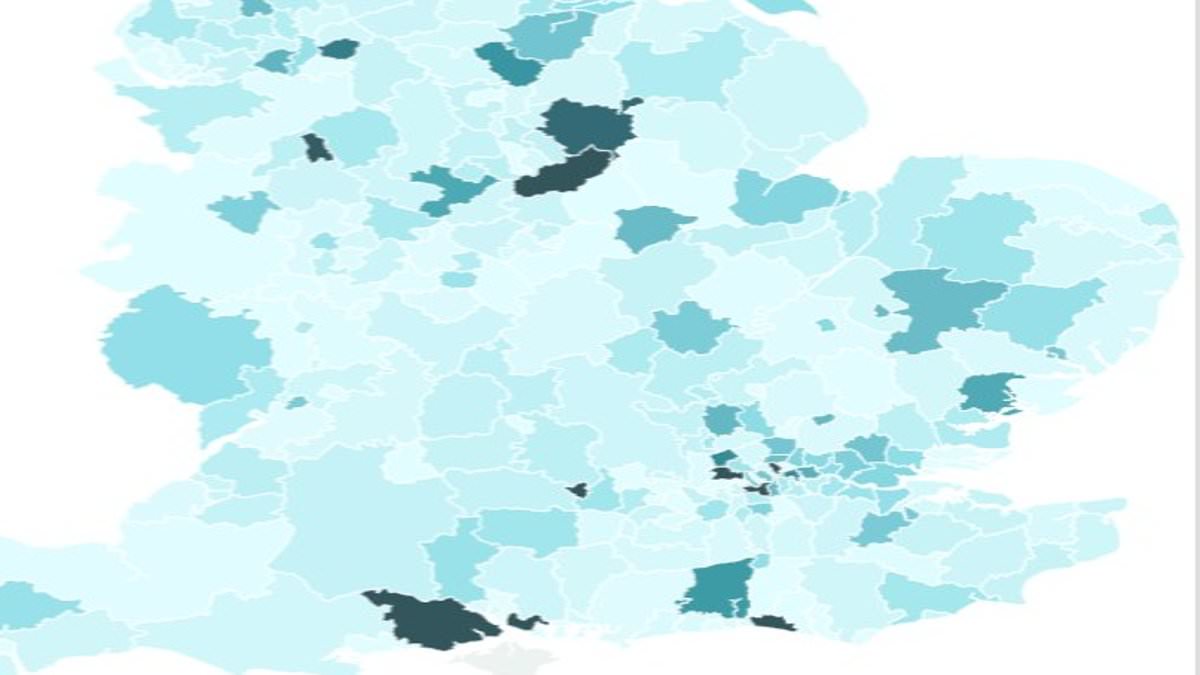
Using statistics extracted from the Department for Environment, Food & Rural Affairs (Defra), our map shows the rate at which every council in England hands out fines and pursues prosecutions.
But it paints a depressingly grim picture, with just 1,600 prosecutions in the country last year out of a total 1,152,000 incidents – a rate of only 0.14%.
The number of FPNs being handed out also decreased by 5% over the past year, from 67,000 to 63,000.
This is despite the rates of fly-tipping soaring to a 14-year high – an increase of 6% from the previous year.
The rising problem usually involves criminal gangs or rogue builders quickly dumping rubbish, from broken fridges to household junk, in quiet locations before driving off.
In the very worst cases, they leave chemical waste, asbestos, discarded nappies and even dead animals for other people to clean up after them.
Prolific fly-tipping by lazy homeowners has been known to attract vermin and make the area so undesirable to live beside that residents struggle to sell their houses.
And although anyone found guilty of fly-tipping can be fined up to £50,000 and face up to six months in prison, this rarely happens.
Local authorities carried out 528,000 enforcement actions in 2023/24, which can include sending warning letters, issuing fixed penalty notices (a fine of up to £1,000 issued by the council), launching investigations and pursuing criminal prosecutions.
But only 1,562 ended up with a successful criminal prosecution. And of those, only 28 resulted in a prison sentence.
Only eight councils in the country managed to either criminally prosecute or hand out FPNs at a rate of 10% or more for their total fly-tipping incidents.
Brighton and Hove council came in first place with 941 FPNs issued based on 1,688 incidents – a rate of 56%. However, the council didn't pursue any prosecutions.

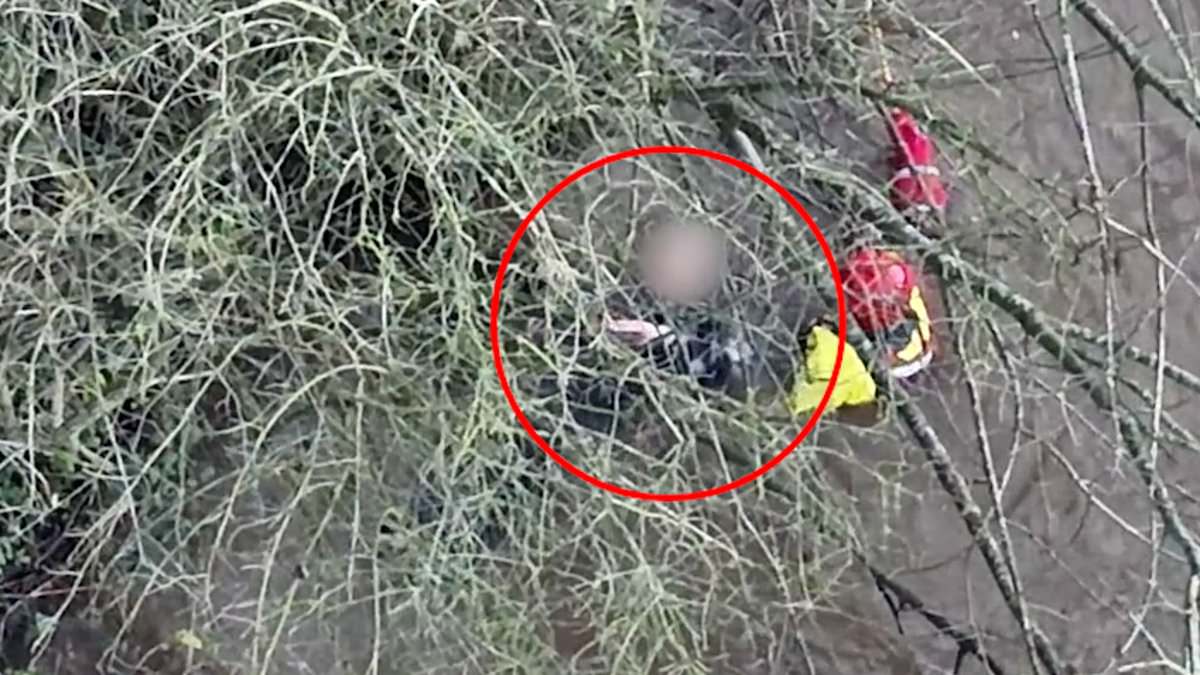
The most feckless council was the London borough of Hounslow in west London (pictured), which had the most incidents (27,241) but no convictions or FPNs

Dumped: Household waste is the most common type of item that is fly-tipped
One of the experts on the frontline of fighting back against the fly-tipping epidemic is seasoned environmental offences expert Sarah Bradley.
She has worked with the National Fly-Tipping Prevention Group and councils for years to help them catch fly-tippers, and now trains companies to deal with the scourge.
Unsurprisingly, she believes that the wide-ranging differences between councils in how they deal with fly-tipping comes down to money.
Because councils don't have a statutory duty to investigate fly-tipping, it often gets punted down the priority list for things that are.
'Statutory duties will always take priority over something which does not have a statutory duty', Ms Bradley explained.
To make matters worse, the investigation costs for councils are nearly always higher than the fixed penalty amounts or court awards, so fighting back against fly-tipping is not cost-effective at a time when councils face ever-greater financial pressures.
She said: 'Councils should be conducting investigations into offences reported, however we know that not all do.
'Some will issue fixed penalty notices immediately to individuals who have been linked to the fly tipping; however, no investigation is undertaken to identify why that person's waste has been found fly tipped.
'Low fines or punishments do not deter fly tipping; they encourage it.'
Ms Bradley explains that the differences in enforcement are likely to be down to the political and senior leadership's motivation.
Alarmingly, she said some local authority management teams and councillors do not want to take enforcement action, because they want to be seen as a 'supportive part of the community rather than an enforcement organisation'.
Another part of the problem is that there is no consistent guidance in relation to local authority enforcement for fly-tipping, and while this has been raised as part of the upcoming Crime and Policing Bill, it will only form statutory guidance.
Britain's lax response to fly-tipping has made national headlines this autumn after the nation's 'biggest ever' fly tip was discovered in a field next to the A34 and River Cherwell in Oxfordshire.
Pictures revealed that the massive 500ft-long mountain of abandoned rubbish had been stacked 20ft-high, with the unsightly pile being dubbed an 'environmental catastrophe' by experts.
The Prime Minister Keir Starmer even came out in November and said the 'disgusting' waste needed to be cleared 'as soon as possible'.
But during a Daily Mail investigation into the disaster, it was revealed that locals had spent the summer desperately trying to stop the desecration by alerting the authorities, however, they failed to stop it.

Britain's fly-tipping shame: A massive 500ft-long mountain of abandoned rubbish, dubbed an 'environmental catastrophe', made national headlines in November

The outcry for change comes as one of Britain's 'biggest ever' fly tips was discovered in a field next to the A34 and River Cherwell in Oxfordshire

Much of the waste in the large fly-tip appears to have been shredded and mixed up with earth
Why do people fly-tip?Fly-tipping first became common after the then Chancellor Kenneth Clarke introduced a 'landfill tax' designed to encourage Britons to recycle more in 1996.
It meant that councils, companies and individuals disposing of waste classed as 'active' – in other words, biodegradable – would be liable to hand over cash to the Government.
Initially, the tax was fixed at a modest £7 per tonne. But like so many stealth taxes, it crept up over the years.
In Jeremy Hunt's last budget before the 2024 election, the rate was whacked up from £103 to £126 per tonne.
Avoiding this tax is what allows criminal gangs to make serious money via illegal fly-tipping.
For example, they can totally avoid the going rate for disposing of a lorry full of waste, which is north of £2,500.
Cherwell District Council, which requires taxpayers in Kidlington to sort household waste into four bins, was told about it in June.
Along with Oxfordshire County Council, which handles planning enforcement, and the Environment Agency (EA), which is allegedly responsible for preventing such crimes, they then visited the field in early July – but all three fell short of stopping the dumping.
It wasn't until October 23, after the case had begun to attract attention in the local Press, that the EA actually went to court and had the site closed down.
As for Thames Valley Police, whose HQ is less than three miles away from the site, they didn't even try to arrest the perpetrators of the appalling crime.
It took until late November, five months after the dumping began, for the EA and the South East Regional Organised Crime Unit to arrest a 39-year-old man in connection with the offence.
Environmentalists believe cleaning the whole thing up will cost an astonishing £25million and take upwards of one year.
The shocking example of the large-scale operation is one that shows how fly-tipping has become an excellent source of money for organised crime gangs.
A previous Daily Mail story exposed the links between waste crime and other forms of organised criminality, from industrial-scale fraud and money laundering to drug trafficking.
Now many career criminals have shifted into the waste sector because it is seen as 'low risk and high reward'.
Police have called fly-tipping 'the new narcotics' – a reflection of the vast amounts of money it can generate for criminals.
Yet while drug traffickers go to great effort and expense to source their product, simply picking up waste and dumping it in a farmer's field costs next to nothing.

A playing field in the London borough of Croydon, the area with the eighth highest rate of fly-tipping
And while cartels contend with the likes of the National Crime Agency, organised waste gangs face a far weaker foe in the form of the toothless and underfunded EA, which scarcely manages to clear illegal dumps, let alone prosecute those responsible.
Gangs are paid as much as £2,500 per lorry to illegally dispose of rubbish, often reinvesting the cash in other crimes.
This costs the UK economy an estimated £1billion annually, although this is almost certainly an underestimate given just 27% of waste crimes are reported.
However, the numbers might be even worse, as Defra's data excludes the large-scale incidents dealt with by the Environment Agency and the majority of private-land incidents.
Ms Bradley said the council officers dealing with fly-tipping often have their time taken up by other types of reports they need to investigate, such as abandoned vehicles, duty of care and littering.
She explained that although most 'investigators are dedicated people who are doing their best', they only have a limited amount of resources and tools available.
Prosecuting fly-tipping is made more difficult as the gangs that often operate the illegal sites can threaten residents with violence if they confront them.
One man - who asked to remain anonymous for his own protection - told of his experience after he complained about a gang dumping construction waste on land near his village.
'Over the years I'd watch them steadily increase their activity, with massive lorries coming from across the country to dump shredded waste in a field secured with gates and CCTV,' he said.
'I had spoken to the EA, but it was a waste of time - nothing happened, and I was just told to lobby my MP for extra funds.
'So, I started talking about what was happening online. Shortly afterwards, I got a message from an unknown number saying, "Shut up or we're coming to get you".'
A recent review of waste crime by the House of Lords Environment and Climate Change Committee heard plentiful evidence about the threat posed by organised criminals.
Committee chair Baroness Sheehan was left 'shocked' by the 'enormous' scale of the illicit market - and warned taxpayers will be left picking up the tab for decades.
Her sharpest criticism, however, was aimed squarely at the EA, the body responsible for fly-tipping cases of over 20 tonnes.
She pointed to the notorious Hoads Wood site in Kent, where convoys of up to 30 trucks a day dumped mountains of waste.
Despite the agency knowing about the site in 2020, access restrictions were only issued this February – a delay she branded 'incomprehensible'.
The EA's defenders have insisted the organisation needs more funding to effectively fight waste crime and stronger enforcement powers.
But Baroness Sheehan was left unimpressed by the evidence its bosses gave to her committee.
'There didn't seem to be frustration that they could see all this very lucrative, illegal business going on,' she said.
'They could see it was highly damaging to the environment and to local communities, and yet they didn't seem to be pushing for a change within the agency so that they could go out and tackle these people.
'They seemed to be satisfied with the situation as it was, which I found quite irksome.'
The consequences, the Liberal Democrat peer warned, will be ruinously expensive.
'Some of these sites will cost tens or even hundreds of millions of pounds to clean up,' she said. 'Hoads Wood, we know, is going to cost upwards of £15million.
'This is all going to be paid for by the taxpayer. And as far as I know, none of those sites have had any of their waste removed. Where is that waste going to go?
'It just beggars belief that we're in this situation. We need the Government to look at it from top to bottom.'
Ms Bradley said that fly-tipping will always be a problem until it is made a priority and given the funding it needs to fight back.
She believes there needs to be an overhaul of the whole investigation and enforcement process, with regional teams made up of specially trained fly-tipping investigators set up.
Magistrates and judges also need to be given more training and told it's not a low-level offence, which it can sometimes be interpreted as, because it is not investigated by the police or prosecuted by the CPS.

Chemical waste, asbestos and piles of trash being dumped outside homes in Newport, Wales
Read More Meet the fly-tipping barons living it up in mansions as they make MILLIONS from illegal mega dumps
She argues that a similar model should be put in place that matches the Scrap Metal Dealers Act 2013, which put in place much stricter requirements for collectors and dealers of scrap metal, such as no cash payments, suitability checks, and having to display their licence in a prominent place.
Defra states that its data on local authority fly-tipping can be influenced by population density, housing stock, demographics and commuter routes.
Its website makes clear that those reporting higher incident numbers are often those 'being more pro-active and rigorous' in identifying incidents.
This is done by encouraging the public to report incidents and by training street crews.
A Defra spokesperson said: 'We will not tolerate waste criminals and fly-tippers who blight our villages, communities and natural spaces going unpunished.
'In April, the government launched a crackdown on cowboy waste operators, including crushing fly-tipper’s vans, to tackle fly-tipping and clean up Britain’s streets, lanes and countryside.'
Councillor Pritam Grewal, cabinet member for community safety at Hounslow Council, said: 'We take enforcement seriously.
'From April this year, we increased the FPN amount to the maximum of £1,000 and have issued 1,445 FPNs for fly-tipping since then.
'Fly-tipping is a complex issue influenced by many factors. Tackling it requires an ongoing approach combining education, enforcement and behaviour change.'
Comments (0)