
Remember me





The millennium was the future once, the stuff of science fiction, a time for new dawns, false beginnings and last days. Stanley Kubrick’s epic movie 2001: A Space Odyssey had hinted at it, as did Gerry and Sylvia Anderson’s television series Space: 1999. Hitting the year on the nose was the comic 2000 AD, the second edition of which introduced the fearsome Judge Dredd, meting out rough justice on the mean streets of Mega-City One. That story was actually set in 2099, but the point was made: the year 2000 had apocalyptic associations. That was why Prince suggested we should party in “1999”, before we reached “Judgement Day” – “Party over. Oops, out of time.”
It was not until the mid-1990s that the date really started to look like imminent reality, rather than distant implausibility. That realisation was signalled by a rise of doomsday cults. There was nothing innocent or New Age about these groups. In 1993, a siege in Waco, Texas saw the deaths of 82 Branch Davidians and four federal agents; a series of suicides and mass murders committed by the Order of the Solar Temple in Switzerland and Canada left almost a hundred dead across 1994 and 1997; the Aum Shinrikyo group killed 22 in two sarin gas attacks over 1994-95, the second on the Tokyo subway; in California, in 1997, 39 members of Heaven’s Gate killed themselves. Crime agencies around the world feared a rising tide of murderous outbreaks.
No mainstream church believed that the end of the world was nigh, of course (though some Pentecostalists said they expected it “around the turn of the millennium”). Instead, George Carey, the archbishop of Canterbury, said he was concerned that the Church itself was – as ever – just a generation away from extinction, even if his remedy didn’t exactly burn with spiritual urgency: “I have a theory that more people would come to church if they knew that the service wouldn’t go on for more than one hour, preferably less.”
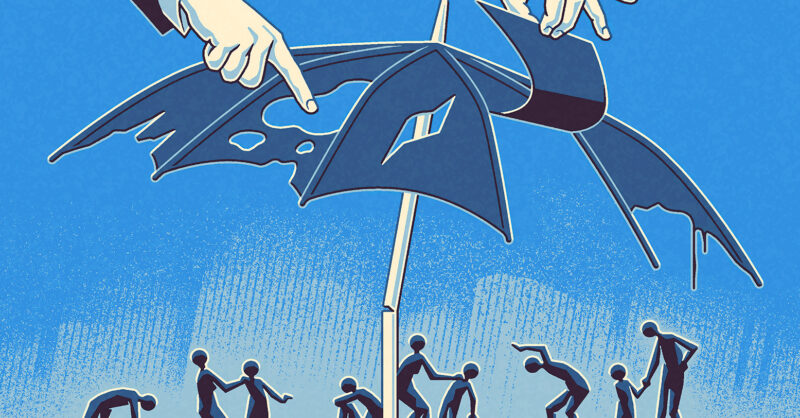
The more plausible threat of Armageddon came from technology, with the discovery in 1995 of the millennium bug, sometimes known as Y2K. It appeared that, in the early days of computer coding, when the millennium was still far away, the date had been represented by just six digits to minimise memory use, with the year reduced to two digits. Now, suddenly, there was a concern that if 99 was followed by 00, programmes would interpret this as 1900 rather than as 2000. The consequences could be catastrophic, the world was warned: hospitals, prisons and banks would malfunction, power stations and sewage works would shut down, and aircraft fall out of the sky. The most lurid prophecies saw nuclear weapons being fired by rogue computers. This really could be the end of the world.

Treat yourself or a friend this Christmas to a New Statesman subscription for just £2
It wasn’t. Instead it was estimated that somewhere between $300bn and $500bn was spent in remedial work to fix the problem. Even so, the lack of a disaster left some wondering whether Y2K had been a scam. Years later, in the aftermath of the Brexit referendum, the Conservative MP Bernard Jenkin downplayed predictions of the dire economic consequences that would come from leaving the EU. “We will look back and wonder what all the fuss was about,” he said. “A bit like the millennium bug. Remember all the experts on the millennium bug?” The 21st century was ushered in with a distrust of “experts”.
Even if one didn’t share that view, there was something terribly trivial about Y2K. The idea that humanity could destroy itself because it used six, not eight, digits for the date was culturally implausible, a far cry from the Book of Revelation, too prosaic for science fiction. It was as banal and bathetic as Archbishop Carey’s pronouncement. And, broadly, that was the story of the millennium. Despite all the hype and hoopla – and there was a great deal of that as the 1990s progressed – it seemed to get smaller the nearer we got. It soon became no more than an excuse for a party, New Year’s Eve squared. A quarter-century on, the millennial let-down continues to frame our uneasy, mistrustful mood. Indeed, that mood has only intensified.
At least back then there was a good reason for a party, for those were not dystopian times. The world economy was growing, the national mood was optimistic, there was even hope that climate change was starting to be addressed with the 1997 Kyoto protocol. The West was congratulating itself on having won the Cold War, and the American political economist Francis Fukuyama had announced “The End of History”. The greatest risk appeared to be complacency rather than cataclysm. This could be seen in the Britpop of the era, with singalong songs that were anything but apocalyptic: Pulp’s “Disco 2000”, Blur’s “End of a Century” (“Oh, it’s nothin’ special”), Robbie Williams’s “Millennium”. “The year 2000 won’t change anyone here,” sang Morrissey on “Reader Meet Author”. Vapidity rather than breakdown appeared the most pressing threat, a vapidity that could be clearly seen in the sorry saga of the Millennium Dome.
It was Michael Heseltine, of the then-Conservative government, who came up with the idea of a national focus, a major exhibition to be staged in Greenwich, home of the prime meridian and of Greenwich Mean Time. “As a nation,” he wrote in his memoirs, “I believed that we should stake our claim to the future with a statement of great confidence and pride in ourselves.”
There was a history of such showpieces, though each one represented a steady reduction in scope. In 1851 there had been a global aspiration with the Great Exhibition of the Works of Industry of All Nations, but the 1920s equivalent had been scaled back to the British Empire Exhibition, while the 1951 version was simply the Festival of Britain. Since then, the UK had shrunk still further and it was far from clear what a statement of “confidence and pride” would actually look like. Virginia Bottomley, the Conservative culture secretary (or heritage secretary as the position was known in the mid-1990s), had no lofty ambitions, suggesting simply that “people want the sense of congregation, of coming together”.
The Dome project was to be paid for by the Millennium Fund of the National Lottery, but no one expected Heseltine and Bottomley to be there at the end. By the time of the first lottery draw in November 1994, Labour stood at 55 per cent in the polls, 31 points clear of the Conservatives. It was clear that Tony Blair – elected Labour leader that May – was going to be the first prime minister to welcome in a new millennium.
That was certainly Blair’s expectation. In his speech to the 1995 conference, he talked of the challenges that would face an incoming government in millennial terms: there were but “a thousand days to prepare for a thousand years”. That was a slight miscalculation – there were actually 975 days between the 1997 election and 1 January 2000 – but it was a sufficiently resonant phrase to be appropriated by Oasis for their song “Magic Pie”. For Blair, and for many of New Labour’s intellectual outriders, the millennium was both a historical force and deadline, spelling and requiring the modernisation of Britain.
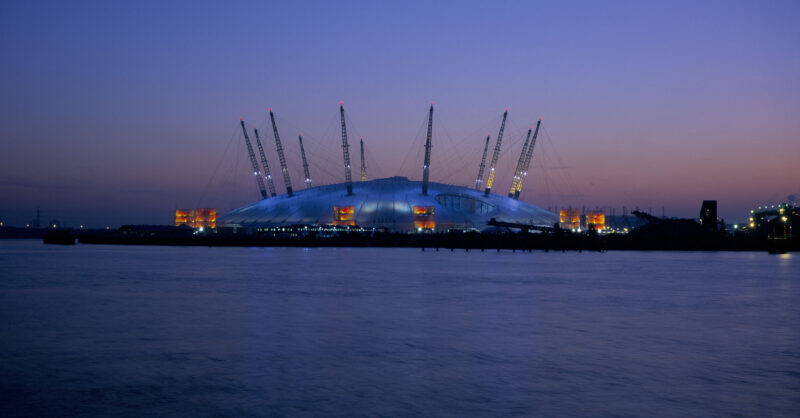
Given the opportunity to pull the plugs on the Greenwich project, Blair’s government opted instead for expansion, and Peter Mandelson – whose grandfather, Herbert Morrison, had overseen the Festival of Britain – was appointed the Dome Secretary (joke courtesy of Tony Banks). The building, designed by Richard Rogers, was striking, if unattractive, but still there was no clear idea of what the contents were going to be, or even why it was happening. The designer Terence Conran, a consultant on the Dome, argued that the millennium “is not an event that has very much to do with Christianity. It’s to do with time.”
Conran’s final version wasn’t about time, though. Or about anything else very much. Mandelson didn’t even get to see the project through – he resigned over an undeclared loan in late 1998. But he couldn’t have salvaged a project around which there was no unifying theme, no identity. The year-long exhibition, which had been expected to attract between 12 and 15 million visitors, ended up with just 6.5 million, each of them subsidised to the tune of £90 a head. It was a national joke.
The Dome wasn’t the only eye-catching project on the Thames. There was also the Millennium Wheel, a huge Ferris wheel on the South Bank, which had its opening ceremony on New Year’s Eve, though delays meant it wasn’t yet ready to start turning. “I don’t think that really matters for tonight,” said Bob Ayling of British Airways, the company that helped pay for the attraction. (“It does if it’s called the Millennium Wheel,” retorted Blair.) And there was the Millennium Footbridge, which opened a month behind schedule and, two days later, had to be closed for 19 months to address a structural problem – it wobbled dangerously when people used it.
Once the year had turned, the whole millennium thing receded rapidly. “In retrospect, the millennium marked only a moment in time,” Blair told the Labour Party conference in 2001. A collective amnesia seemed to descend. An official amnesia, as well. Of the great London projects, the Millennium Dome was renamed the O2 Arena, and the Millennium Wheel became the London Eye. Only the Millennium Footbridge kept the faith (and that was destroyed by Lord Voldemort’s Death Eaters in the film of Harry Potter and the Half-Blood Prince). Elsewhere, the Millennium Stadium in Cardiff is now the Principality Stadium, and the Millennium Tower in Portsmouth is the Spinnaker Tower. (Understandably, the Millennium Hotel in Mayfair – best known as the place where Alexander Litvinenko was poisoned with polonium – also changed its name.)
Others survive, of course, but the rebranding of landmarks to remove mention of the millennium seemed to set a tone for much that has followed, from Cleggmania and Milifandom to #BlackLivesMatter and Covid: a huge amount of noise, the bold declarations that we were in a new era, that things would never be the same again, followed by almost instant, slightly embarrassed forgetfulness.
In 2000 the Tory leader, William Hague, joked that the Dome was “a symbol of New Labour: an empty, pointless tent in the middle of nowhere”. Quarter of a century later, it feels symbolic of more than that, a huge structure erected and run at great cost, without any vision for what should go inside. If the British 21st century has been marked by false promises that the public has never forgotten, perhaps the millennium was this dynamic’s first, and comparably least-damaging, manifestation. Form without function, office without authority – maybe TS Eliot was right about the world ending not with a bang, but a whimper.
[Further reading: TS Eliot’s Hollow Men are all around us]
Content from our partnersRelated
Comments (0)