
Remember me
In almost exactly five weeks, spring training camps will open across Arizona and Florida and the long journey that is the 2026 MLB season will begin. Plenty will happen between now and then. This hot stove has moved very slowly and I can't guarantee all the top free agents will sign between now and the start of camp, but there will be some signings and trades before spring training. For sure.
The top four, five of the top six, and 17 of the top 50 free agents remain unsigned with camp five weeks away. The No. 1 free agent, outfielder Kyle Tucker, has been connected to most contenders at some point this winter, though his market has yet to really heat up. At least not publicly. Conversations are undoubtedly taking place behind the scenes. Very little has been leaked, however.


Earlier this week, ESPN reported that "Tucker has both short- and long-term options, according to sources familiar with the situation." How open Tucker is a short-term contract is unknown, but he has that option. He'll turn 29 later this month and, while free agents can still get paid very well going into their age-30 or -31 season, teams have shown they will pay the most for a player's 20s.
Now that we know Tucker has short-term options for his next contract, let's break it all down. Why he could go for such a deal, what the contract could look like, which teams could pursue him, and more.
Why would Tucker go for it?Short-term, high-salary deals have become increasingly popular the last few years. Teams love them because they limit long-term risk and typically only capture peak performance seasons. Players take them because the long-term contract they want isn't there and a short-term deal sets them up to test free agency again in the near future, often without the qualifying offer attached.
While these short-term deals are becoming more common, they definitely aren't new. The Yankees signed closer Rafael Soriano to a three-year, $35 million contract with opt outs after every year way back in January 2011. Trevor Bauer (Dodgers) and Carlos Correa (Twins) signed three-year deals with multiple opt outs prior to the 2021 and 2022 seasons, respectively.
If Tucker goes for such a contract -- no sure thing, of course -- he would do it because it has worked out quite well for several free agents. Remember, Correa agreed to a massive contracts with the Giants (13 years, $350 million) and Mets (12 years, $315 million) before an ankle issue scuttled things. Even then, Correa still landed a six-year, $200 million contract to return to Minnesota.
Here are a few others who parlayed a short-term deal with opt outs into bigger money:
Mets
2 years, $54M
5 years, $155M
Giants
3 years, $54M
Giants
6 years, $151M
Giants
2 years, $62M
Dodgers
5 years, $182M
Giants
2 years, $44M
Yankees
6 years, $162M
Alonso, Rodón, and Snell opted out after the first year of their short-term contract, then signed their long-term deal. Chapman never actually opted out, but he leveraged the opt out into an extension. We'll add Alex Bregman and Cody Bellinger to that list soon too; they opted out of their short-term contracts earlier this offseason and are in position to sign long-term deals in the coming weeks.
That is the potential reward. The risk is that things don't go well for Tucker in 2026 (or in 2027), sabotaging his chances at a long-term contract. Yes, a short-term contract would pay him well enough that generations of Tuckers would still live comfortably, but a huge payday may be off the table. Realistically, Tucker may never be better positioned to cash in long-term than he is right now.
Also, there's a chance the new collective bargaining agreement next winter will change baseball's financial landscape in a way that hurts Tucker's earning potential. There could be a salary cap, there could be a limit on contract length, who knows what else? The next CBA is the great unknown and that risk will have to factor into Tucker's decision to take a short-term deal.
Long story short, Tucker could take a short-term contract (i.e. multiple years with opt outs) this offseason because he doesn't like the long-term offers on the table and he believes he'll be better positioned to cash in next winter. Tucker had hand and calf injuries in the second half in 2025. It's not crazy to think that, with good health in 2026, he'll be even more in demand a year from now.
What could a short-term deal look like?The model here is Bregman. Tucker, like Bregman, is a much more well-rounded player than Alonso and he has a more consistent track record than Bellinger and Chapman. Since 2021, Tucker is top 10 in both on-base percentage and slugging percentage while having the 13th-lowest strikeout rate. The high-end offense plus strong defense and baserunning make him very valuable.
The caliber of player makes Bregman the best comparison for Tucker, and Bregman's deal with the Red Sox was straightforward. Three years at $40 million a pop, with an opt out after each year. Correa's first deal with the Twins was in that neighborhood too. Three years at $35.1 million a year. We can chalk up the $4.9 million annual difference to three years of salary inflation.
Contract structure is always important and that is especially true with short-term deals that include opt outs. Bregman's deal was a flat $40 million per year, but Alonso's deal was frontloaded: $30 million in 2025 and $24 million in 2026. He received most of his money before opting out. Chapman's contract was backloaded: $16 million in 2024, $17 million in 2025, and $18 million in 2026.
Only Tucker and his camp know how he would want a short-term deal structured, though it stands to reason that, if you're signing a contract with designs on opting out in a year or two, you want as much money upfront as possible. That's how Alonso (and also Bellinger) had his contract structured. Of course, the team has to agree to it too, but I'm sure that's what Tucker would prefer.
Tucker now is two years younger than Bregman was when he signed his short-term deal, and Tucker had a slightly better walk year too (4.5 WAR vs. 4.2 WAR). If Bregman got $40 million per year, Tucker's camp could reasonably push for $45 million or so. I think that's the magic number though: $40 million. A short-term deal for Tucker has to start there in terms of average annual salary.
Which teams could be interested?If Tucker does come around to the idea of a short-term deal, then basically every contender should get involved. Even the Red Sox, who definitely do not need another left-handed hitting outfielder, should try to find a way to make it work. Tucker is good enough to swing a division or wild-card race. He's a difference-maker who can help put you over the line (or further over the line).
With the caveat that not every team is willing to spend at the level it will take to land Tucker on a short-term, high-dollar deal, here are the clubs that make the most sense should such a contract become a possibility (listed alphabetically).

Blue Jays: The defending American League champs reportedly remain in the mix for Tucker even after signing Kazuma Okamoto, and why not? They have room in the outfield (sorry, Nathan Lukes) and are clearly motivated to get over the hump this season after coming so agonizingly close to winning the World Series last season. Their spending seems to have no limits this winter. A 1-2-3 lineup punch of George Springer, Tucker, and Vladimir Guerrero Jr. is about as good as it gets.

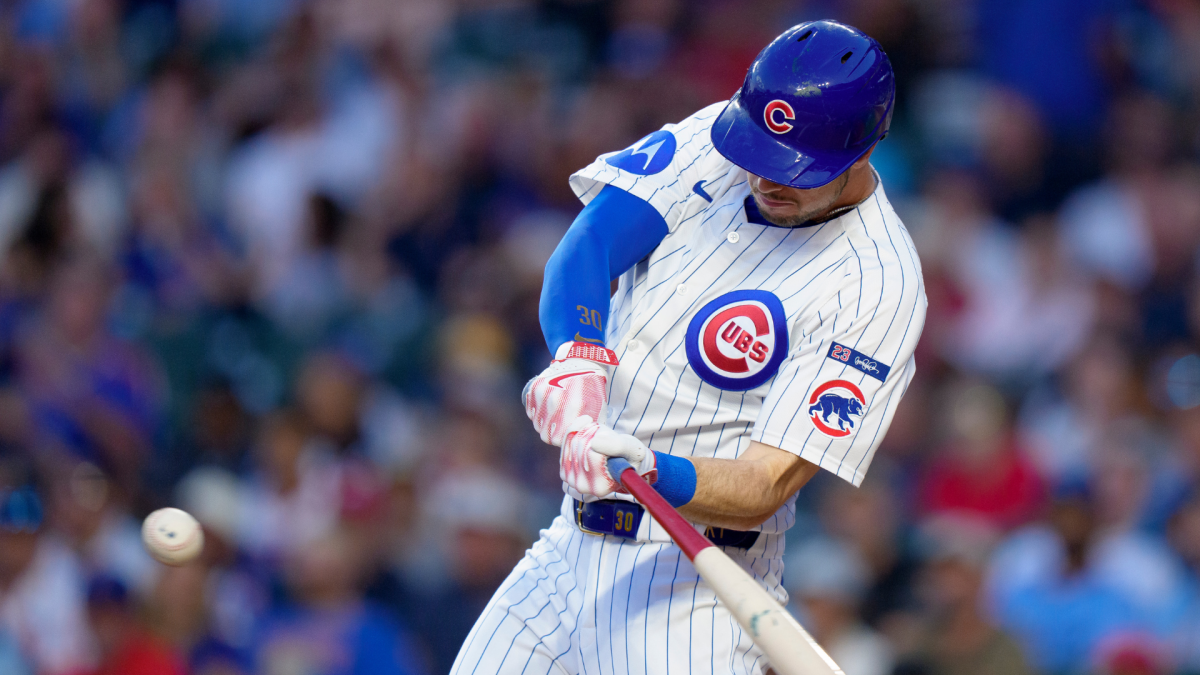
Cubs: The Cubs don't always spend the way a Chicago team should spend (at least they're not as bad as the White Sox), but Tucker was a pretty darn good player for them last year and they could easily slot him back into right field, especially after top prospect Owen Caissie was included in the Edward Cabrera trade. Ian Happ, Nico Hoerner, Shota Imanaga, Seiya Suzuki, and others will all be free agents after 2026. This might be this group's last run together. Tucker on a short-term contract fits the timeline perfectly.

Dodgers: It's definitely not great for the rest of baseball that Tucker aligns almost perfectly with what the two-time defending World Series champions need. Specifically, they must improve their outfield defense and they need another middle-of-the-order bat. A short-term arrangement with Tucker would also keep a path clear for top prospects Josue De Paula and Zyhir Hope down the line. The Dodgers offered Bryce Harper a four-year, $180 million contract back in the day. Why not try something similar with Tucker?

Giants: The Giants have a history with short-term, high-dollar deals (Chapman, Rodón, Snell). Granted, that was the previous front office regime, but ownership signed off on those contracts, plus they all worked out pretty well. A wild-card spot is within reach and Tucker is way more likely to get the Giants there than Drew Gilbert and Luis Matos, their current right field options.

Mariners: They're currently slated to play (platoon?) Luke Raley and Victor Robles in right field, so yeah, there is definitely a place on this roster for Tucker. Seattle needs another bat, and if they're dead set on leaving third base clear for top prospect Colt Emerson, right field is really the only place to add that bat. The Mariners could give Tucker $45 million and they would still rank only ninth in 2026 payroll, per FanGraphs. Winning pays for itself, Mariners. Tap into that Switch 2 money and get it done.

Mets: The Mets currently employ one (1) major-league caliber everyday outfielder. Tucker would have to play left field in deference to Juan Soto, which is fine. He's played left field in the past, most notably on an everyday basis in 2020. A Tucker signing would also keep the center field lane clear for top prospect Carson Benge. What good is owner Steve Cohen's wealth if you're not going to jump on the top-ranked free agent when he's willing to take a short-term contract?

Phillies: I'm not sure top prospect Justin Crawford is MLB ready. Tucker would allow Crawford to get more seasoning in the minors while also lengthening the lineup. Brandon Marsh would have to play center field, but the Phillies can live with that. Is there a contender that would benefit from Tucker more than the Phillies? I don't think so. The sun is setting on this core and a short-term Tucker deal would boost their short-term World Series odds significantly.

Tigers: Why haven't the Tigers been in on Tucker, exactly? (At least not publicly.) There's the A.J. Hinch connection, and trust me, Tucker would do more for the team than a Wenceel Pérez/Matt Vierling right field platoon. Tarik Skubal will be a free agent after 2026. This might be Detroit's last season with him. Why not try to maximize your last guaranteed year with Skubal by bringing in Tucker on a short-term deal?

Yankees: The Yankees and Bellinger have been engaged in an offseason-long game of contract chicken. At some point though, don't you have to consider Tucker on a short-term deal? He could play left field for a year and would upgrade the lineup. Aaron Judge isn't getting any younger. Tucker is more likely to get Judge a ring than running it back with Bellinger. Also, Yankee Stadium's short right field porch is perfect for Tucker's pull-heavy approach. He would put up monster numbers in the Bronx, which would appeal to Tucker as he prepares to re-enter free agency in a year.
There are a bunch of small market teams that could use Tucker (Guardians, Pirates, Reds, Royals, etc.), though it's hard to see them winning a bidding war for Tucker, or Tucker choosing those teams over a big market contender. Then again, who knows what Tucker's priorities are? He already has a World Series ring (2022 Astros). This offseason might be all about the money, and hey, there's nothing wrong with that.
Tucker's market continues to drag and drag, but, ultimately, it makes no difference if he signs on Nov. 15, Dec. 15, Jan. 15, or Feb. 15. If Tucker is jamming up the rest of free agency, well, too bad. It's not his responsibility to unjam it. He has to do what's best for him. Alonso, Bellinger, Bregman, Chapman, and Correa all signed their short-term deals much closer to spring training, if not after spring training opened. Tucker's decision to take a short-term, high-dollar deal may still be weeks away, if he makes it at all.
Comments (0)