
Remember me





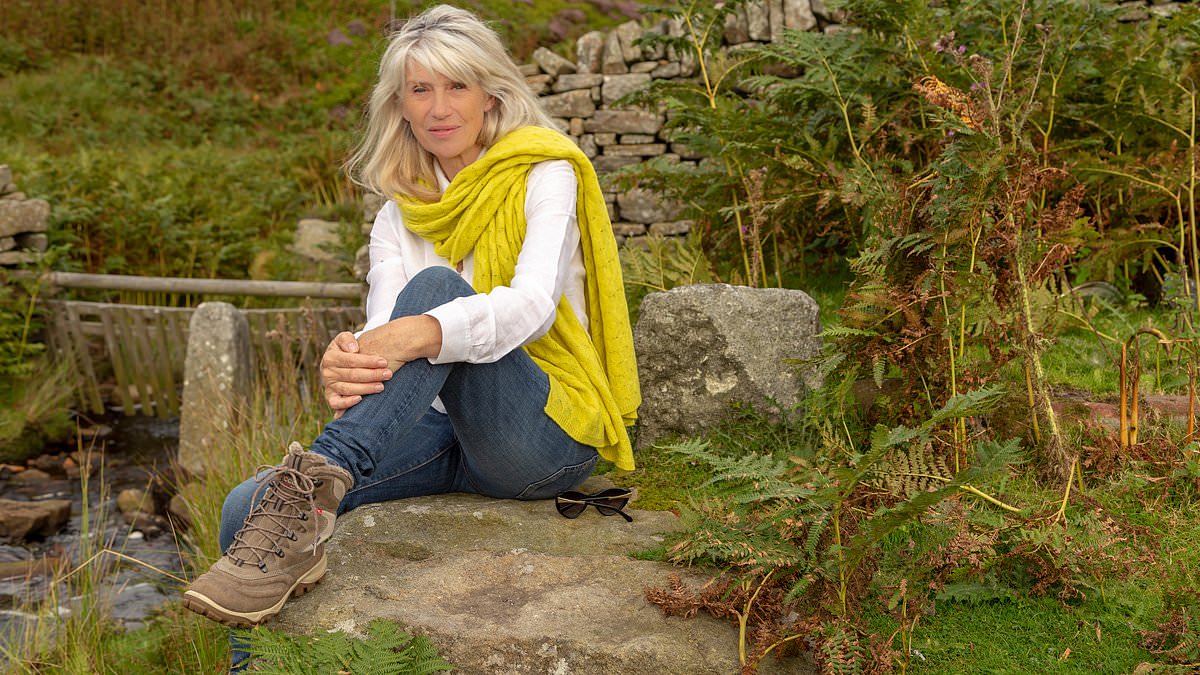
With Britain still in the grip of winter, it's hard to imagine that newborn lambs will soon be jumping for joy in the meadows around my North Yorkshire farmhouse.
Their infectious pleasure at just being alive will not last long.
In a few months, the farmer who has reared these gentle creatures will herd them into the back of a truck and send them to Northallerton market where many will be sold for religious slaughter, a death barbaric beyond the imagination of those who misguidedly believe this country leads the world in animal welfare.
These lambs will be shackled and hauled by their back legs on to a conveyor belt, and while still bleating, their throats will be cut. They will bleed to death, fully conscious for up to a minute in terror and pain.
UK law requires animals to be stunned before slaughter, but an exemption is reserved for both 'schechita' (Jewish) and some 'halal' (Muslim) methods.
And the latter is by far the larger market for this produce, catering to a UK Muslim population of four million people that has almost doubled from a decade ago - a trend that has been mainly driven by the rise in legal and illegal immigration. By comparison, the Jewish population numbers over 277,000.
So while the RSPCA says only 12 per cent of halal meat is not pre-stunned (and no schechita animals are pre-stunned) that still amounts to what the Food Standards Agency estimates as some 30 million chickens, sheep, goats and cattle killed while fully conscious in 2024.
Other welfare organisations put the figure higher, possibly up to as much as 100 million.
And just as alarming, according to the National Secular Society, these animals are now being fed in ever growing numbers into our hospitals, supermarkets, prisons, kebab shops and other outlets in the food chain without any of us being made aware of it.
Non-stunned produce is being served up by 17 local councils in schools - the majority of which are not Islamic faith schools - without parents or children knowing it. Why? Because it's cheaper, and in an industry that's worth £2 billion a year, overproduction is a commercial imperative to large abattoirs who want to keep costs down and the conveyor belts running.

Selina Scott, an animal welfare campaigner and former TV presenter, writes that nowhere in Labour's new 12,500-word animal welfare paper is there a single mention of barbaric halal slaughter

The Bill seeks to ban the boiling of lobsters in scalding water - which it says 'is not an acceptable killing method'

The Bill does not seek an end to Muslim halal slaughter - a method in which livestock have their throats slit while they are conscious
To an animal welfare campaigner like me, this industrial-scale cruelty is a scandal made worse by the lack of political will to tackle it. Last month, Labour announced its animal welfare strategy, which grabbed headlines for its proposed bans on boiling lobsters alive and trail hunting.
Yet in the entire 12,500-word paper there is not one mention of ritualistic slaughter. It pledges to introduce legislation on the 'humane slaughter of farmed fish' and to phase out CO2 gassing of pigs (a painful and distressing experience) but makes no comment on the savage way in which millions of livestock are killed.
Nor does it advise forcing retailers to label the method of death on their packaging, so consumers can see what they are buying.
Labour is fully aware how emotive this issue is. A public petition calling for all animals to be stunned before slaughter garnered 100,000 signatures and was debated in Parliament last summer, but the issue failed to gather momentum after vested interests objected.
Two further petitions are now gathering force, both demanding a clearly labelled method of death on all meat sold.
It is instructive that neither the RSPCA nor Compassion in World Farming have added their considerable influence to these causes. Both charities say they are prioritising high standards of welfare on farms, instead.
There is a strong suspicion that they are running scared, fearful that publicly expressed support for a more humane way of killing animals will antagonise and infuriate religious minorities.
I offer no disrespect to religions, but all too often officialdom bends the knee to these levantine customs in our abattoirs, petrified of being called racist and - for politicians - of losing votes. But complicit in this is the food industry, which is reluctant to offer customers clarity on how their meat is killed.
I contacted Jake Pickering, senior manager of agriculture at Waitrose, which prides itself in being 'first in animal welfare', who told me their own-brand meat is killed humanely.
He added that shoppers should look on its website for content information. This I did, and after ploughing through a 68-page document I eventually found the promise. So why not make this a point-of-sale boast to demonstrate their credentials?

With Britain still in the grip of winter, it's hard to imagine that newborn lambs will soon be jumping for joy in the meadows around my North Yorkshire farmhouse, writes SELINA SCOTT
It is a supreme irony, of course, that Muslims and Jews, through their own food chain of specialist butchers and grocers, insist on knowing the method of death.
Anyone doubting the horror of the non-stun means of killing should listen to Jim Paice, a farmer and former farming minister, who on visiting a religious slaughter house described how he had to watch 'for six horrifying minutes how a bullock bled to death wailing in pain'.
Another former farming minister George Eustice echoed his horror, saying in a House of Commons debate on the issue in 2019: 'The greatest concern is always the impact on cattle because their physiology is complicated by the fact that they have a third artery that goes to the back of the head that continues to supply blood even after the cut has taken place.'
He went on in more gruesome detail to explain why cattle take 'between one minute and 20 seconds and two minutes... to lose consciousness' without stunning.
Among those who have spoken out against ritual killing are parliamentarians and former MPs Craig MacKinlay, Steve Double and Roger Gale.
Those who have spent their lives working with animals are also unequivocal. Rupert Lowe, a farmer and MP for Great Yarmouth, said in Parliament last year: 'Freedom of belief does not mean freedom to cause cruel and brutal pain…
'We talk so much in this place about being a nation of animal lovers. It is time to prove it.'
Vets, on the front line tasked with overseeing the brutality in abattoirs, have expressed their revulsion. John Blackwell, the former president of the British Veterinary Association, urged Jews and Muslims to allow all animals to be rendered unconscious before having their throats slit. He described 'schechita' slaughter as 'five or six seconds of pain for the animal but the period of suffering may be considerably longer'.
It is shamefully significant that Britain's leaders have remained mute on this issue while across the Channel the European Court of Human Rights has recently banned non-stun slaughter in some regions of Belgium, which has paved the way for a continental ban encompassing Norway, Sweden, Slovenia, Iceland, Switzerland and Denmark.
Australia and New Zealand have also prohibited non-stun. If they can do it, why can't we?
As Jeremy Bentham, the philosopher and social reformer wrote of animal welfare in 1789: 'The question is not can they reason? Nor can they talk? But can they suffer?'
That was more than 200 years ago. In our supposedly enlightened age today, as millions of sentient creatures are forced to die, fully conscious, it is a moral failing that we continue to turn a blind eye to this question.
Selina Scott is an animal welfare campaigner and former TV presenter.