Taxes on Scots' mansions and jets in new Budget
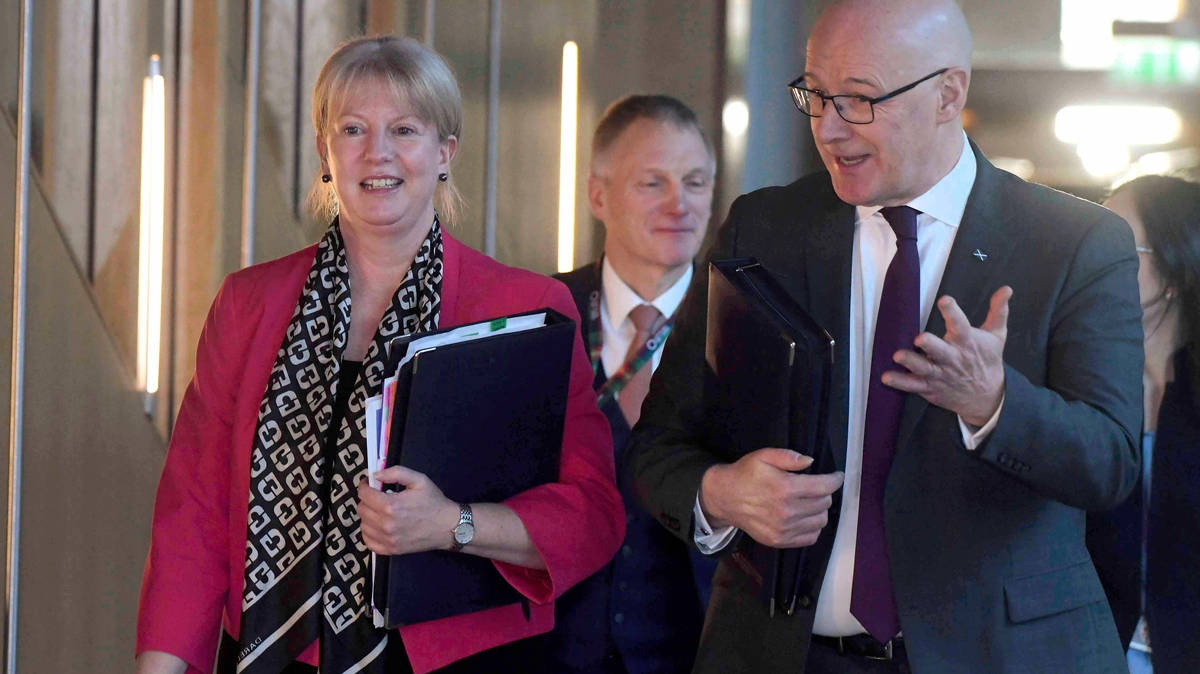
Finance Secretary Shona Robison unveiled the mansion tax in her Budget which also saw a proposed new tax on private jets using Scotland's airports which will be introduced in 2027.The policies she said would ensure that Scotland became a "fairer nation".However she was criticised for not doing enough to help middle earners and businesses - while economic experts pointed to cuts of day-to-day spending by £480 million, largely due to much weaker underlying tax forecasts.Shona Robison said her £68bn Budget would provide a "brighter future" for Scots struggling with the cost of living crisis and mean "some of the pressure on families and family budgets will ease".In her last Budget before the Holyrood election, she told MSPs the Scottish Child Payment would rise to £40 a week for babies under the age of one for qualifying families and that all primary and special schools will have breakfast clubs by 2027. Both policies come as a result of money which would have been used to mitigate the two-child benefit cap, being freed as a result of the UK Government's decision to scrap the cap.And she revealed a plan to change income tax thresholds at the basic and intermidate rates, which would see all Scots earning under £35,000 a year pay £40 a year less tax than elsewhere in the UK - or 75p a week - around 55 per cent of the workforce.However once people earn £35,000 they will pay £15 a year more in tax, at £50,000 it rises to £1496 and at £80,000 the difference is £2300.Ms Robison said: "To deliver even more for those with the least, we will ask those with the most, the very wealthiest in our land, to contribute that little bit more."I say to those who choose to travel by private jet in Scotland, you will pay and pay a fair share for that privilege and, in doing so, will be making Scotland a fairer nation."Asked by LBC how much the mansion tax would raise, she said: "The revaluation of the council tax bands at the higher end will bring in around £16m - it's not an unsubstantial amount of money and we will enable local authorities to keep that money."And on the tax thresholds changing she said: "We've raised the basic and intermediate thresholds two years in a row so about 11 per cent across the two years, to support those on lower incomes but we have a social contract with the people of Scotland where for the taxes they pay they get a lot of support not available elsewhere in UK, be it no tuition fees, free presciptions... and of course with the freezing of the higher rates 75 per cent of tax payers won't be any worse off. This is about trying to make sure tax is progressive." As well as increasing the Scottish child payment for under-ones, she said the benefit - which is currently set at £27.15 a week per child - will increase in line with inflation from next April.Vowing the Scottish Government will "continue to expand the best cost-of-living support package available anywhere in the UK", she said £49 million will be set aside for new measures to tackle child poverty in an updated action plan to be published in March.She also promised every primary school will have a breakfast club, and a "summer of sport" will take place for youngsters this year to mark both the Commonwealth Games being staged in Glasgow and Scotland's men's football team returning to the World Cup.This will see free children's sporting activities, including swimming lessons for every primary school child in the country.Overall, she said the 2026-27 draft Scottish Budget sets out "investment of almost £68 billion in the wellbeing of our people and in the future prosperity of our nation".With record funding of £22.5bn going to the NHS and social care, she added: "There will be more operations and appointments in our health service and it will be easier to access a GP."That money includes £36 million to help fund walk-in GP clinics - helping fulfil a key commitment from First Minister John Swinney.Scotland's councils meanwhile will receive almost £15.7 billion next year.She told MSPs: "This is a Budget for a stronger NHS, a Budget for a more prosperous Scotland, a Budget that, once again, gives the people of Scotland the best cost-of-living deal anywhere in the UK."But Scottish Conservative finance spokesman Craig Hoy claimed the "pre-election Budget is as predictable as it is cynical", adding that for "hard working Scots who are tired of being taxed to hilt by the SNP", the proposals "will not wash".He added: "While today's change to thresholds for the basic and intermediate rates are to be welcomed, it does nothing for those people at the middle of the tax band that are paying 50% tax on the pound between £43,000 and £50,000, that is the cost of the SNP."He also slammed the Budget for not providing enough help to businesses who have been hit with up to 400 per cent rates rises after a revaluation.Scottish Labour's Michael Marra said the Budget "does not meet the aspirations of the people of Scotland, and it does not recognise their need for real change".Claiming the Budget simply offers "more of the same" from the SNP, he added: "Everyone in Scotland knows what that means - hundreds of thousands in pain on NHS waiting lists, a justice system past breaking point, an education system going backwards day by day, over 10,000 kids waking up each day in temporary accommodation with no home to call their own." But Scottish Green co-leader Ross Greer said: "I am glad the Scottish Government has accepted Green proposals to fund the likes of childcare expansion with tax rises on the super rich, a mansion tax on million pound homes, and a charge on the 12,000 private jet fights."And Scottish Liberal Democrat MSP Jamie Greene said he was also "pleased to see that many of the Liberal Democrat asks do feature in today's Budget".Despite Ms Robison announcing a package of transitional relief for businesses facing rising rates bills after a revaluation, Mr Greene said he fears some firms are still "facing choppy waters ahead".Economic expert, João Sousa, Deputy Director of the Fraser of Allander Institute said the "devil was in the detail and what wasn't said" by the Finance Secretary.He said she "chose to talk about policies such as higher bands of council tax on million-pound-plus properties and increases in the Scottish Child Payment for children under the age of one, but neither takes effect in the next financial year."What does take effect in less than three months’ time is a significant cut in spending, even if you wouldn’t know it from the Budget speech. "Relative to plans laid out in June, the Finance Secretary has had to cut day-to-day spending by £480 million, largely due to much weaker underlying tax forecasts from the Scottish Fiscal Commission."He added: "This Budget, then, was another example of the Scottish Government plugging an underlying deficit of over half-a-billion pounds with one-off funding pots – and even then having to make significant cuts to its planned expenditure."