
Remember me
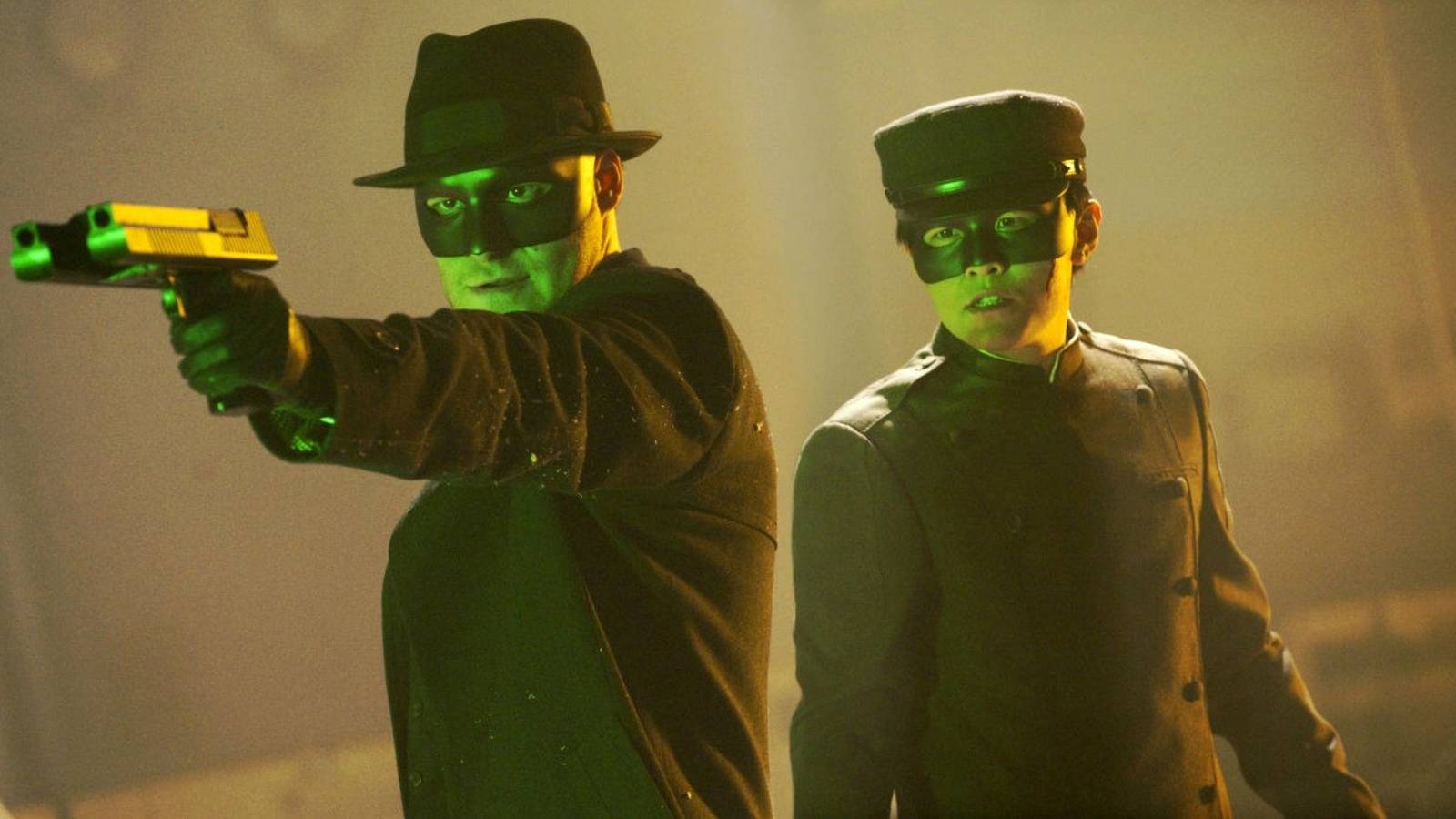



In the early 2010s, superhero movies occupied a middle ground they might never find again. The early, promising days of the Sam Raimi Spider-Man and Bryan Singer X-Men movies were over, while the Marvel Cinematic Universe was still in its infancy, having produced two blockbuster Iron Man movies and one already forgotten, less-than-incredible Hulk. In the summer of 2011, Thor and Captain America: The First Avenger would lay more groundwork for a bigger team-up, while X-Men: First Class would soft-reboot the mutants for another decade’s worth of films. In the meantime, the studio behind Spider-Man tried its luck with reviving the Green Hornet, a non-superpowered vigilante character who hadn’t been a big-screen attraction since the era of movie serials. The big-budget film was released on Jan. 14, 2011. It did not go as planned.
But at the same time: Didn’t it? Hard as it may be to believe given its reputation, but a Michel Gondry-directed, Seth Rogen and Evan Goldberg-penned version of The Green Hornet made very close to $100 million in North America, and another $100 million-plus overseas. It wasn’t wildly profitable, but by all available evidence, it wasn’t a word-of-mouth disaster, either, with a superhero-standard second-weekend drop and a respectable B+ CinemaScore. No, this was a flop as designated by critics, an inflated budget, and especially the people who actually made it. Writer-star Rogen and director Gondry have both been upfront about their disappointment after the fact. What’s been less discussed is how influential the movie was in encouraging the development of big-studio superhero house styles — guardrails to assure that nothing as unwieldy as a Gondry/Rogen Green Hornet would ever darken a studio’s doorstep again.
From a creative perspective, The Green Hornet isn’t particularly unwieldy, at least not compared to some of the superhero bloat that followed. Its bizarre cross-pollination is in the spirit of superhero stories, so often full of strange power sets and unlikely allies. Rogen and Goldberg had previously specialized in raunchy buddy comedies like Superbad and the more action-oriented Pineapple Express. Michel Gondry, meanwhile, had jumped from music videos to films exploring hand-made fantasies (and neuroses) in movies like Eternal Sunshine of the Spotless Mind, The Science of Sleep, and Be Kind Rewind. It’s easy to picture Rogen slotting into one of Gondry’s offbeat comedies, just as Jim Carrey and Jack Black had before him.
It’s perhaps less easy to picture Rogen as a superhero, which is part of the central joke The Green Hornet uses to tweak the character’s backstory. Rogen’s Britt Reid, accidental newspaper publisher by day and eventual vigilante by night, is a feckless, wealthy failson whose superhero operation is driven largely by his vastly more capable sidekick Kato (Jay Chou), a tech genius and essentially superpowered martial artist. The concept of Reid supplying the enthusiasm and money while Kato supplies the actual abilities goofs on the superhero-sidekick power dynamic. It also makes sense as an intersection between Gondry, who is able to position superheroics as an overgrown kid’s bizarre daydream, and Rogen, who often plays immature characters who must learn to put others first.
The Gondry side of this pairing has aged a bit better than the Rogen side, which too often finds the star defaulting to frantic-yammering mode. Some of his brainstorming scenes with Chou are still funny, but the material dealing with Reid’s brainy secretary/reporter Lenore Case (Cameron Diaz) is particularly ill-handled. Rogen and Goldberg’s obvious recognition that Reid’s romantic designs on Lenore are boorish doesn’t make their scenes any funnier, especially with Diaz given little room to flex her own comedic muscles.
 Image: Sony Pictures
Gondry, though, seems genuinely engaged by the business of staging action sequences, dotting them with whimsical touches throughout. He envisions Kato’s martial arts as hallucinatory, Matrix-y glimpses inside his head, where time slows down and certain objects will fan out to give him additional runway, a visual trick borrowed from some of Gondry’s music videos. A potentially overblown climax has a sense of loopy displacement as the Green Hornet and Kato drive their tricked-out car through a newspaper building, at one point lodging it in an elevator, where it’s cut in half on the way to an upper level, whereupon they continue driving half a car around an office. It’s not far removed from some of the sillier Fast & Furious mayhem, with an emphasis on practical effects that gives it a toylike charm.
This quality extends to the superhero gadgets, some useful (a knockout gas that, before Kato perfects the formula, puts Reid in a weeklong coma) and some purely fanciful (a record player inside the pair’s armored vehicle). Even some rote exposition gets the Gondry touch: When Reid finally ties together the various plot points in his head, Gondry assembles a wacky kaleidoscope of his thought process, making the boilerplate material visually interesting while also making a joke of how hard his hero must work to understand it all.
Granted, this doesn’t add up to much more than an amusing lark. Compared to superhero movies from Tim Burton, Sam Raimi, or even James Gunn, The Green Hornet is not nearly as successful at imprinting an iconic (or at least vaguely familiar) character with the style of its caretakers. Rogen, Goldberg, and Gondry all have fun ideas that mesh well enough together, but there’s no unifying vision to bring the movie any extra resonance beyond a temporary good time.
 Image: Sony Pictures
That aimlessness may be partially attributable to the movie’s unspoken third collaborator: Sony, the company footing the bill for all of this nonsense. Rogen has mentioned dealing with studio interference, in his telling less focused on the movie’s expensive spectacle than with the details of its script. It’s easy to imagine executives, either at Sony or rival studios, blanching at taking supposedly valuable IP (even if it’s actually just an old radio serial character) and turning it into a playground for Gondry’s handmade sensibilities.
But while there had been plenty of studio-mucked superhero movies before 2011, there was less a sense of imposing a particular house style with those movies, the way that their comic-book counterparts might exercise some degree of broader influence over the printed DC or Marvel universes. The MCU movies from later in 2011 aren’t exactly Tim Burton-esque expressions of an artist’s torment, but Thor and Captain America: The First Avenger at least bear the obvious stylistic touches of Kenneth Branagh and Joe Johnston, respectively. Between The Green Hornet and X-Men: First Class, that year may have set a record for use of split-screen in superhero films. And The Avengers, the following year, certainly has countless trademarks of its writer-director Joss Whedon. So why did some form of house style ultimately prevail over both Marvel and the early days of the DCEU (before the former collided with the latter with the misguided mash-up of Justice League)? Maybe a project like The Green Hornet served as a cautionary tale. Or maybe studio architecture is simply a house-always-wins proposition that will inevitably conclude that the studio knows best.
Either way, in the past 15 years, fewer directors with visual imaginations on par with Michel Gondry seemed to get interested in making a superhero movie, consolidating the power of the Big Two and emphasizing big-picture oversight. Maybe it’s for the best that a Gondry-level talent might not submit themselves to the machine. Even among whatever fans it may have picked up, The Green Hornet is virtually nobody’s favorite Seth Rogen or Michel Gondry movie. Yet there’s still something wistful about watching it now that superheroes are even bigger captains of industry. The Green Hornet may not be Spider-Man 2 or Batman Returns, but at least it was bold enough to turn childish power fantasies into a stylish joke.