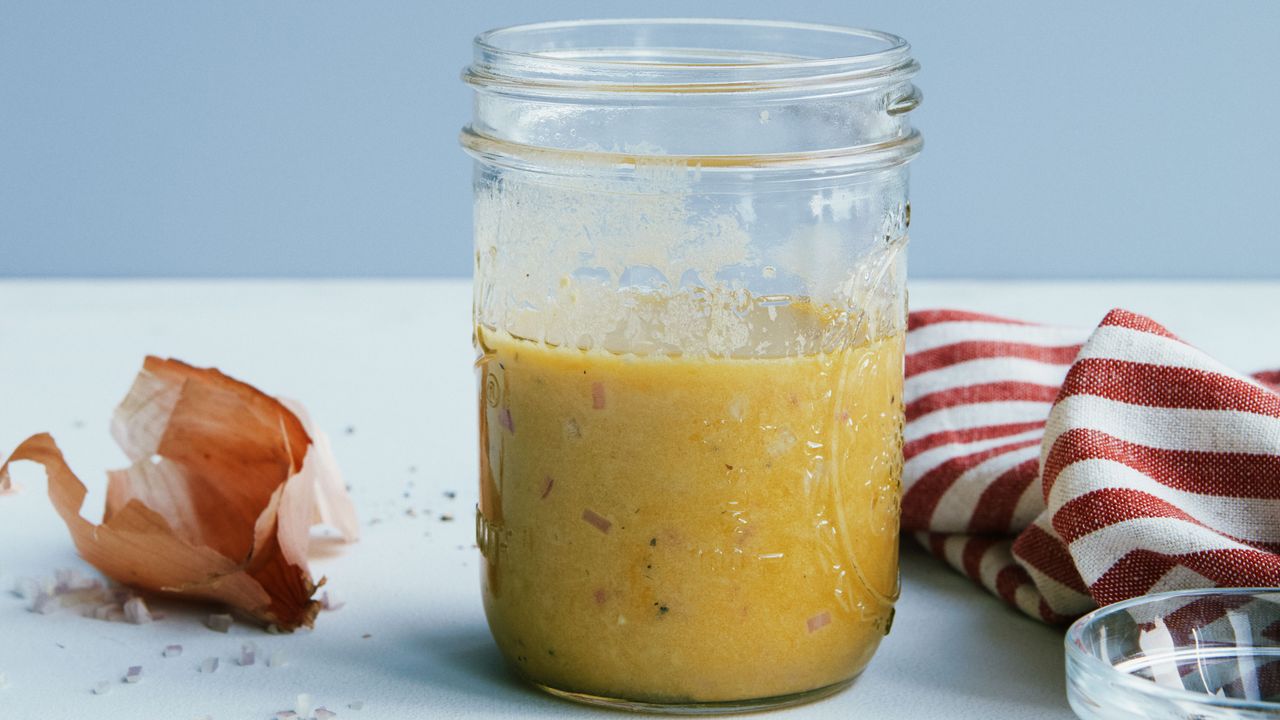
French vinaigrette recipes traditionally use a 3:1 ratio of oil to vinegar, plus Dijon mustard, minced shallot, and salt and pepper. If you’ve been relying on store-bought dressings, that blend is the perfect place to start for greener, brighter salads at home. It’s delicious as written, but also designed as a flexible template you can adapt with different vinegars, herbs, and seasonings. Modern vinaigrettes often adjust the ratio to 2:1. It will easily hold in the refrigerator for up to a week, cutting down on weeknight dinner prep—just let it come to room temperature and give it a quick shake to reemulsify
Do I have to use wine vinegar for a good vinaigrette?
You can use red or white wine vinegar, balsamic vinegar, champagne vinegar, sherry vinegar, or apple cider vinegar. Lemon juice adds a distinct brightness, but technically a vinaigrette must include vinegar—though you can split the acid, using lemon juice and vinegar together. If the dressing tastes too sharp, balance it with a small amount of honey, maple syrup, sugar, or another sweetener.Can I leave out the Dijon mustard?
Dijon mustard is classic in French-style dressings. Not only does it add punchy flavor, but it also helps create an emulsion, keeping the oil and vinegar combined and somewhat creamy. You can swap it for grainy mustard if you prefer, or another emulsifier like mayonnaise.Can I add fresh herbs or spices?
Herbs like chives, tarragon, and parsley add a smack of freshness to your dressing but are best added just before you dress the salad. If you’re making a big batch of dressing to keep in the refrigerator, try mixing in dried herbs and spices like fennel or coriander seeds, or Aleppo pepper for a gentle fruity heat.What can I substitute for shallots?
A little bit of delicately oniony shallot goes a long way in a dressing, but a grated garlic clove or some very finely chopped red onion could also work. Or use the white part of a couple of scallions.

Comments (0)