
Remember me







Labour is facing renewed demands for welfare reform today with more than six million workers earning less than people can get through benefits.
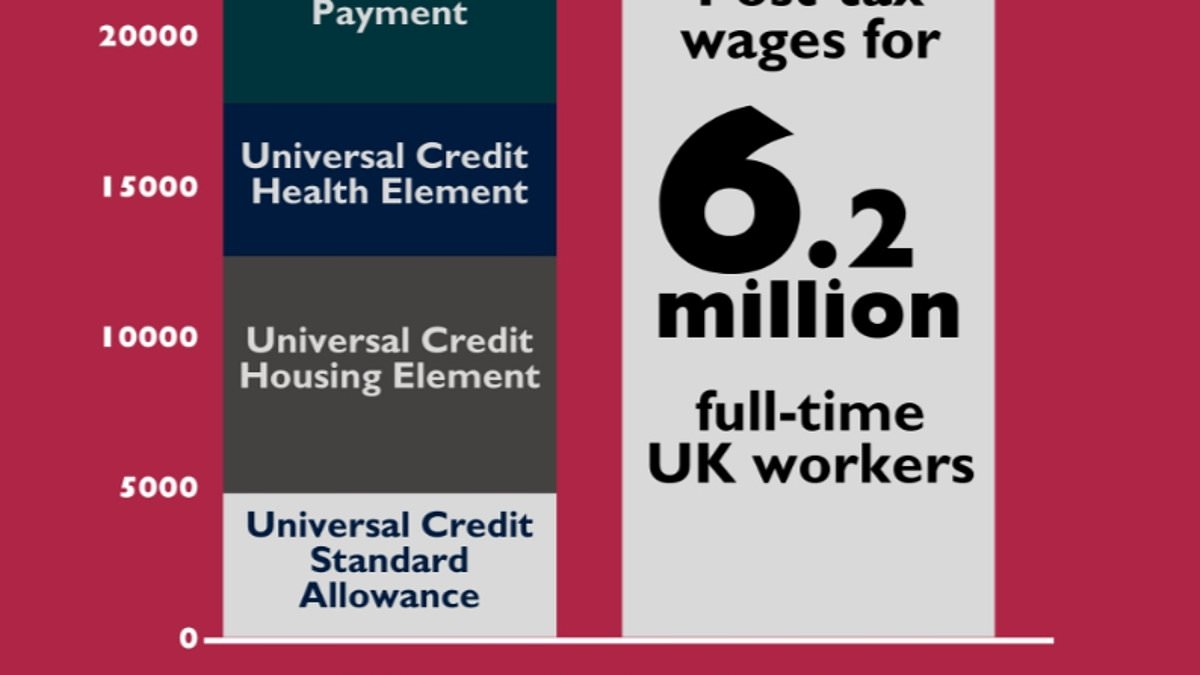
Some 6.2million - one in four of the workforce - would be better off on the combined benefits for a jobless Brit getting health and housing support.
The calculations from the Centre for Social Justice come amid rising concerns about Labour's failure to tackle the spiralling cost of welfare.
The Office for Budget Responsibility warned at the Budget in November that the overall bill for sickness benefits is now set to reach £109billion by the end of the decade.
But Keir Starmer has ruled out any legislation in the King's Speech amid fears of another revolt by MPs - after the last bid to trim £5billion from costs was humiliatingly killed off.

Keir Starmerhas ruled out any legislation in the King's Speech amid fears of another revolt by MPs - after the last bid to trim £5billion from costs was humiliatingly killed off

The calculations from the Centre for Social Justice come amid rising concerns about Labour's failure to tackle the spiralling cost of welfare
Official projections have revealed that the annual bill for PIP alone is on track to go from £25.9billion when Labour came to office to a staggering £44.9billion.
In 2019-20 the cost of the benefit was £13.7billion, with warnings that too many individuals with 'low-level' issues such as anxiety are being supported by the taxpayer.
The CSJ calculated that an individual receiving PIP and Universal Credit with housing and health elements could get £25,200 a year.
That is equivalent to a pre-tax salary of £30,100, higher than the pay of 6.2million workers.
The CSJ pointed to recent job adverts including a prison officer role in Leicester on a salary of £28,187, a store cleaner in Birmingham paid £26,312, and a nursing assistant in Manchester earning £24,465.
The combined benefit package is worth £3,400 more than the post-tax wages of a worker doing 40 hours a week on the National Living Wage.
The CSJ said although many on UC can work to top up incomes the figures 'demonstrate the powerful incentive to swap demanding, modestly paid employment for a higher benefit income with no requirement to work at all'.
Tory former Cabinet minister Iain Duncan Smith said: 'My reforms brought workless households to an all-time low.
'But because of the post-Covid collapse in vetting, millions could now take home more from welfare than wages post-tax. The system must restore work incentives.
'This is an outrageous state of affairs. The system must stop writing off thousands of people every day, and incentives to work must be restored to end this ruinous waste of human potential.
'Welfare reform is ultimately about transforming lives. The danger now is that Britain becomes a welfare state with a bankrupt country attached.'
Share or comment on this article: Why go to work? More than six million Brits are earning less than people can get in benefits, think-tank warns