Her remarks lay bare her long-held belief that the yen depreciation is beneficial to the economy
Published Tue, Feb 3, 2026 · 05:30 PM
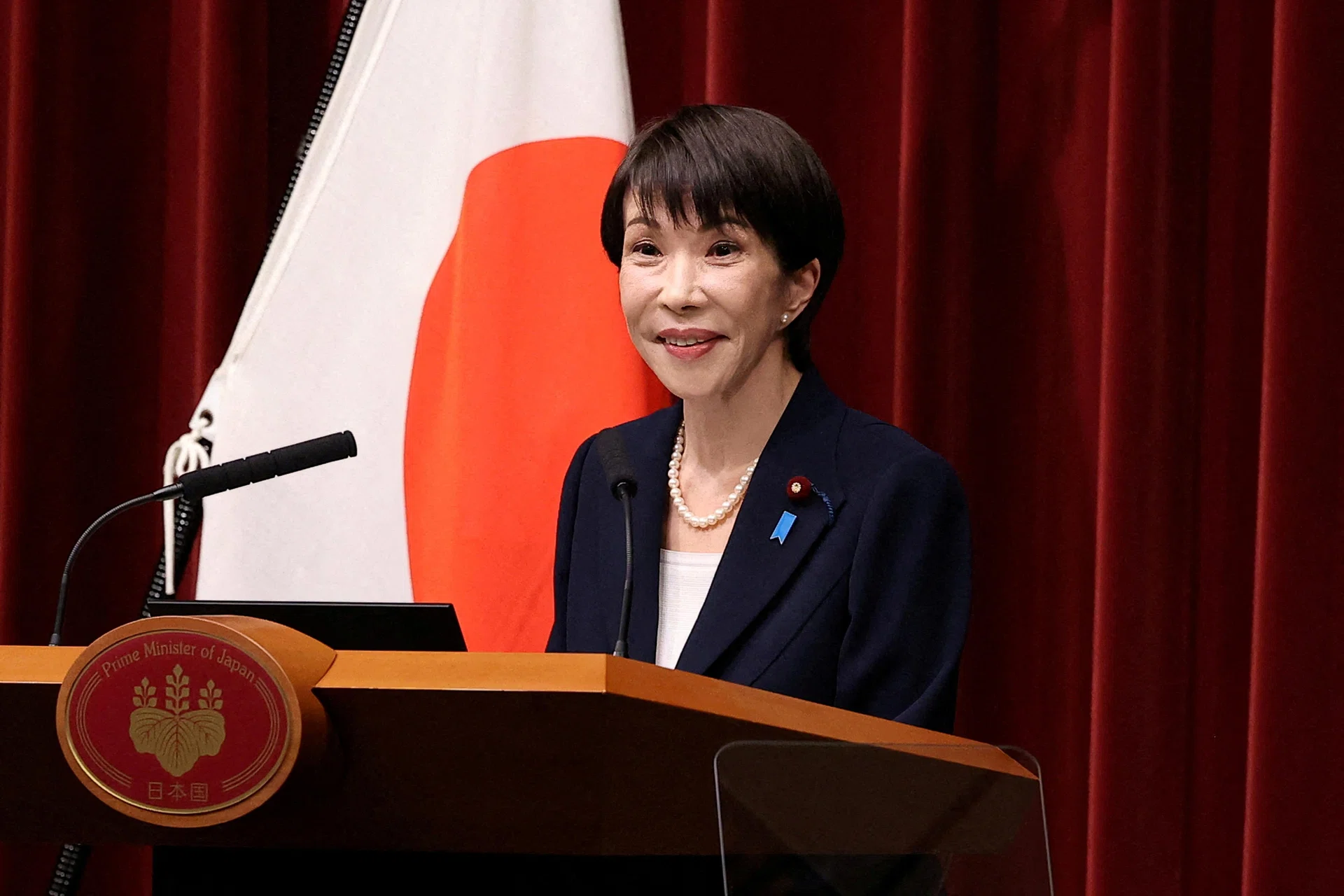
[TOKYO] Just as Japan was finally gaining ground in its long, hard fight to stop sharp currency falls, a fresh challenge has emerged from its own prime minister, whose off-the-cuff comments tell a different story about yen weakness.
Prime Minister Sanae Takaichi, who is widely expected to win a snap election this Sunday (Feb 8), triggered a yen sell-off in the week of Feb 2 after a campaign speech in which she talked up the benefits of a weaker currency.
While she later walked back on those comments, monetary bureaucrats are privately worried that the mixed signals from her could undermine a push to shore up the battered currency, particularly through the US rate checks that signalled rare joint efforts with Washington.
The weak yen has become a political sore point both at home and abroad, blamed domestically for soaring imported costs and more recently by the Trump administration for potentially destabilising US markets.
Her campaign comments quickly raised eyebrows among the officials in her administration, said sources, prompting behind-the-scenes efforts to prevent negative ramifications in the financial markets.
“Officials were scrambling to respond through Takaichi’s X social media account to clarify her intentions over the weekend,” one official at the Prime Minister’s Office said.
Navigate Asia in
a new global order
Get the insights delivered to your inbox.
In her X post on Feb 1, she clarified that she did not have a preference for the yen’s direction, noting that her earlier comments were intended solely to state that she would aim to build an economic structure that is resilient to exchange-rate fluctuation.
Scramble to keep the case for a strong yen
After weeks of heavy downward pressure on the yen, signs of close coordination between Tokyo and Washington have helped to steady the Japanese currency. This includes rare rate checks by the New York Federal Reserve.
Her initial remarks were at odds with Minister of Finance Satsuki Katayama, who has repeatedly threatened market interventions to support the yen, and noted that US Treasury Secretary Scott Bessent shares concerns over the excessive volatility in the yen.
Masafumi Yamamoto, chief currency strategist at Mizuho Securities, said of Takaichi’s remarks: “It revealed a complete lack of a sense of crisis over the historically weak yen.
“Instead, it laid bare that (her) long-held belief – that yen depreciation is beneficial to the economy – remains unchanged.”
After the prime minister’s remarks, the yen has given up about half of its seven-yen gains, driven by the spectre of joint US-Japan interventions to support the yen.
The government also made sure that her clarification of her comments were passed on to the US authorities, another official said. So far, Washington has stayed quiet on the remarks.
“From Washington’s perspective, the remarks were also likely unwelcome,” said Tsuyoshi Ueno, a senior economist at the NLI Research Institute.
US officials have been wary that surging Japanese government bond yields, which have come alongside yen weakness, could reverberate through the US markets, pushing up Treasury yields and triggering sell-offs in US assets, Ueno added.
Based on several Japanese government sources, Bessent told Katayama that Japan’s rising debt yields had triggered a triple sell-off in the US and urged Japan to respond.
This was during their bilateral meeting held on the sidelines of the World Economic Forum’s annual gathering in Davos, Switzerland.
Japan’s bond rout, triggered by Takaichi’s election pledge to temporarily waive the sales tax on food, coincided with the market volatility stirred by US President Donald Trump’s threats to reignite a trade war with Europe over Greenland.
The US Treasury Department did not respond to a request for comment outside of business hours.
Katayama said in January that she and Bessent shared concerns over what she called the yen’s recent “one-sided depreciation”.
Tokyo’s official stance on yen moves contrasts sharply with the new premier’s own recent public musings.
“I read the whole of Takaichi’s campaign speech, but I honestly wonder whether it needed to be said in the first place,” said one government official.
He added: “She rambled on, off the cuff without notes, but it’s ultimately unclear what she was trying to say.”
The government officials declined to comment as the matter is private.
Shooting from the hip
This is not the first time the prime minister has made off-hand remarks that have departed from lines carefully crafted by bureaucrats.
Weeks after she took office in October, she commented in parliament about how Tokyo might react to a hypothetical Chinese attack on Taiwan, touching on the biggest dispute with Beijing in over a decade.
But the off-hand remarks are one of the reasons behind her popularity, appealing particularly to younger voters.
Takaichi’s Liberal Democratic Party is likely to score a landslide victory in Sunday’s Lower House election, a survey by the Asahi newspaper showed, heightening the chance the country will continue to pursue big spending and tax cuts. REUTERS
Decoding Asia newsletter: your guide to navigating Asia in a new global order. Sign up here to get Decoding Asia newsletter. Delivered to your inbox. Free.