
Remember me







Updated February 4, 2026 — 1:01pm,first published February 3, 2026 — 3:37pm
SaveYou have reached your maximum number of saved items.
Remove items from your saved list to add more.
Save this article for later
Add articles to your saved list and come back to them anytime.
Got itAAA
Key pointsTHEATRE: Tastefully erotic, Afterglow at Chapel Off Chapel explores polyamoryDANCE: Songs of the Bulbul draws inspiration from the Sufi myth of the caged nightingaleTHEATRE
MIDSUMMA | Afterglow ★★★★
Chapel Off Chapel, until February 21
Gay sex has a pop-cultural currency that would have been unimaginable a decade ago. Think of all those comments about Heated Rivalry clogging up your feed. It can’t be only gay and bisexual men who were aroused by raunchy encounters between closeted hockey players in the show, or it wouldn’t have been such a huge phenomenon. In fact, women consume almost half of all gay male porn on Porn Hub, and as we enter an age of increasing heteropessimism, it seems homoeroticism has become flavour of the month.
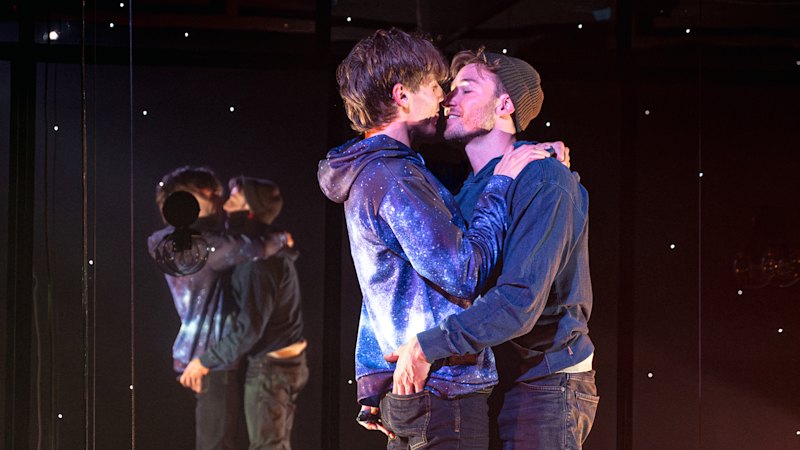
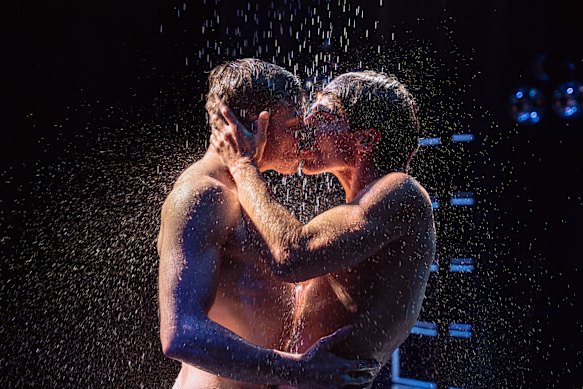 Matthew Mitcham (left) and Matthew Predny in a scene from Afterglow.Cameron Grant
That’s good news for S. Asher Gelman’s Afterglow. The play bears the tagline “the climax is just the beginning”, and true to its word, starts in flagrante, with a gay male threesome nuzzling and pashing each other, post-coitally entwined.
If you’re jonesing for a Heated Rivalry fix in the flesh, look no further. The show comes fully stocked in the eye candy department, with liberal displays of full-frontal male nudity (the most I have seen onstage since Puppetry of the Penis).
All three actors are intimidatingly hot and ripped. Gym-toned physiques. Washboard abs. Bubble butts. And the characters are unabashedly sexual, with tastefully choreographed erotica underpinning Gelman’s relationship drama.
Scientist Alex (Julian Curtis) and his theatre director husband, Josh (Matthew Mitcham – yes, the Olympic gold medallist), are a Manhattan gay couple in an open marriage.
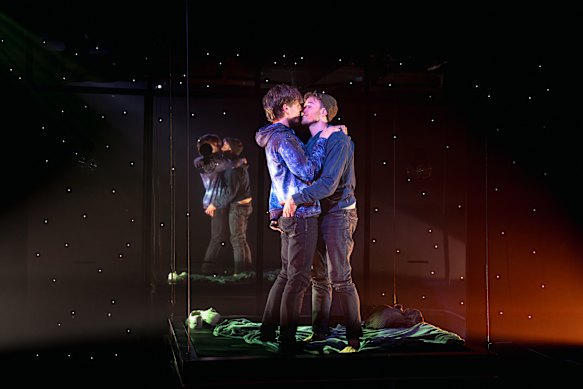 Afterglow is non-judgmental about the various forms contemporary relationships may take.Cameron Grant
They seem to have it all. They’re handsome, successful and loaded – and they have a commitment to starting a family together, expecting their first child via surrogacy in a few months.
Their equilibrium is fractured when Josh desires something more than a casual fling with their latest playmate, Darius (Matthew Predny), a younger massage therapist.
Alex consents to his partner’s new “friend with benefits” arrangement, with a veto if it starts to make him feel threatened or uncomfortable. Josh fails to inform his husband of a crucial detail, while seeking to avoid confronting marital difficulties or disappointments in his newfound passion for Darius. Darius genuinely falls for Josh and is torn between desire for what he cannot have and appal that the love triangle he’s entered is causing unintended distress.
Related Article
The set is modular genius that’d put IKEA designers to shame (and allows for steamy shower scenes). And the performances are strong and likeable, lending a charismatic gloss to the unfolding melodrama, even if the underlying emotional dynamics aren’t always fully and precisely articulated.
As an examination of modern polyamory, the play is a touch predictable and superficial for my taste. Yet it does have the advantage of being broadly relatable – whether you’re gay or straight or something in between – and remains non-judgmental about the various forms contemporary relationships may take.
If there’s a message, it’s that you can get hurt no matter what kind of romance your heart leads you to pursue. You’ll be forgiven if you get distracted from it, though, by the sensuality of the sex scenes and the way Afterglow plugs so directly into the homoerotic zeitgeist.
Reviewed by Cameron Woodhead
DANCE
Songs of the Bulbul ★★★
Playhouse, Arts Centre Melbourne, until February 7
The UK-based Aakash Odedra is a superb dancer. His emotional intensity and poetical abundance feel almost radical in the world of contemporary concert dance. He’s a proper phenomenon and still very much in the prime of his career.
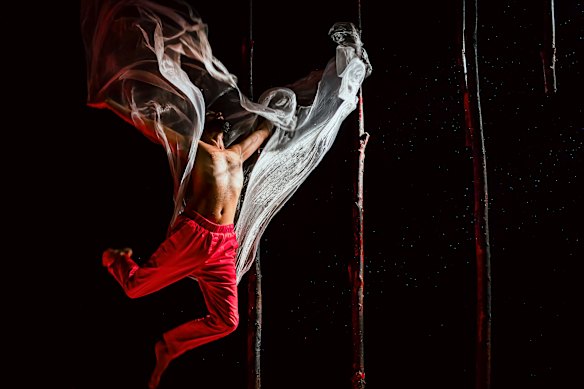 Aakash Odedra performs in Songs of the Bulbul Angela Grabowska
For Songs of the Bulbul he has teamed up with choreographer Rani Khanam to make an hour-long solo from the Sufi myth of the caged nightingale or bulbul. The more the bird suffers, goes the story, the more beautiful its song.
The result is a tour de force: a moody, mettled drama that slips between plain statement and lyric suggestion. It is yearning and inward but with plenty of athletic excitement in the combination of rapid Kathak footwork and the loosened spinning of the Sufi dervishes.
In the beginning, Odedra ranges freely across the stage, buoyant and smiling, skirts flaring into blurred halos, bare feet snapping lightly at the floor. Birdlike figurations, with quicksilver movements of head and hand, connect cleanly with happy leaps and turns.
Related Article
The pathways of movement become narrower as the cage descends. The bird strains against captivity, projecting anguish: arms reach upward, palms open, sometimes pleading, sometimes offering. The light begins to dwindle and flicker as Odedra collapses, clutching at the red confetti that swirls around him.
The soundtrack, by composer Rushil Ranjan, is epic: thunderous percussion, tinkling music-box phrases, blanketing strings and soaring arias. Select UK performances reportedly featured a full live arrangement. One can only imagine the immersive force of such an event.
Here, pre-recorded, the intensity is still formidable. Indeed, sometimes, with the strings building and building and building, it all becomes too much, too busy, too alarming.
At the show’s climax the bird has its eyes removed. This moment is staged with clarity and admirable restraint. It’s the quietest passage, wisely, and therefore the most concentrated. The tragedy lands with the barest ornament, its awful resonance unimpeded.
Coming down from that is hard. The closing scenes, for me, fall into something a little too gimmicky: standing before a bank of electric candles, Odedra gestures here and there, lighting the lights and dousing them as if by the magic of the suffering he has just passed through.
Still, in Melbourne right now there are few chances to see an international touring dance artist at all, let alone one of this calibre, moving across traditions with such total imaginative surrender and generosity of feeling.
Reviewed by Andrew Fuhrmann
The Booklist is a weekly newsletter for book lovers from Jason Steger. Get it delivered every Friday.
SaveYou have reached your maximum number of saved items.
Remove items from your saved list to add more.
 Andrew Fuhrmann is a dance critic for The Age.From our partners