In May 1983, a secluded stretch of road near Springfield, Oregon, became the scene of one of America's most chilling murder cases.
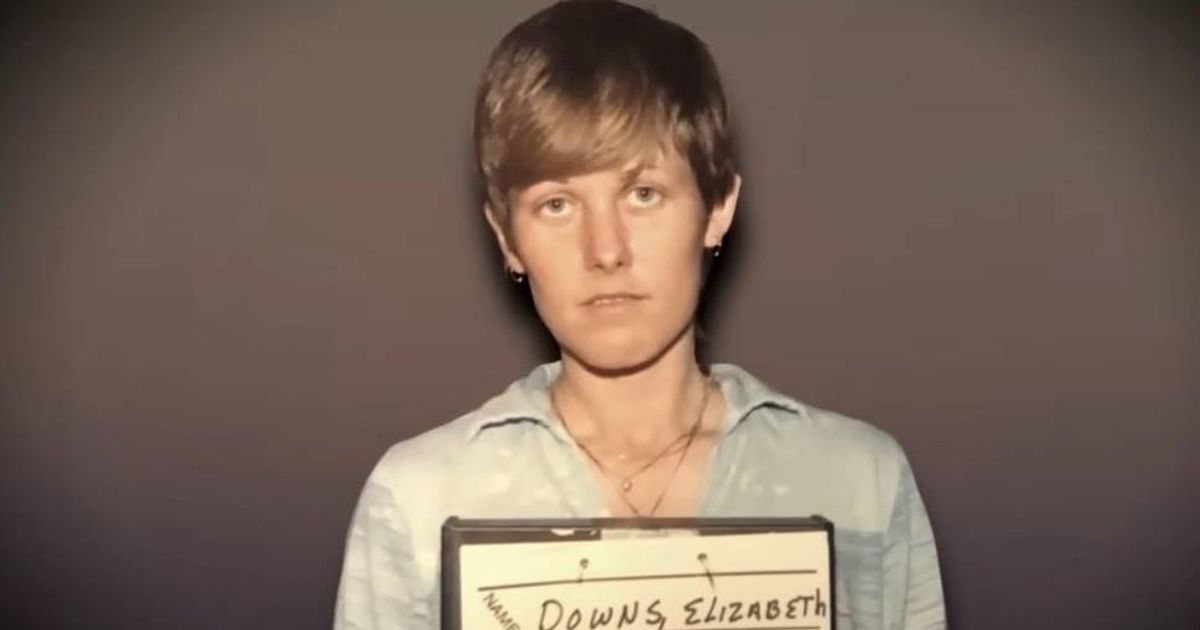
Diane Downs, a 27-year-old divorced postal worker, arrived at McKenzie-Willamette Hospital late at night with a gunshot wound to her left arm and her three young children bleeding in the back of her car.
Her seven-year-old daughter Cheryl was pronounced dead shortly after arrival. Her other children - Christie, eight, and Danny, three - were critically injured.
Downs told police the family had been attacked by a "bushy-haired stranger" who flagged her down on a rural road and opened fire. But from the moment she entered the hospital, doubts began to emerge.
Medical staff later testified that Downs appeared calm and composed, a reaction that struck them as unusual given the circumstances. Investigators would later say her behaviour did not match that of a mother who had just witnessed the shooting of her children, reports the Mirror.
According to Downs, she had been driving home late in the evening when she noticed a man standing in the road. She claimed he demanded her car keys, shot her during a struggle, then fired at her children before she escaped and drove to the hospital.
Police soon discovered evidence that contradicted her account. Forensic examination revealed no blood splatter on the driver's side of the vehicle where it would be expected if the shooting had unfolded as she described.
Forensic examination revealed no gunshot residue that supported her account of what happened.
Her narrative was further contradicted by eyewitnesses, with one driver subsequently informing police that Downs' vehicle was moving at walking pace en route to the hospital, rather than at the urgent speed one would expect from someone escaping an armed attacker.
It also came to light that Downs had failed to declare ownership of a. 22-calibre handgun, despite records showing she had purchased one whilst married.
Whilst the firearm was never found, police subsequently discovered unfired ammunition bearing markings that matched the murder weapon.
"There were a number of things which didn't make sense, even that first night. Sightseeing when it's pitch black out? And why are the kids fatally or near-fatally wounded, and she, being right-handed, is shot in the left arm? I mean, think about it. She's the biggest threat to him, not three sleeping children," SAID Detective Doug Welch.
As investigators delved further into the case, they discovered a possible motive. Downs was romantically involved with a married man who had no desire for children.
The prosecution contended she regarded her children as barriers to the existence she desired and that the shootings represented a deliberate effort to eliminate them.
At trial, a psychiatrist summoned by the prosecution provided some of the most disturbing evidence.
He informed the court: "She shows no remorse. She regards her children with no empathy and as objects or possessions. Any feelings she has for them are superficial and only extend to how they are part of her and her life."
However, the most damning testimony emerged from within Downs' own family.
Following months of recuperation, surviving daughter Christie recovered her ability to communicate and subsequently gave evidence that her mother had pulled over at the roadside and shot all three children, before shooting herself to create the impression they had been victims of an attack.
Her account completely undermined Downs' version of events and left jurors visibly distressed. On June 17, 1984, Downs was convicted of one murder charge, two attempted murder charges, and two criminal assault charges.
She received a life sentence plus 50 years, with the judge specifying that most terms should run consecutively, making it abundantly clear he anticipated she would never walk free.
The trial captivated America and subsequently led to the book 'Small Sacrifices' and a TV film featuring Farrah Fawcett. Nevertheless, even whilst incarcerated, Downs remained in the public eye.
On July 11, 1987, she broke out of the Oregon Women's Correctional Center by scaling an 18-foot razor-wire fence.
She evaded capture for 10 days, sparking a nationwide search spanning several states before being apprehended and sent back to prison. She was handed an extra sentence for the breakout.
Downs' two remaining children, Christie and Danny, were subsequently adopted by the chief prosecutor in the case and his wife, providing a semblance of stability following years of distress.







Comments (0)