
Remember me

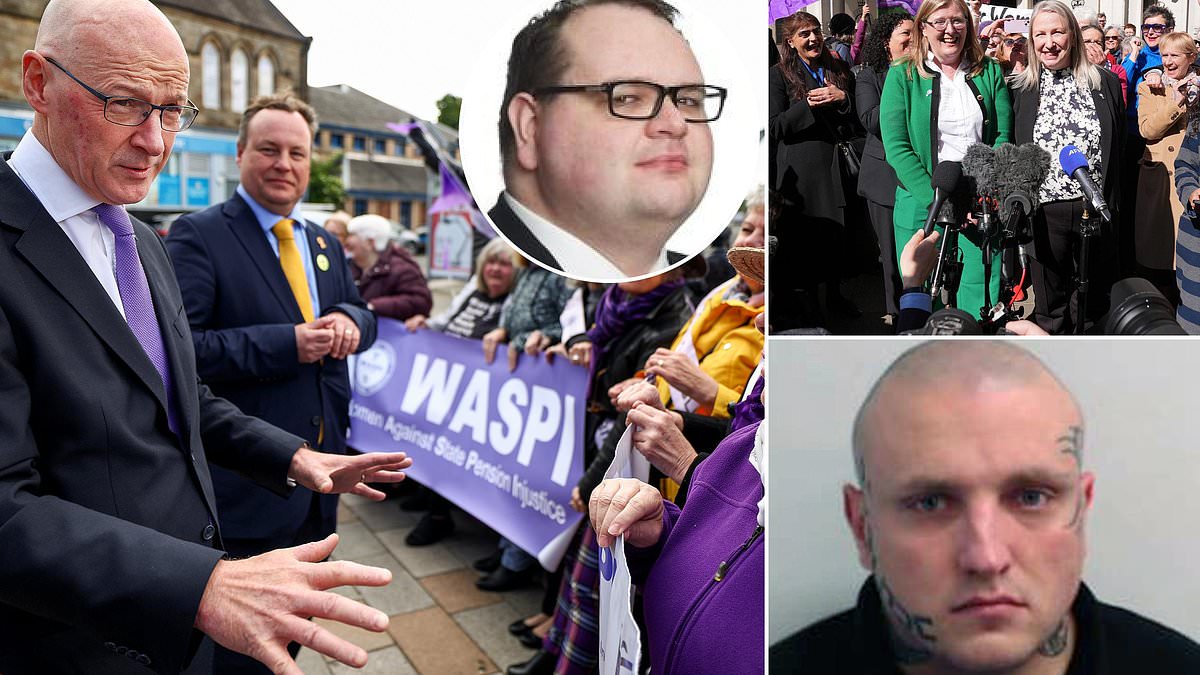
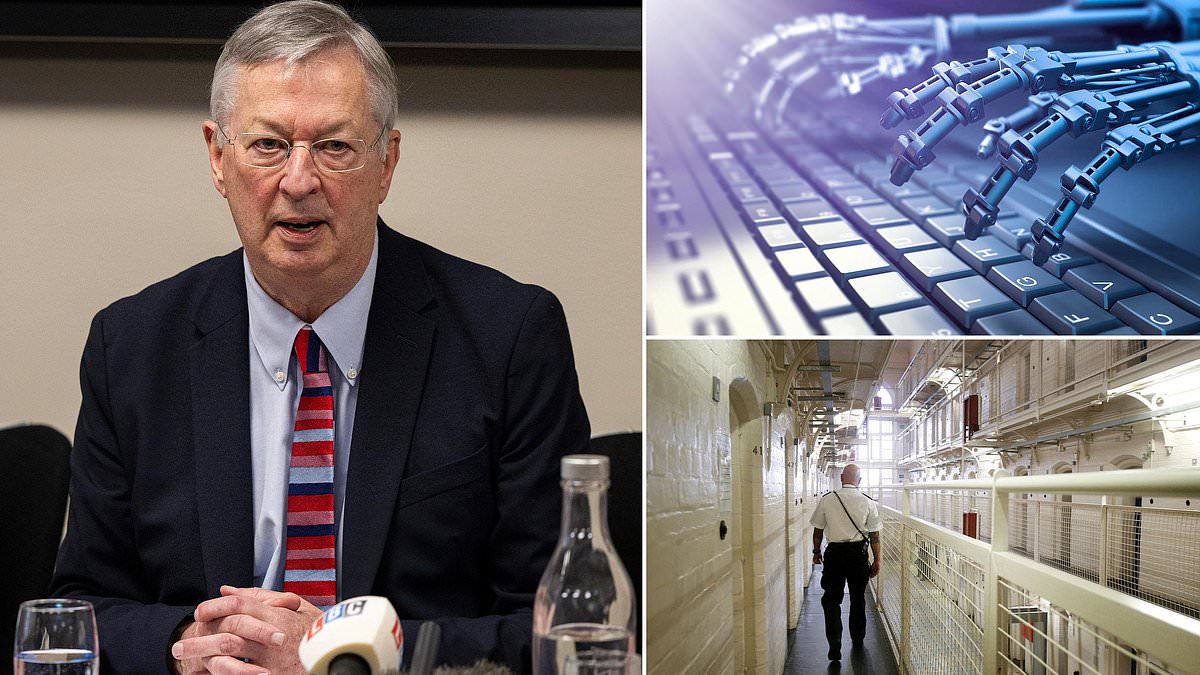
At last, John Swinney has figured out what a woman is. The First Minister convened a meeting of Waspi women on Thursday and reiterated his support for their cause.
Afterwards, he said: ‘It’s shameful that Labour promised them the compensation they’re due, but abandoned them in government.
‘The SNP is proud to stand with Waspi women and we will keep pressing for the justice they deserve.’
Proud to stand with them, especially when there’s a photographer in the room. This is Swinney’s definition of a woman: an adult human photo-op.
The SNP doesn’t need to stand with the Waspi women. They’re the government. If they believe Scottish women have been unfairly treated over the pension age equalisation, SNP ministers can hand over the money tomorrow.
Yes, it’s a reserved policy area, but the Westminster government has washed its hands of the matter. And given the Scottish Government’s strong feelings, and its eagerness to involve itself in other reserved subjects (the Union, foreign affairs, international development), surely it would be only too happy to compensate these women.
Here is another opportunity to demonstrate that SNP-run Scotland is more progressive, egalitarian and decent than Labour-run England.
We went through much the same cynical game with the two-child benefit cap. The Nationalists huffed and puffed about the injustice but when called to put their hands in their pockets to correct that injustice, it was suddenly nothing to do with them.

First Minister John Swinney has met with Waspi campaigners
They were happy to exploit the issue for political gain, but fix the problem? What do you think Holyrood is, some kind of parliament?
The reason for the Waspi meeting was to produce images of the First Minister surrounded by nice, middle-class ladies in the run-up to an election – listening, smiling, nodding solemnly.
This is the image Swinney’s spin doctors are trying to cultivate, that of decent, honest John sticking up for women he believes have been wronged.
His conversion to the feminist cause was not among my predictions for 2026.
I can just picture him now, rocking up to a Reclaim the Night march, Julie Bindel on one arm, a copy of The Lesbian Revolution under the other, and a T-shirt emblazoned with ‘Perthshire Says No To Patriarchy’.
Alas, Swinney’s allyship has a blindspot roughly in the shape of HMP Stirling, Scotland’s national prison for women. The women held there could use a roundtable with the First Minister, and not just a stunt for the TV cameras but a candid meeting in which he answers their questions. One question, I suspect, would be: why do you believe we should be locked up alongside male prisoners?
That, after all, is the Scottish Government’s position: that the Scottish Prison Service may, on a case-by-case basis, decide that a male prisoner who identifies as transgender be accommodated in the female estate.
On paper this is an improvement on the previous arrangements, in which convicts were typically assigned to a prison that corresponded to their ‘gender identity’.
That was before the public learned of the name Isla Bryson and Nicola Sturgeon chose to make affirmation of Bryson’s gender the hill on which her political career would die.
In fact, though, the new policy is pernicious in its own way, rendering the decision of where to assign prisoners who consider themselves transgender subjective and even capricious.
Nor does it get around the fundamental point: prisons should be segregated by sex for reasons of safety, dignity, offender management and other obvious considerations.

Susan Smith and Marion Calder, co-directors of For Women Scotland, celebrated outside the Supreme Court in London after the landmark ruling on sex in April 2025
It is on this basis that the feminist collective For Women Scotland, which secured the landmark Supreme Court judgment on the meaning of ‘sex’ in the Equality Act, is in court once more challenging the lawfulness of Holyrood’s prisons policy.
The Scottish Government has told the Court of Session that restricting women’s prisons to women only ‘would violate the rights of some prisoners’.
Ministers’ counsel raised the spectre of trans-identifying men taking their own lives if forced to live in the men’s estate, saying ‘the risk of suicide of one prisoner, let alone a number’ was ‘wholly unacceptable’.
I happen to agree. Males who wish to be seen as female would undoubtedly be vulnerable in a men’s prison and it is entirely plausible that some might end their lives as a result.
The state should go to all reasonable lengths to avert such a situation.
However, placing these men in the female estate is not reasonable. It involves introducing risk for women prisoners in order to mitigate it for a very small number of their male counterparts. It makes the dignity afforded to women conditional on the dignity of some men. It says that in order to make men who identify as women less vulnerable, women – actual women – must be made more vulnerable.
That is plainly unacceptable as a balancing of rights calculation, but it is also objectionable because female prisoners are among the most vulnerable people in the country.
Four in every five women in prison in Scotland have previously suffered a significant head injury.
That’s according to a 2021 study by researchers at Glasgow University, who found that almost all (89 per cent) received their injuries through domestic abuse. Almost half have been sexually abused as adults and a majority were preyed upon as children.
These women have lived lives with scant safety and dignity and now what little they are afforded in custody is compromised in the name of compassion for others. What about compassion for them? What about their rights? What about the risk of them taking their own lives?

Transgender double rapist Adam Graham, who is now Isla Bryson, was initially jailed in women's prison but was then moved to a men's facility
There are currently fewer than 20 transgender-identifying prisoners incarcerated in Scotland, but as that number rises so too will the percentage accommodated in the female estate.
That will bring added risk, and opportunities for ill-motivated men to victimise women in an enclosed setting.
If the Scottish Government was in the business of guaranteeing the rights of all prisoners, it would be investing in a prison exclusively for male offenders who identify as transgender, an institution where they can serve their sentences in safety and dignity.
Their rights would be met and so would those of women prisoners, who would no longer have to be incarcerated alongside men.
The Scottish Government isn’t in that business. It has become a vehicle for pursuing the ideological pet projects of graduate activist progressives within the civil service, the spad racket, the government-funded ‘non-governmental’ organisations, and those expensive hubs of miseducation, the universities.
The object isn’t even the advance of transgender rights. That is merely the cause du jour and will be jettisoned for another whenever the mark of status moves elsewhere. We are ruled by the intellectual fashions of intellectually shallow elites.
Ours is a midwitocracy: government by dilettantes. At the apex sits chief midwit John Swinney.
Even he can’t believe that men should be in women’s jails, but he chooses to be a prisoner of the younger ministers and advisers around him rather than stamp his own principles on his government, and for good reason: he has none.