
Remember me





The Albanese Government has introduced a 10 per cent tariff on steel ceiling frames imported from China after an investigation found imports were threatening local manufacturers.
The Anti-Dumping Commission oversees products being 'dumped' into the Australian market, meaning they're cheaper to import than buy domestically.
The move follows China's punitive trade sanctions against Australian products such as beef, barley and wine between 2020 and 2024 following calls for an inquiry into the origins of the Covid pandemic.
The Australian Steel Institute late last year claimed cheap imports, particularly from China, had reached 700,000 tonnes per year and were threatening to destroy domestic steel manufacturers.
It applied for emergency trade protections and asked for a 50 per cent tariff on imports of steel over 450,000 tonnes.
The commission then set its sights on steel ceiling frames with a height of up to 45mm, a width up to 60mm and a base metal thickness of up to 0.65mm.
A spokesperson for Industry Minister Tim Ayres on Monday said the government 'supports free and fair trade' because the country's 'prosperity is linked to open and rules-based trade'.
'When trade is not fair, the government will stand up for Australian farmers, manufacturers and workers,' they said. 'This includes applying measures at the border to address unfair imports.

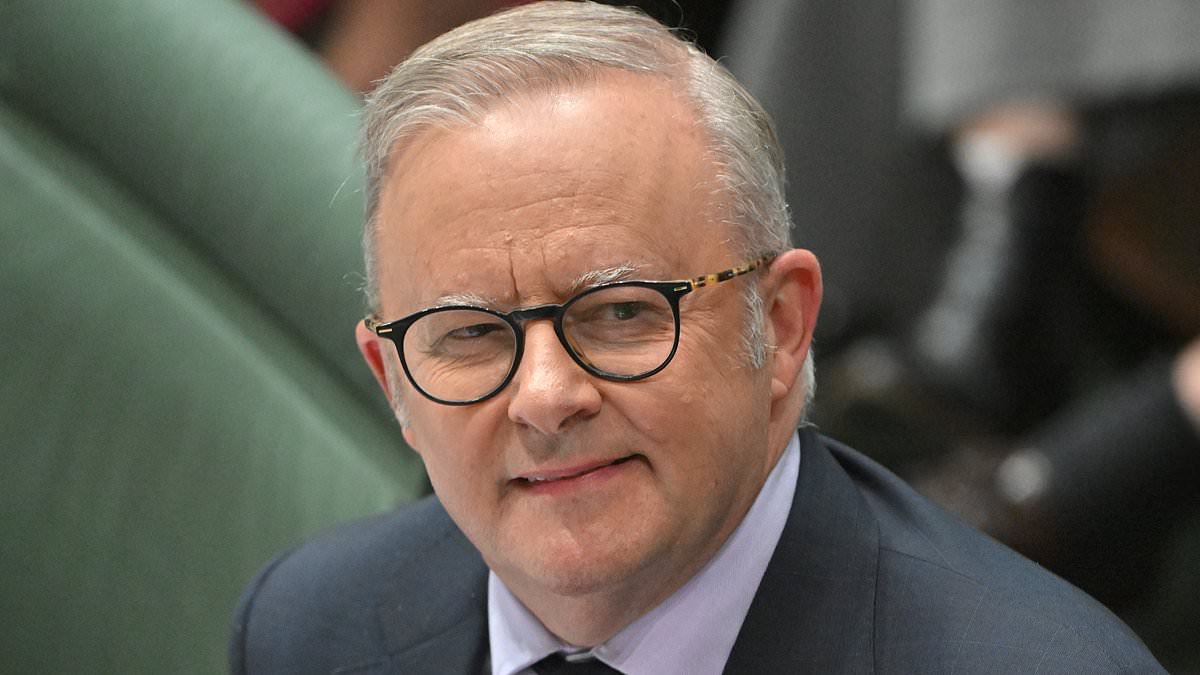
The Albanese Government has introduced a 10 per cent tariff on steel ceiling frames imported from China (pictured is Prime Minister Anthony Albanese)

The Australian Steel Institute asked for government intervention after struggling to keep up with competitive imported steel prices

Chinese steel ceiling frames (pictured) are subject to the 10 per cent import tariff
'Decisions about whether to impose anti-dumping measures are based on industry applications to the Anti-Dumping Commission.'
The move, however, could be seen as slap in the face to Chinese officials who are already being subject to a series of temporary steel tariffs from Australia, ranging from 35 to 113 per cent.
Fan Xi, an official at Beijing's Trade Remedy and Investigation Bureau, last month warned the tariffs could have a negative effect on Australia's iron ore exports.
'We call for avoiding the misuse of trade remedy measures and ensuring the legitimate rights and interests of Chinese exporting enterprises are safeguarded in a fair, just and non-discriminatory manner,' he wrote in response to a complaint by complaint by BlueScope Steel submitted to ASI.
Fan noted one of the other specific Chinese products subject to tariffs by Australia - hot-rolled steel coil - was often made using Australian iron.
'We urge the committee to respect facts and rules, correct its improper approaches, refrain from negatively impacting the stable and healthy co-operation between the industries of both countries and earnestly adhere to multilateral trade rules,' Fan wrote.
The Albanese Government has also ordered the Productivity Commission to investigate allegations of steel dumping.
It is set to publish its final report in November.

Chinese authorities have repeatedly called for Australia to be 'fair' in its steel trade rules, hinting Australia's own iron ore industry could suffer (pictured is Chinese President Xi Jinping)
Daily Mail has contacted Chinese Ambassador to Australia Xiao Qian for comment.
Late last month, Xiao urged Australian officials to remember its former trade agreements for steel were 'mutually beneficial'.
'We are both members of the World Trade Organisation,' he told reporters.
'Should we conduct any trade remedy practice, it's important to follow exactly the WTO rules and should be in according with the spirit of the China-Australia agreement.
'We are concerned about excessive use of trade remedies.'
Just last month, China announced all beef imports exceeding new quota limits would be subject to a 55 per cent tariff.
Officials said the move was to protect domestic Chinese beef producers and was not a targeted attack on one country though it massively affected its biggest importers - including Australia, Brazil and the US.
China is Australia's second-largest beef export market.
The government's explanation for the tariff'A tariff is a tax on goods that come into or leave Australia.
'The Australian Parliament might impose a tariff on certain types of goods to raise money or to protect an Australian industry.'
In the context of steel ceiling frames, Australian manufacturers were losing business due to cheap imports from China, threatening the industry.
So, the government introduced an additional 10 per cent tax to help level prices.
Source: Parliamentary Education Office
Comments (0)