Don't Miss the 'Ring of Fire' Solar Eclipse Today!
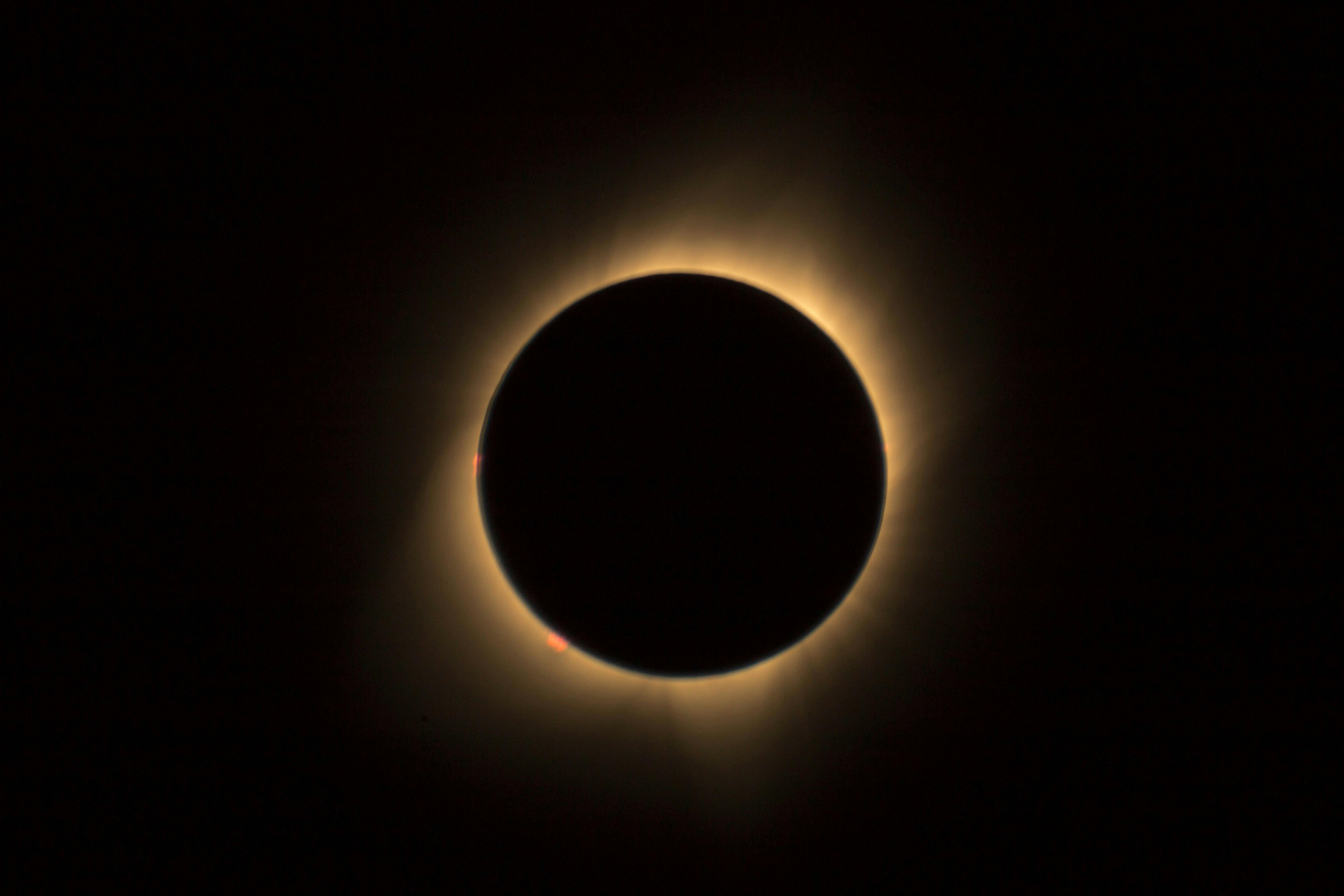
Stargazers and astronomy enthusiasts are preparing for a spectacular show today, 17 February, as the first solar eclipse of 2026 graces the skies.Known as an annular solar eclipse, or the 'ring of fire', this phenomenon occurs when the moon passes between Earth and the sun. However, unlike a total eclipse where the sun is completely blocked, the moon is currently too far from Earth to cover the solar disc entirely. The result is a dazzling ring of sunlight glowing around the moon's dark silhouette. While the most dramatic views are reserved for those in remote Antarctica, viewers in parts of the southern hemisphere will catch a glimpse of a partial eclipse.The path of annularity—the specific corridor where the full 'ring of fire' is visible—is incredibly narrow and remote this year. It stretches roughly 2,661 miles (4,282 kilometres) long and 383 miles (616 kilometres) wide. Unfortunately for most of the world's population, this path falls almost entirely over the icy expanse of Antarctica. According to experts, only about 2 per cent of the global population will have the opportunity to witness this event first-hand. For the dedicated scientists and few travellers at Concordia Station in Antarctica, the event promises to be a stunning display of orbital mechanics.When to Watch the PhenomenonFor those tracking the event globally or tuning in via livestreams, the timing is precise. The eclipse will begin its partial phase at 09:56 GMT (4:56 a.m. EST). The main event, where the 'ring of fire' is at its maximum, will occur at 12:12 GMT (7:12 a.m. EST). The spectacle will conclude when the partial eclipse ends at 14:27 GMT (9:27 a.m. EST). At the point of greatest eclipse, the ring effect will last for up to 2 minutes and 20 seconds.While the full ring is limited to the Antarctic region, a partial solar eclipse will be visible to observers in southern South America and southern Africa. In Argentina and Chile, early risers will see the moon take a 'bite' out of the sun starting around 7:00 a.m. local time. Meanwhile, sky-gazers across southern Africa can expect to see the partial eclipse in the early to mid-afternoon.Safety Measures and Eye ProtectionIt cannot be stressed enough that looking directly at the sun is dangerous, even during an eclipse. Dr C. Alex Young from NASA's Goddard Space Flight Center warns that unlike a total solar eclipse, an annular eclipse never completely covers the sun's bright face. Therefore, there is no safe time to look at the eclipse with the naked eye. Regular sunglasses, even very dark ones, offer no protection against permanent eye damage.To view the event safely, observers must use certified solar eclipse glasses or handheld solar viewers that meet international safety standards. For those without access to these specialised glasses, a simple pinhole projector can be made at home. By punching a small hole in a piece of cardboard and holding it with your back to the sun, you can project the image of the crescent or ring sun onto the ground or a wall. This indirect viewing method ensures you can experience the event without risking your vision.The Science Behind the RingThis celestial event is all a matter of geometry. An annular eclipse occurs because the moon's orbit around Earth is elliptical, not a perfect circle. When the moon is near its apogee—the point in its orbit farthest from Earth—it appears smaller in the sky. When this aligns with the sun, the moon cannot block the entire star, leaving the brilliant rim of light that gives the 'ring of fire' its name.
During the eclipse, those in the path of annularity may notice strange phenomena on the ground. As coverage increases to about 80 per cent, shadows will lose their fuzzy edges and become sharp. If you look at the shadows cast by tree leaves, you might see hundreds of tiny crescent or ring shapes projected onto the floor, mimicking the shape of the sun above.Future Celestial Events to Mark in Your CalendarIf you are in the UK, Europe, or North America and feeling left out of today's event, there is good news on the horizon. Eclipses often come in pairs. Following today's solar eclipse, a total lunar eclipse will occur in just two weeks on 3 March 2026. This will turn the moon a deep blood-red colour and will be visible across North America, Australia, and East Asia.More significantly for those in Europe, a major total solar eclipse is scheduled for 12 August 2026. This highly anticipated event will be visible from parts of Greenland, Iceland, and northern Spain. A partial eclipse will be seen across much broader regions of Europe, including the UK, and Africa. It promises to be one of the most watched astronomical events of the decade for the continent.










Comments (0)