
Remember me
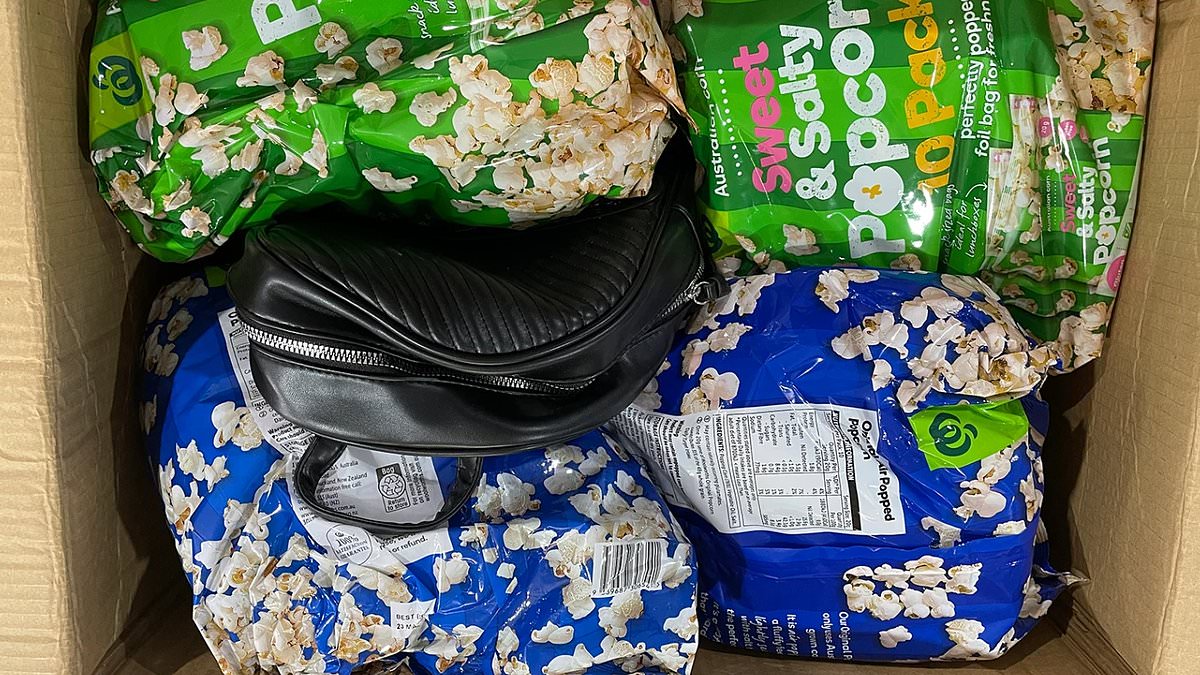









A Sydney man who tried to post native lizards, dragons and other reptiles out of Australia in bags of popcorn and biscuit tins has been sentenced to eight years in jail.
The eight-year term handed down on Friday was a record for wildlife smuggling, federal environment officials said on Tuesday.
A district court in Sydney gave the man, 61-year-old Neil Simpson, a non-parole period of five years and four months.
Investigators recovered 101 Australian reptiles from seized parcels destined for Hong Kong, South Korea, Sri Lanka and Romania, the officials said in a statement.
Australian wildlife is extremely sought after overseas with reptiles fetching high prices.
The animals were posted in 15 packages between 2018 and 2023.
Those animals included shingleback lizards, western blue-tongue lizards, centralian blue-tongue lizards, bearded dragons, southern Pygmy spiny-tailed skinks, eastern Pilbara spiny-tailed skinks, desert skinks, narrow-banded sand swimmers, and major skinks.
'Lizards, skinks and dragons were secured in calico bags. These bags were concealed in bags of popcorn, biscuit tins and a women's handbag and placed inside cardboard boxes,' the statement said.

Neil Simpson, 61, was sentenced to eight years behind bars after attempting to smuggle Australian reptiles in popcorn bags (above) and biscuit tins

Among the lizards were several native skinks (one above)

Lizards were found hidden amongst bags of Woolworths-branded popcorn and Christmas-themed tins of biscuits (above)
Photos of recovered boxes showed tiny lizards hidden amongst bags of Woolworths-branded popcorn and Christmas-themed tins of biscuits.
Several reptiles were stuffed into small bags.
The smuggler had attempted to get others to post the animals on his behalf but was identified by government investigators and the New South Wales police, it added.
Three other people were convicted for taking part in the crime.
The New South Wales government's environment department states that 'the illegal wildlife trade is not a victimless crime'.
It described it as harming conservation and stripping the state 'and Australia of its unique biodiversity'.
'Our native reptiles are not commodities to be trafficked for profit. They belong in the wild, not in overseas black markets,' it said.
A spokesperson for the federal Department of Climate Change, Energy, the Environment and Water said the harsh sentence should serve as a warning to smugglers, 'if you do the crime, you will do the time'.

Authorities hoped the harsh sentenced would deter other smugglers (pictured is a few of the tins used to smuggle the lizards)

Authorities recovered 101 reptiles (two above) from the parcels
'The illegal international trade in Australia's precious wildlife is cruel and has a devastating impact on our biodiversity,' they said.
'The heartless criminals who attempt to exploit the popularity of our native wildlife in overseas markets for quick profits should take note.
'We're working closely with our partners to stop parcels at the border using advanced scanning technologies that detect animals through any concealment method.
'If you attempt to illegally export our native wildlife, your parcel will be intercepted, and our investigators will track you down.'
Those convicted of exporting protected wildlife without a permit can face a maximum of 10 years behind bars.
Individuals can also face fines of up to $330,000, which jumps to $1.65million for corporations.