
Remember me



Australia should not be in the business of helping Islamic State fellow travellers find their way back to Australian streets.
That is the core of what Prime Minister Anthony Albanese said this week when asked about the so-called ISIS brides and their children attempting to leave camps in northern Syria.
Albo bluntly made it clear that his government will do nothing to assist their return, and the mothers 'made this decision' and 'put their children in this position'.
He's exactly right, and the politics of inhibiting their return is obvious and simple. Albo is undoubtedly reflecting the feelings of the majority of Australians, especially in the wake of the Bondi terrorist massacre perpetrated under the banner of ISIS.
However, the how-to policy guide Albo is drawing on, simply saying 'we won't help', isn't quite the same as promising 'they won't come'. Mainstream Australians would prefer that the latter assurance was given.
At issue is whether it can be done, legally and morally. The brides and their children are still Australian citizens, even if the women made the choices they did and their kids have never even been to Australia.

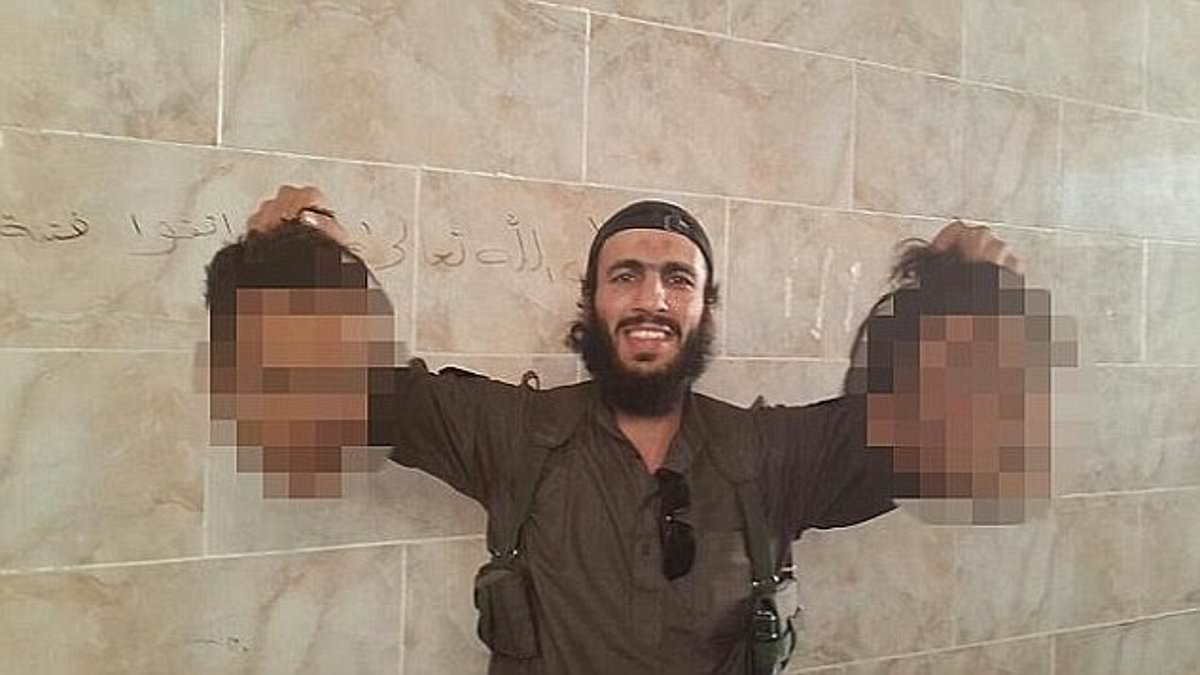
One of the most infamous photos from the ISIS conflict - Australian terrorist Mohammed Elomar wields beheaded heads... he was killed in an airstrike in 2015

Albo has said the government will not help so-called ISIS brides and their children return to Australia

'But he how-to policy guide Albo is drawing on, simply saying 'we won't help', isn't quite the same as promising 'they won't come'. Mainstream Australians would prefer that the latter assurance was given,' writes Peter van Onselen
If someone is an Australian citizen, the Commonwealth's power to permanently bar their entry is constrained. That's why Home Affairs has reached for a rarely used tool: temporary exclusion orders, rather than a blanket ban.
Reuters reports that these orders can exclude certain citizens aged 14 and above for up to two years on security advice. The obvious follow-up question is how 'temporary' is temporary if governments keep renewing the exclusion?
Given the circumstances and the timing right now, if the exclusions can be legally renewed, I say do it. Because the alternative is sleepwalking into a situation where people who chose a terrorist state, who lived under its rules, and who were part of its social ecosystem, can land at an Australian airport and dare authorities to deal with them after the fact.
We aren't talking about naive backpackers who made a bad romantic choice. We are talking about adults (by and large) who left a safe, wealthy, liberal democracy and travelled to live in a territory controlled by an organisation that executed, enslaved, raped, beheaded and broadcast its propaganda as recruitment theatre.
They opted into that, almost universally with eyes wide open to the brutality being committed, because they agreed with the radical cause. They only want out now because the project collapsed. There can be no guarantee that they are converts who have seen the error of their extremist ways.
There is a tendency, pushed by activists and echoed by parts of the political left, to reframe this as a humanitarian story about women and children. It's emotionally potent, but it's also deliberately evasive.
My former colleague on The Project, Hamish Macdonald, used that line of questioning when interviewing the PM, even claiming that Labor is going harder than the previous Coalition government did.
Macdonald invoked the Morrison government's 2019 repatriation of ISIS orphans, and pressed the argument that Australian children should therefore come home this time too.

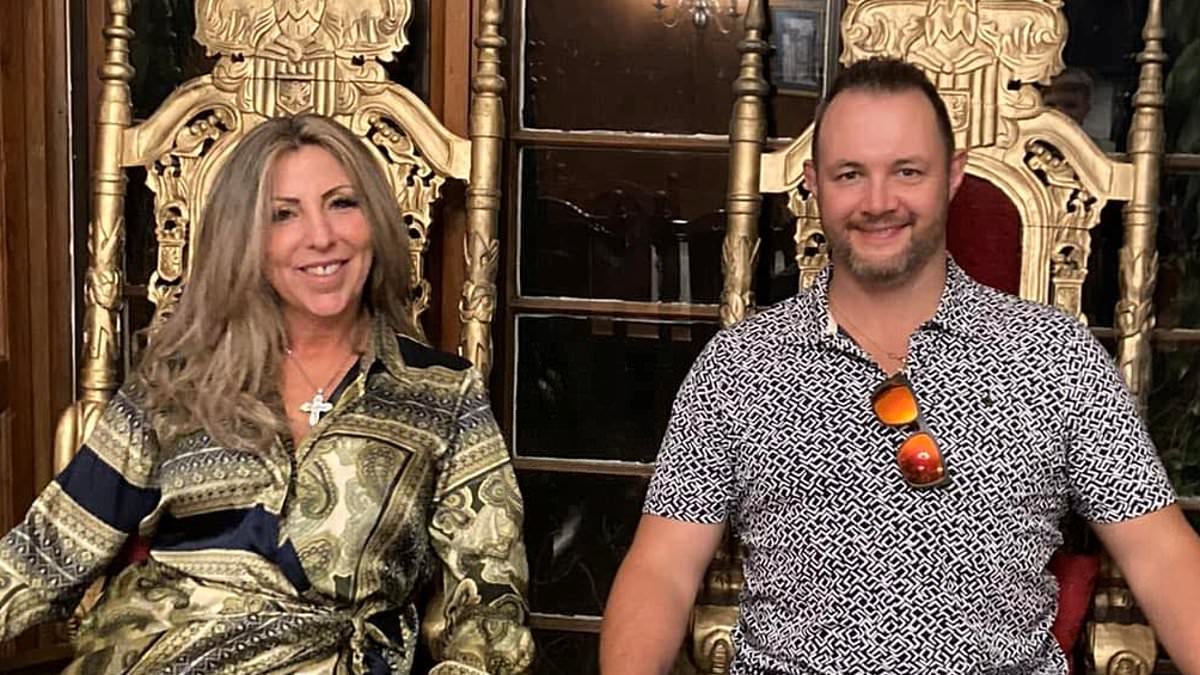
The ISIS brides were named on Friday. They included Aminah Zahab, whose son convinced her and other family members to go to Syria
Albo rightly slapped down the false equivalence with a pretty obvious retort: 'We can't bring the children back without their mothers'.
That is not heartlessness, it's realism. Further, they are not Australian kids in the ordinary sense. Many have never even been here. They were born into, or raised inside, a radicalised ISIS set-up.
The likelihood is that many are the children of ISIS fighters, men who joined a movement explicitly committed to mass murder. That doesn't make the children guilty, of course. But it does make the security and integration challenge categorically different from a normal child welfare case.
And Australia is allowed to weigh that reality up when deciding whether to build a government-run pathway to assist in their return.
Nor should anyone pretend that this debate exists in a vacuum. Australia has just been through the Bondi Beach terror massacre, which police have described as ISIS-inspired, and which involved homemade ISIS flags.
In that environment, when social cohesion is fragile and extremist content circulates faster than institutions can respond to, the last thing any responsible government should do is import foreseeable risk and then feign surprise if it metastasises.
Firstly, stop providing practical assistance. The PM's position, that the Commonwealth will not facilitate their return, should be treated as the minimum baseline.

'The PM's position, that the Commonwealth will not facilitate their return, should be treated as the minimum baseline'
There should be no government coordination whatsoever, no quiet repatriation lanes, no sympathetic bureaucratic workarounds that contradict public statements by the politicians in charge.
If they cannot travel without Australian help, that is the consequence of their own decisions.
Second, the government must use all the tools and loopholes already on the books. Temporary exclusion orders exist for a reason. They are designed for terrorism-related risks. If the legal threshold is met, use them and do it consistently, not selectively.
Next, be ruthless about prosecutions and post-return controls if anyone does make it back. The 'full force of the law' can't just be a slogan. Charges must be laid where the evidence permits. Control orders must be used as a workaround where convictions aren't possible. The government shouldn't indulge those who plead victimhood after years of complicity because the public has had enough.
The government has publicly emphasised the ideological threat and the security agencies' advice. Treat that advice as operational, not performative political theatre.
Labor also needs to tighten passport and document processes so that civil rights don't become a bureaucratic escort service. The public reporting around this episode has included the uncomfortable detail that some of these people appear to have had Australian travel documents issued already.
If the law compelled that then parliament should revisit the circumstances and re-write the laws. At the very least, passports should be cancelled wherever lawful, and any re-issuing of passports should be treated as an exceptional act requiring senior sign-off and security clearance, not a default administrative response that allows politicians to throw their arms in the air and claim it had nothing to do with them.

The first duty of the Commonwealth isn't to rescue a small number of citizens (including some who have never set foot here) from the consequences of their ideological choices. It is to protect the rest of us from the dangers those appalling choices can bring home
The hardest part, which needs to be looked at seriously, is how to legally cancel their citizenships altogether, to bring this matter to an end. There is a popular instinct that supports rendering them stateless if need be. Especially in the aftermath of Bondi. The problem is that the law doesn't currently give Canberra a clean, broad power to do that.
Under the current citizenship cessation framework described by Home Affairs, a court can order cessation only where the person is a dual national, aged 14 or over, convicted of serious offences, and the conduct shows repudiation of allegiance. That is not a tool for rendering single-passport Australians stateless, unfortunately. And Australia is constrained by international obligations aimed at preventing statelessness.
If our top legal scholars can find a way around that, it's time we look into it. The law has never been an exact science. There are plenty of states around the world, including liberal democracies, that are prepared to take on the supposedly unimpeachable idea of canceling the citizenships of sole nationals.
The first duty of the Commonwealth isn't to rescue a small number of citizens (including some who have never set foot here) from the consequences of their ideological choices. It is to protect the rest of us from the dangers those appalling choices can bring home.
Comments (0)