
Remember me


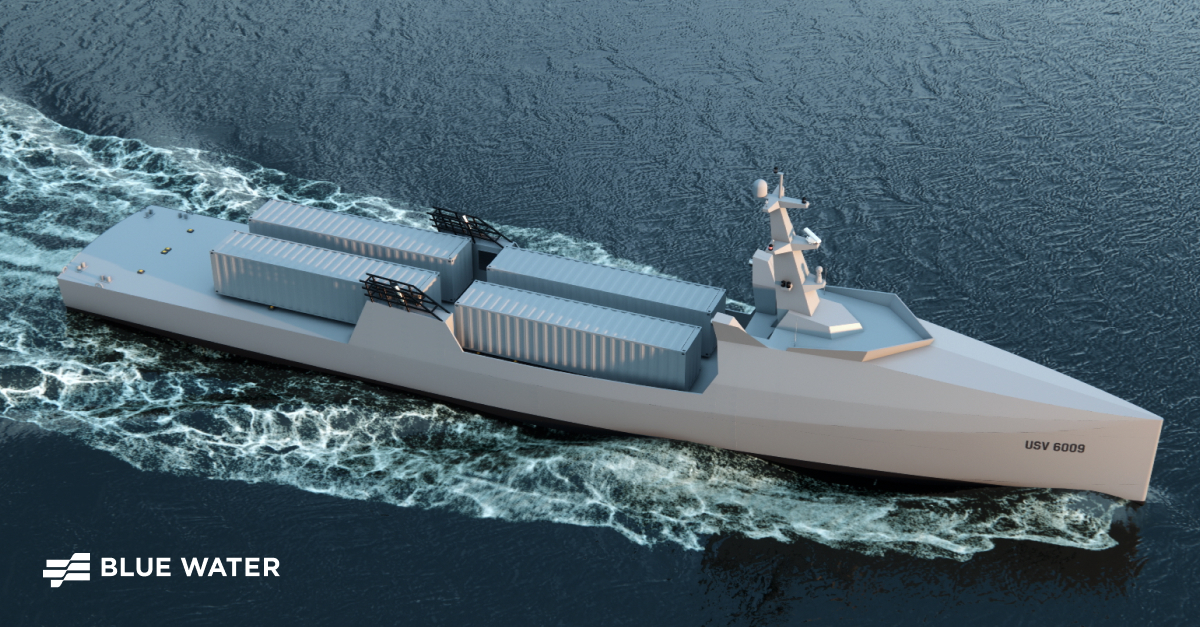







The U.S. Navy seems increasingly willing to pass over top defense contractors and hire private shipbuilders to build its warships.
At 505 feet long and 9,000 tons, powered by four GE Aerospace gas turbines, and carrying dozens of vertical launch system missiles, the Arleigh Burke-class guided missile destroyer is the mainstay of the U.S. Navy.
Two U.S. defense giants -- military shipbuilders General Dynamics and Huntington Ingalls -- build the Burke-class warships, which take anywhere from five to six years per hull. There are 98 such warships currently in service, under construction, or under contract. Each requires a crew of more than 280 officers and sailors.
Now, the Navy's newest warships are a lot smaller, can be built in under a year -- and require no sailors at all.
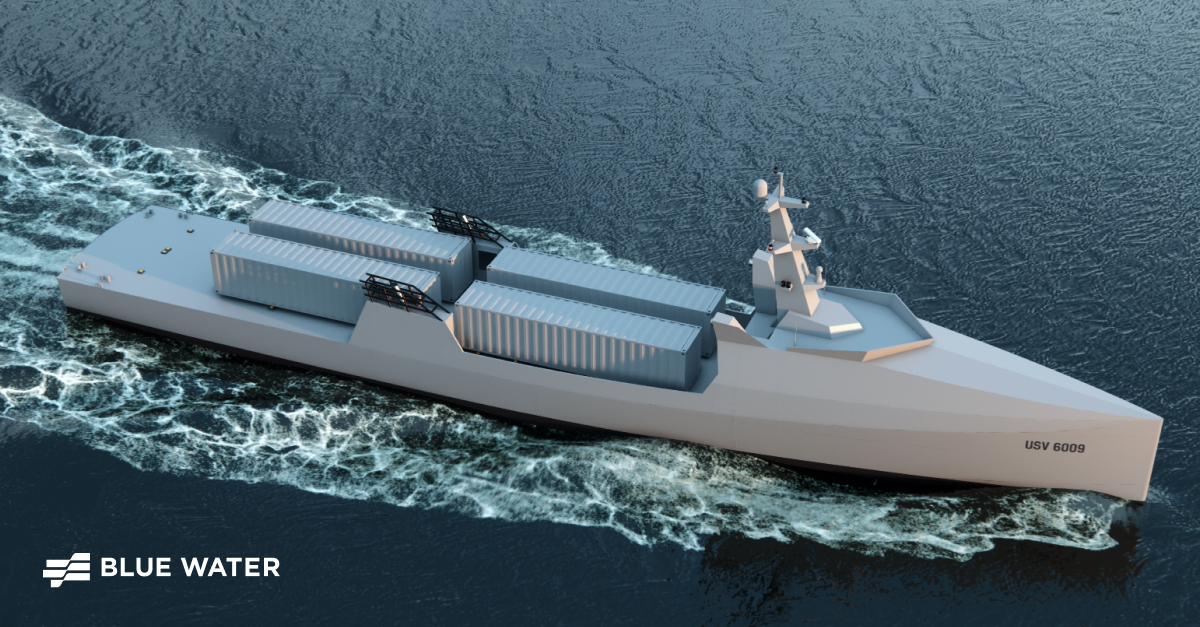
A rendering of a Liberty-class USV. Image source: Blue Water Autonomy.
Introducing the new and improved Liberty classPrivately owned Boston tech company Blue Water Autonomy announced last week that it will begin work on its first Liberty-class uncrewed surface vessel (USV) for the Navy in March and aims to have the ship in the water before the end of 2026.
Based upon a proven hull design, the Liberty will measure 190 feet stem to stern and be about one-ninth the size of an Arleigh Burke, displacing perhaps 1,200 tons. Each of these USVs could potentially carry anywhere from 16 to 32 missiles -- one-third as many as the Burke class warships. But on a ship one-ninth the size, that takes one-fifth as long to build. That's a lot of missiles in a tiny package.
A quicker way to build a navyThe U.S. Navy currently has a battle force of 295 vessels. And President Donald Trump has called for the Navy to grow to 355 ships, or even more.
Partnering with Conrad Industries in Louisiana, Blue Water says it can build anywhere from 10 to 20 Liberty-class USVs for the Navy annually, potentially enabling the president to reach his goal before the end of his second term in office. And with Conrad having a capacity of more than 30 vessels per year across its five Louisiana shipyards, that goal could be hit even sooner.
What it means for investorsThree years ago, looking at Navy plans to bolster its fighting strength with autonomous warships as outlined by the Congressional Research Service, I described how plans back then envisioned large military contractors -- General Dynamics, Huntington, Boeing, Leidos, and L3Harris -- taking the lead in this effort.
Bigger isn't always better, however. Too often, it's just slower and more expensive. Blue Water's announcement last week appears to provide further evidence that the Navy is increasingly willing to award work to smaller, privately owned shipbuilders to achieve its goals faster.
Now we just need to see if any of these smaller military shipbuilders will hold initial public offerings and give investors a chance for an ownership stake.