
Remember me









Social Security beneficiaries have seen some big changes over the last 13 months.
We're now 13 months into Donald Trump's second presidential term. To say that it's been a wild ride so far is an understatement.
The president's immigration and trade policies have been at the forefront. However, his administration has taken action on multiple other priorities. What has President Trump done about Social Security so far? Here are four things you should know.

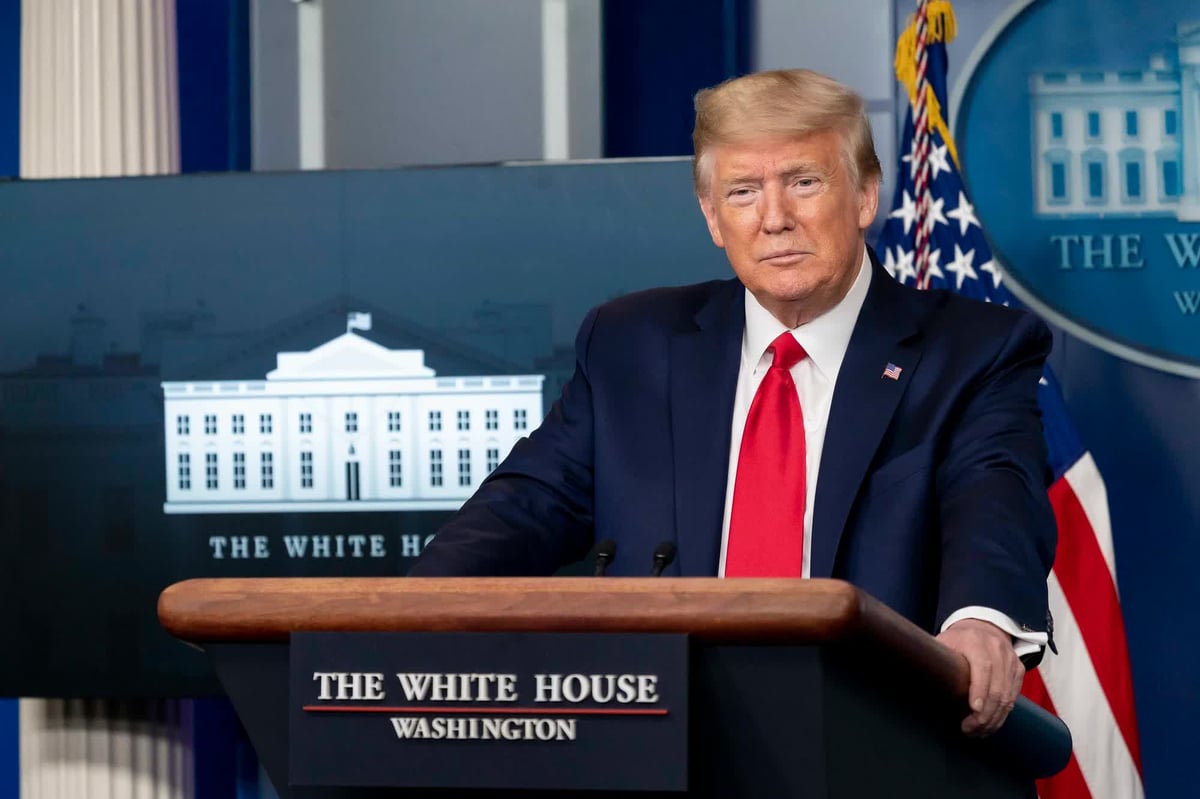
President Trump at White House podium. Official White House Photo by D. Myles Cullen.
1. The Social Security tax elimination that wasn'tDuring his 2024 presidential campaign, Trump pledged to eliminate federal taxes on Social Security retirement benefits. Following the passage of the One Big Beautiful Bill Act (OBBBA), the White House issued a press release stating that "no tax on Social Security is a reality." The Trump administration cited an analysis done by the Council of Economic Advisers that estimated that 88% of seniors who receive Social Security won't pay taxes on their benefits.
The press release ended with four words, "Promises made, promises kept." However, it isn't so simple.
Many Americans aged 65 and older will be eligible for an enhanced standard deduction under the OBBBA, $6,000 for individuals and $12,000 for couples. This enhanced deduction will reduce the federal taxes these seniors owe.
However, the Center on Budget and Policy Priorities estimated that nearly half of Social Security beneficiaries aged 65 and older who have paid federal taxes on their benefits in the past will still be subject to at least some taxes. It's important to keep in mind that around 64% of seniors already didn't pay federal taxes on Social Security before OBBBA was passed.
There's one other key detail to note: The enhanced standard deduction is only temporary. Under the OBBBA, the tax break for seniors expires in 2028.
2. Elimination of WEP and GPOAnother Social Security change has impacted many people during President Trump's second term, but wasn't initiated by Trump himself. Former President Joe Biden signed the Social Security Fairness Act on Jan. 5, 2025, just over two weeks before Trump returned to the White House. However, the task of implementing the legislation fell to the Trump administration.
The Social Security Fairness Act effectively repealed the Windfall Elimination Provision (WEP) and Government Pension Offset (GPO). The two provisions reduced or eliminated Social Security retirement benefits for over 2.8 million people, including firefighters, police officers, and teachers in many states, as well as federal employees covered by the Civil Service Retirement System.
Because the Social Security Fairness Act applied to benefits beginning in January 2024, many seniors received retroactive payments. Others received increases to their Social Security benefits in addition to their annual cost-of-living adjustment (COLA).
3. No more paper Social Security checksPresident Trump signed an executive order on March 25, 2025, to phase out paper checks for all federal payments, including Social Security retirement and disability benefits. The reason given for this move was that eliminating paper checks would reduce costs, fraud risks, and administrative inefficiencies.
The Social Security Administration (SSA) stopped issuing paper checks for benefit payments on Sept. 30, 2025. This change impacted nearly 400,000 people, less than 1% of the 70.6 million Social Security beneficiaries.
4. Significant staffing cutsThe Trump administration has made significant staffing cuts to SSA. The agency eliminated approximately 7,000 positions, roughly 12% of its total workforce. Jessica LaPointe, a union leader with the American Federation of Government Employees, called the move "the largest staffing cuts in the 90-year history of Social Security."
SSA stated in February 2025 that the reductions were needed because of a "bloated workforce and organizational structure." It said that the staffing cuts would focus significantly on "functions and employees who do not directly provide mission critical services."
Some field offices, particularly in rural areas, have been closed because there wasn't enough staff to support them. However, SSA's 2026 operating plan targets scheduling 100% of all requested appointments within 30 days, up from the current rate of 78.3%. Only time will tell whether the agency can do more with fewer staff.