
Remember me









Lots of places talk about work-life balance. Fewer actually deliver it at scale while keeping output high. Using OECD indicators as the guide, this list focuses on countries that combine relatively low average annual hours worked with strong “GDP per hour worked,” a common way to describe productivity per hour. The pattern behind the numbers is rarely hustle culture. It is usually training, trust, infrastructure, and rules that keep work from turning into friction.
You can feel that rhythm as a visitor. Afternoons stay lively, evenings start earlier, and people protect personal time with surprising seriousness. A practical travel tip: check local opening calendars and Sunday norms before you arrive, because “rest day” can be a real thing, not a suggestion.
1. Netherlands
Image Credit: Shutterstock.
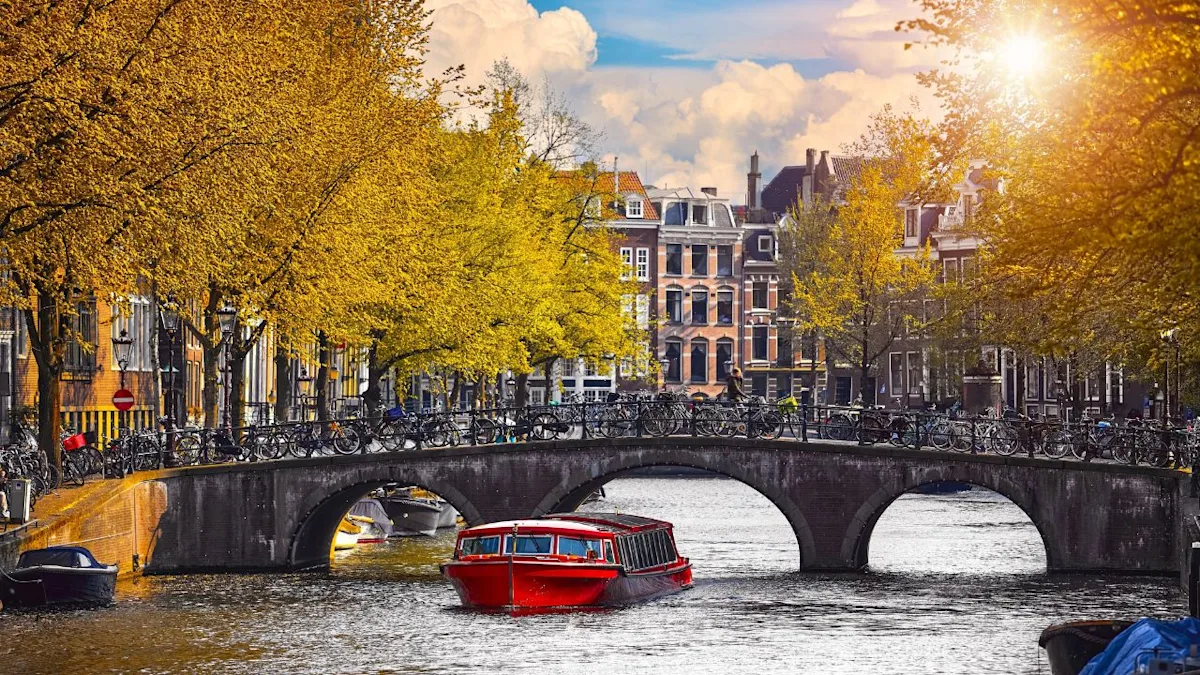
The Netherlands has treated part-time work as normal for years, especially among parents and caregivers, and that cultural acceptance changes how the entire week is paced. Work tends to be organized around planning and clarity rather than long hours, and the country regularly shows up in OECD comparisons as both relatively low in annual hours and strong in productivity per hour. Daily logistics help too: reliable trains, compact cities, and a bike-first mindset mean less time lost to commuting chaos. When a system wastes fewer hours, people do not need marathon days to stay on top of life.
For travel, that efficiency feels like extra daylight you can actually use. Amsterdam is essential, but Rotterdam’s modern skyline and waterfront energy give you a different angle, and Utrecht delivers canal charm with a calmer pulse. Biking is often the fastest way across town, so rent one and plan your day in short hops instead of long transit blocks. Leave space for an unplanned café stop, because this is a country that rewards drifting.
2. Denmark
Image Credit: Valeria Venezia / Shutterstock.
Denmark’s work culture is often explained through “flexicurity,” a model that supports job mobility while maintaining social protections and retraining options. The productivity angle is simple: when people can move into better job matches, work becomes more efficient without stretching the clock. High trust reduces the hidden tax of micromanagement, endless approvals, and systems designed for suspicion. The result is a compact workday that still produces serious output.
Copenhagen makes the lifestyle argument without trying too hard. Harbor walks, public swim areas in warm months, and food halls that turn lunch into a mini event fit the earlier-evening rhythm. Aarhus adds strong museums and a younger vibe, often with fewer crowds than the capital. Plan dinners a bit earlier than you might elsewhere, and do not be surprised when quieter neighborhoods power down on schedule.
3. Norway
Image Credit: Shutterstock.
Norway’s strong productivity per hour is helped by structure as much as culture. Capital-intensive sectors, high-quality infrastructure, and a strong safety net can raise value created without turning overtime into a badge. Many people protect evenings for family time, hobbies, and the outdoors, and that expectation shapes how the week feels. The message is subtle but consistent: life is not something you postpone until after work.
As a traveler, Norway nudges you toward nature even if you start in the city. Oslo pairs fjord-edge walks with museums that move smoothly from Viking history to modern art. Bergen is the classic gateway to dramatic fjords, and it comes with a practical reminder that rain gear matters. Sundays often run quiet, which is perfect for trails, viewpoints, and slow air rather than errands.
4. Germany
Image Credit: Shutterstock.
Germany often combines relatively low annual hours with a reputation for dependable output, especially in manufacturing and engineered services. Apprenticeships, steady processes, and a fix-it-early mindset reduce the “chaos tax” that turns normal weeks into emergency weeks. Works councils and co-determination structures can also push issues into the open before they explode, which keeps teams focused on results instead of constant firefighting. Reliability becomes the brand, not endless late nights.
Visitors notice this in the way daily life is structured. Berlin has its own creative tempo, but Munich, Leipzig, and Freiburg show a more routine-oriented Germany where plans actually work. Many stores close on Sundays, so shop ahead and treat the day as a built-in slowdown. Use it for a beer garden, a thermal spa, or a long riverside walk, and you will understand why rest is treated as part of the system.
5. France
Image Credit: Shutterstock.
France is shaped by a widely cited 35-hour legal standard for full-time work, along with generous paid-leave norms that many people actually use. The 35-hour figure functions as a reference threshold for overtime rather than a promise that every job runs identically, but it still influences expectations and planning. France also tends to rank strongly in productivity-per-hour comparisons among wealthy peers, which fits a culture that guards time off. Compact cities and fast rail links help keep daily logistics smoother than newcomers expect.
France also teaches travelers to respect the calendar. Paris earns its fame, but Lyon is a serious food city, and Bordeaux has a relaxed riverfront pace that makes days feel longer. Parts of August can feel quieter as locals take extended holidays, so timing matters if you want everything running at full speed. Plan for long lunches, book one memorable dinner, and let evenings belong to slow streets and warm light.
Read More
Comments (0)