
Remember me


The icon indicates free access to the linked research on JSTOR.
In the novel China Men, author Maxine Hong Kingston colorfully depicts a traditional ritual held before weddings among women in her mother’s village community:

“Dressed in white, MaMa sat behind her bedcurtains to sing-and-weep. ‘Come and hear the bride cry,’ the village women invited one another. ‘Hurry. Hurry. The bride’s started singing-and-crying.’”
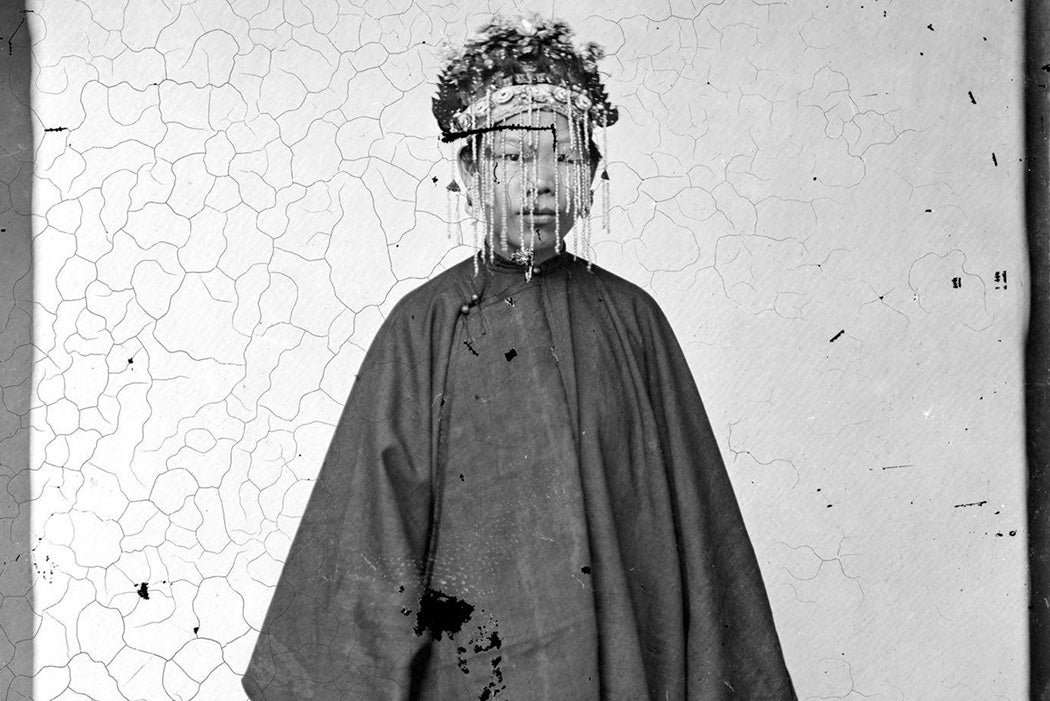
Kingston’s writing captures the moving but emotionally confusing scene of the kuge (crying song), or bridal lamentation, which was traditionally performed up to the 1960s in China. The practice “allowed women to express the inexpressible—for example, complaints toward parents or protests against androcentric Confucian institutions,” ethnologist Fei-wen Liu explains.
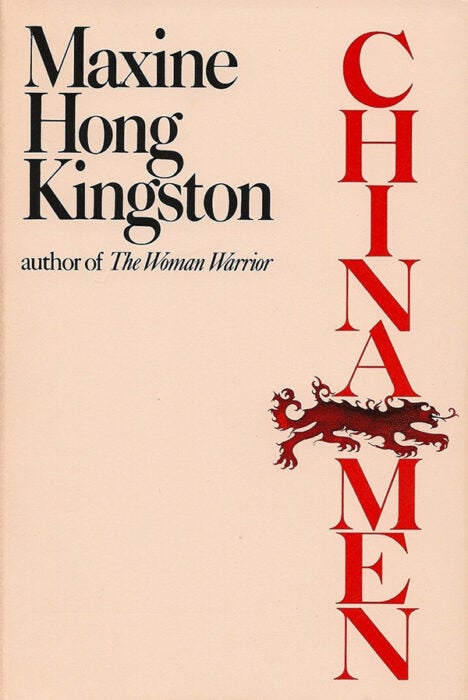 Knopf
Knopf
The mother in China Men, for instance, bewails how her own family has “kept me working at your house” and delayed her marriage, while also fretting over the possibility of wedding an unfaithful husband, who will “pick a plum blossom as I become a prune.” But the bride is not the only performer. Kingston’s story notes that the audience “called out ideas” for lyrics and “punctuated her long complaints with clangs of pot lids for cymbals.”
“One had to wail while listening to and incorporating the interlocutor’s utterances into her succeeding lamentation” to present a successful performance.
Conducting fieldwork in Hunan province’s Jiangyong county, Liu finds that kuge rites there feature similar collaboration between the bride and others, usually women. Their responses, called peiku 陪哭 (to cry along with) or yiku yipei 一哭一陪 (one cries, the other accompanies), reveal that kuge “transcend[s] simple lamentation,” writes Liu.
Rather, peiku allowed women to reflect on their own lives and share their feelings—turning kuge into “a body of social texts that all participants may ponder and interact with.”
For her research, Liu consulted Xiao and Huan, two sisters born in the 1930s, who performed songs such as the peiku that Xiao had sung at her own wedding. “[T]o my surprise, Xiao did not stop once Huan began to sing, and the two voices remained concurrent throughout the performance,” Liu observes. She notes “the dialogic format ensures the aesthetic qualities of kuge and promotes mutual inspiration.” This is because “one had to wail while listening to and incorporating the interlocutor’s utterances into her succeeding lamentation” to present a successful performance.
 Marriage and the Maiden Name
 December 17, 2025
While many women trade surnames they had at birth for their husbands’, some hold on tightly to the former, a tradition famously established by Lucy Stone.
In another peiku interaction, Huan played the role of a young bride consoling an older aunt who has joined in to bemoan her lack of sons. The lyrics uttered in such a scenario enabled the bride to show that she was aware of community norms and etiquette. As Liu explains, “Required demonstrations of such knowledge were considered educational in that they compelled the bride to cultivate the skill and wisdom needed to cope with real-life difficulties the bride might have to deal with later.”
At the same time, Xiao’s laments about her childlessness in this peiku rendition show how women listening to the bride could also contribute their own experiences of kelian (misery) to the kuge. “From the interlocutor’s perspective, peiku performance prompts self-reflection, especially regarding kelian,” says Liu, adding that kuge participants might have “hoped that the negative sentiments would be reformulated into positive ones via articulation.”
While practiced for centuries across different ethnic groups in south and southwestern China, the practice of kuge has become “nearly lost” in the last half-century. After the rise of communism in China, traditions such as kuge were regarded as primitive and feudal, and heavily discouraged. In fact, one family friend “considered the kuge ‘backward and of affectation’ and thus refused to lament at her own wedding,” Liu reports. “[E]ven if elders try to initiate wailing at weddings, the young brides now fail to follow.”
On top of that, not all kuge included peiku, especially in communities where brides hailed from different villages and did not have the rapport to lament together. The songs performed by Xiao and Huan thus offer “rare and invaluable” insights into a disappearing world. “Incorporated into the wedding ritual, bridal lamentations gave shape to peasant women’s conception of adulthood in the reformulation of the individual’s social position and cultivation of social wisdom,” Liu concludes.
“Through these transformations, the bride was readied to face a brand new world and all possible life situations.”

JSTOR is a digital library for scholars, researchers, and students. JSTOR Daily readers can access the original research behind our articles for free on JSTOR.
The Journal of American Folklore, Vol. 125, No. 496 (Spring 2012), pp. 204-225
University of Illinois Press on behalf of American Folklore Society

Comments (0)