
Remember me


When athletes suffer a serious injury, they normally disappear from public view, for a while at least. There might be a post on social media thanking people for their support and expressing gratitude for the care they were given, but that is usually followed by pleas for privacy and maybe patience while they navigate the challenges ahead.
Rarely does an athlete open a window on those deeply personal, often agonising moments in the aftermath of serious injury. Rarely do they share any real details of the injury or the medical procedures that they have undergone. And rarely do they allow the public to see them at their most vulnerable, when medals, sponsors, followers and fame mean nothing and they are just another human in need of help.
Lindsey Vonn is different.
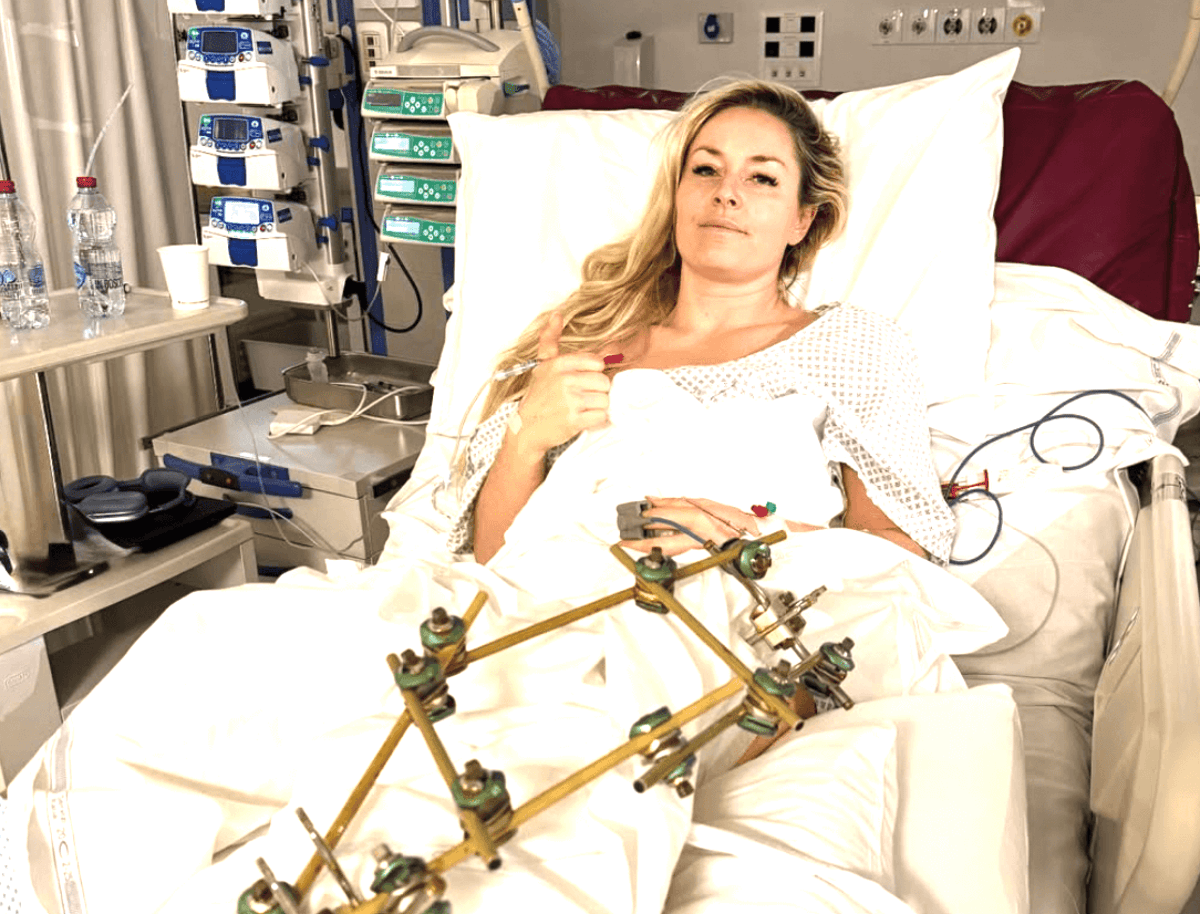
Since she crashed out of the Olympics in one of the worst ways possible on February 8, the 41-year-old has documented her injury via a series of social media videos and pictures. The world has seen her left leg encased in an external fixator (a metal frame that stabilises the bone from outside the body), been kept informed about her multiple surgeries, and followed her journey from a hospital in Italy to one in the United States, via two ambulances and a plane.
There have been X-ray images showing the snapped bone, the plates and screws inserted to hold her leg together and graphic images of the gaping wound left after one of her operations. There was even a post in tribute to her dog Leo, who died on the same day she crashed.
A few days ago, she recorded an almost five-minute-long video, sharing the good news that she was out of the hospital and adding more detail on exactly what she has endured over the last two weeks, including being diagnosed with compartment syndrome and having her leg “filleted open” to — as she described it — save it from being amputated.
Why is an athlete with such a large following (Vonn has 3.6million followers on Instagram alone) sharing such intimate details about her injury and the aftermath? Only she really knows. There will be critics who label it attention-seeking, but for other athletes watching, it opens up a realm of new possibilities in how to deal with such setbacks.
Vonn was already one of the highest-profile athletes at the 2026 Winter Olympics before her skis even touched the snow. The fact that she had ruptured her anterior cruciate ligament a week before her Olympic race had assured her of that. So, when she crashed 13 seconds into her downhill run, it was viewed by millions. The images of her lying stricken on the mountain, surrounded by medics, before being airlifted to hospital were shown repeatedly across television and social media in the hours that followed, ensuring the world was already invested in her personal tragedy.
Had she chosen a different path and kept the details of her injury private, speculation would inevitably have spread like wildfire across the internet; “experts” would have been diagnosing her injury and offering their prognosis. By shining a light on her darkest hour, Vonn has maintained some control over the narrative. She has owned it, not only in terms of what has happened but how, and her feelings about it, even as she lay immobile in her hospital bed.
“I have no regrets,” she wrote the day after her crash. “I knew that racing was a risk. It always was and always will be an incredibly dangerous sport.”
Other athletes who have suffered injuries on a public stage say that sharing details with followers online can be helpful. Sportspeople are used to being in the spotlight, but when injuries occur, that spotlight disappears very quickly and the sense of loneliness can become palpable.
“You’ve lost your way of being in the spotlight because you’re injured,” says former England cricketer Simon Jones, who ruptured his ACL in a match against Australia in 2002. “It’s letting people know that you’re still around, because that’s the danger with sport — you’re a long time retired. People do forget about what you did and who you were.”
Two-time heptathlete world champion Katarina Johnson-Thompson ruptured her Achilles tendon while training for the delayed Tokyo Olympics in 2021 and chose the opposite path to Vonn. She kept the injury hidden, posting pictures on social media pretending she was training
“It’s hard to explain exactly why I decided to do that,” Johnson-Thompson wrote in her 2024 book, Unbroken. “At the start, it was partly to do with the fact that, when my Achilles ruptured, I was in the process of renegotiating my contract with Nike — I didn’t know what impact it could have on things if they found out I was injured.
“I also didn’t want my competitors to think I wasn’t going to be there (in Tokyo). I wanted them still to see me as strong, not as someone who needed sympathy or a fuss made of them.”
It’s something she later regretted, believing the pretence that everything was OK sapped more energy from her than being honest would have done. When one of her training partners and close friends, British long jumper Jazmin Sawyers, suffered the same injury in 2024, she dealt with it publicly, sharing videos and updates on social media and speaking about it in interviews.

Lindsey Vonn is transported by helicopter after crashing in Italy (Francois-Xavier Marit/AFP via Getty Images)
“I realise her approach is the far healthier way,” wrote Johnson-Thompson, “especially in the long term. It was such a dark time for me, and it took me years to get out of the injured mindset.”
There will be those who question whether Vonn’s approach impacts any future privacy claims. After all, if she has chosen to share so much publicly, surely anything in her life is up for grabs?
It shouldn’t be seen that way. Vonn is the one in control in this case. Yes, she has shared a lot, but there will be a whole lot more she is not sharing. We are seeing what she is happy for us to see. It’s still likely that her hardest moments — of which there will be countless over the coming months — will remain private, witnessed only by those closest to her or perhaps no one at all. Sharing a lot of detail doesn’t mean she has to share all the details. It’s her body; her prerogative.
She could have chosen to disappear beneath that cloud of snow that encased her as she crashed. Instead, she has remained visible and stayed connected with those who have been so invested in her story. Perhaps it’s the only way she knows. Perhaps it’s the best way she knows for herself.
Either way, it’s her choice, her injury. She is owning it all.
Comments (0)