This is a rush transcript. Copy may not be in its final form.
AMY GOODMAN: This is Democracy Now!, Democracynow.org, the War and Peace Report. I’m Amy Goodman in New York, joined by Democracy Now! cohost Juan González in Chicago. Hi, Juan.
JUAN GONZÁLEZ: Hi, Amy, and welcome to all of our listeners and viewers across the country and around the world.
AMY GOODMAN: We begin today’s show with the latest on the Epstein files. Former president Bill Clinton is testifying today before a congressional committee over his connections with serial sex offender Jeffrey Epstein. This comes after Hillary Clinton denied ever meeting Epstein or knowing anything about his crimes during a more than six-hour closed-door deposition in front of the House Oversight Committee Thursday. Clinton spoke to reporters in Chappaqua, New York, yesterday after the closed-door deposition.
HILLARY CLINTON: I never met Jeffrey Epstein. Never had any connection or communication with him. I knew Ghislaine Maxwell casually as an acquaintance. But whatever they asked me, I did my very best to respond.
AMY GOODMAN: In her opening statement, Clinton denounced the process as partisan political theater and accused House Republicans of using her as a prop to “distract attention from President Trump’s actions and to cover them up despite legitimate calls for answers.” Democrats on the House Oversight Committee have called on President Trump to also be deposed following mounting reports that key documents related to a woman who accused Trump of assaulting her while she was a minor, those documents missing from the Justice Department release of the Epstein files.
According to an NPR investigation, the missing files include 53 pages of FBI interviews and notes from conversations with the woman, who claimed that she had been sexually assaulted by both Trump and Epstein in the 1980s when she was just 13 years old. This is Democratic Congressman Robert Garcia.
REP. ROBERT GARCIA: We want to understand right now where the missing FBI files are. These are files that accuse the president of the United States about serious, serious accusations around sexual abuse. And the fact that they are not in the files and have been apparently either removed or discarded is incredibly concerning. So we are calling on Attorney General Pam Bondi to immediately release those files. And lastly, I want to also add that this committee has now set a new precedent about talking to presidents and former presidents, and we are demanding immediately that we ask President Trump to testify in front of our committee and be deposed in front of oversight Republicans and Democrats.
AMY GOODMAN: Meanwhile, the fallout from the Epstein files continues with a wave of resignations of powerful leaders in business, academia and politics over their ties to Epstein. On Thursday, President and CEO of the World Economic Forum Børge Brende said he was resigning. On Wednesday, former U.S. Secretary of the Treasury and former Harvard president Larry Summers said he would resign as professor at Harvard University at the end of the semester.
Also Wednesday, former Nebraska Democratic senator Bob Kerrey confirmed he had resigned from his role as chair of a clean energy startup. Nobel laureate Richard Axel also announced his resignation Tuesday as co-director of Columbia University’s neuroscience institute over his association with Epstein. And Bill Gates has also apologized to the staff of the Gates Foundation over his ties to Epstein.
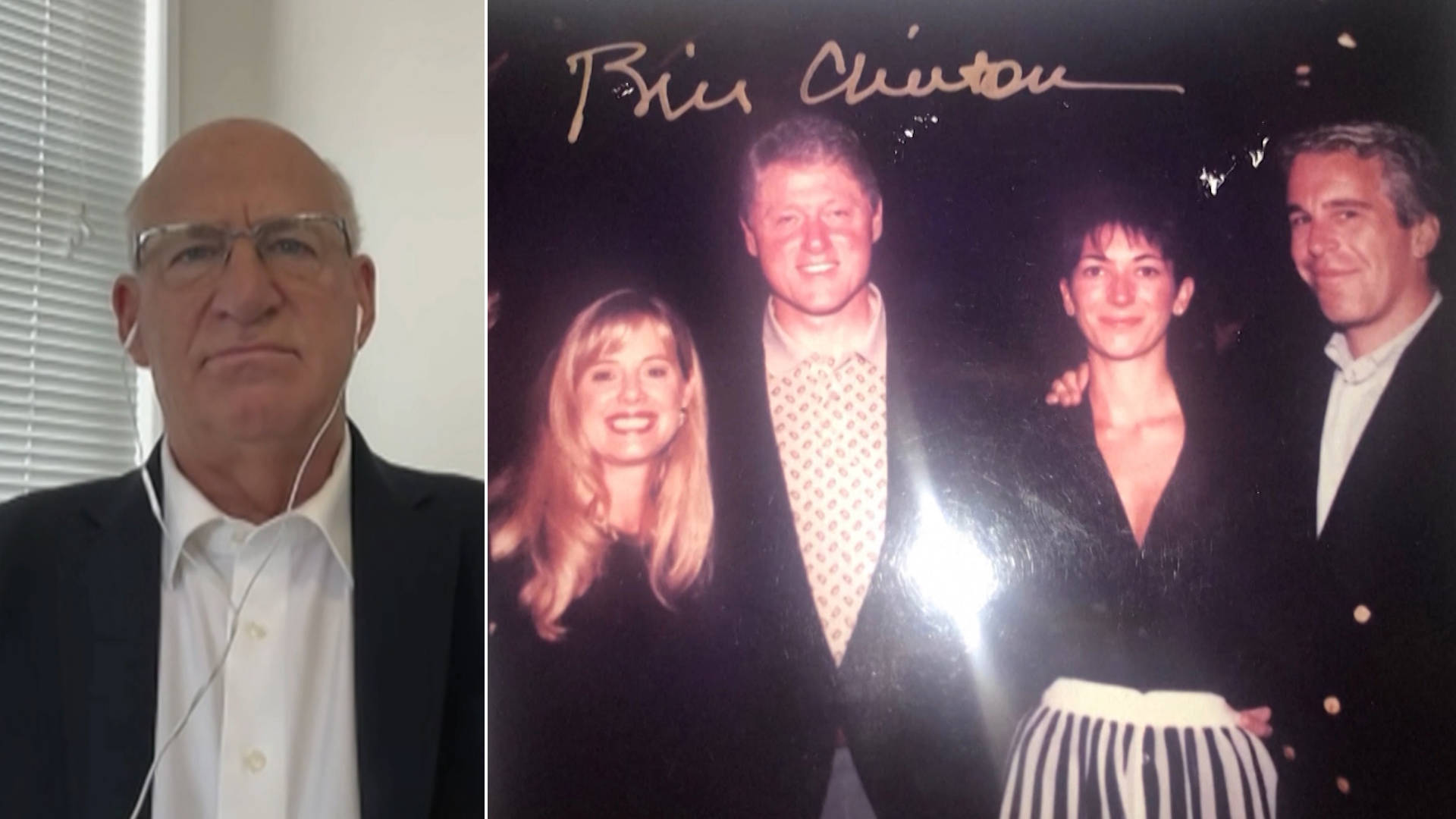
For more on all of this we’re joined by Barry Levine, investigative journalist and author of the book The Spider: Inside the Tangled Web of Jeffrey Epstein and Ghislaine Maxwell. Barry, thanks so much for being with us. Let’s start off with these testimonies yesterday and today of the former president and first lady, former Secretary of State Hillary Clinton. She had wanted, she said, open hearing, but it was closed door in Chappaqua, where they live. Could you explain the significance, what’s taking place with this hearing, and then move on to the missing DOJ, Department of Justice, FBI files?
BARRY LEVINE: Sure, absolutely. I think first of all we are going to see the video of her testimony. As we saw with Jeffrey Epstein’s patron Leslie Wexner recently, they released it the day after. We should get the videotape of Hillary Clinton’s testimony today. Bill Clinton is testifying today. We should get his video of his testimony tomorrow.
I think first of all that it’s important for the sake of the survivors that we get accountability in this case. This is something they have been demanding for two decades now. Certainly, the more we can learn about individuals’ interactions with Jeffrey Epstein and what they may have witnessed or what they may have been told by him is certainly important to the survivors. I think, however, that there are many other individuals in this particular case who are more important getting to than former President Clinton or even our current president, Donald Trump. Both men have never been accused directly by any of the survivors that have done extensive interviews with the FBI and the SDNY.
Now of course both spent time with him, so it is important to learn about their experiences with him, but I do think right now for the Oversight Committee and the administration, this is part of a bit of a political theater that’s taking place. Certainly with Hillary who, as we know, never met him directly. So to me, it was wasted time when there are other individuals much closer to the case that we need to hear from.
JUAN GONZÁLEZ: Barry Levine, what do you make of the allegations of these interviews, FBI interviews with a young woman who claims she was assaulted when she was 13 and the fact that these have not been released?
BARRY LEVINE: That’s a very good question. It’s important that the DOJ doesn’t hold back documents. From the law that—the Transparency Act law—on these files that President Trump signed into law, the public and the survivors are entitled to see all the documents, including these FBI—what’s called FBI 302 witness reports. These are interviews that were conducted. They should not be missing. There’s no question about that. And I’m thankful that NPR and a couple of other news organizations pointed that out. And the DOJ says that they are looking into that. So we will see, hopefully, the missing files.
Now, I have to say that as someone who has investigated this case for two decades as an investigative journalist and then the author of my book The Spider, I did devote a page and a half to this woman’s allegations that came in a lawsuit in 2019 following Jeffrey Epstein’s arrest. I do want to see the specifics. I think, however, that the timeline doesn’t appear to be correct because the allegations center on actions that she claimed took place with Jeffrey Epstein and former President Donald Trump back in the 1980s, specifically in the 1983 to 1985 range. All of my reporting shows that former president—or that Donald Trump didn’t interact with Jeffrey Epstein until around 1987, both in Palm Beach, Florida and in New York. They continued to see one another socially for the next 15 years before—
AMY GOODMAN: But Barry Levine, isn’t the issue more that the—all of these are allegations. We don’t know what is true—
BARRY LEVINE: Yes. yeah.
AMY GOODMAN: —but that all of the allegations against Epstein by this woman who alleges she was sexually assaulted by Epstein and also Trump—the ones on Epstein, they remain in the files. People can come to their own conclusions. But the documents around Trump were removed. And the DOJ says they are not involved in any investigation and that they released all the files. So that’s the point—why were they removed, not whether they’re true or not.
BARRY LEVINE: Yes, and I agree. We should be able to see whether these allegations are true or not, and of course we need to continue to do fact checking, as I have started to do on this particular case and find issues with the timeline. We still need to see the files. And there’s no question that something is wrong here in terms of the Trump administration’s DOJ.
The law specifically states that material related to men in these files, even if they are embarrassing to these individuals in terms of allegations, whether they are true or not, need to be made available to the public and to the survivors for the sake of accountability. So we do need to see each and every document.
The only thing that they can hold back that they say could be privileged would be sensitive information related to national security. We know that Jeffrey Epstein was involved with many other countries. There are allegations that he may have even been a foreign asset for Israel, for Iran, for Russia. However, we are talking about incidents that took place domestically involving this woman, so there would be no national security related to these documents. So by all means, we should see each and every sentence, no matter how embarrassing the statements are, made by this woman against both Jeffrey Epstein and Donald Trump.
JUAN GONZÁLEZ: Barry Levine, based on your years of investigation of Epstein, what remains to be uncovered about his influence and his accomplices that you have not yet seen reported or gleaned from the documents so far released?
BARRY LEVINE: Good question. There are still two million files that still haven’t been released. I can’t believe that each and every one of those files is related to national security. Why they’re holding back, why the DOJ is holding back these additional documents, this is something that has been raised by Thomas Massie and Ro Khanna, the cosponsors of the transparency bill. So we need to see everything be released.
In addition to that, we learned something very disturbing recently from these files, and that is that Jeffrey Epstein hid possible evidence in six storage lockers around the country. He had private investigators take material out of his homes before the police raids took place. This is going back as early as the police raid in Palm Beach, Florida, in 2005. Material was taken out—computers, CDs, videotapes, all different types of evidence, 29 address books. We don’t know to this day if the FBI ever recovered that information in those storage lockers. And it seems to me based on my reporting that Jeffrey Epstein was tipped to the first police raid on his home in Palm Beach, Florida, in December 2005, and he had this material removed.
So we don’t know what’s in that material. We don’t know if there is additional incriminating videotapes involving any of the 20 men that Representative Thomas Massie said were allegedly trafficked by Jeffrey Epstein. Rich and powerful individuals, six billionaires, a political government official, someone else in politics, people in entertainment. There are men who are out there who took part in the sex trafficking that have not been brought to justice. And for the sake of closure for the victims, we need to see more by the DOJ in terms of the possible apprehension of these individuals.
AMY GOODMAN: Very interesting that the House Oversight Committee went to Chappaqua, to the hometown of the Clintons right now, to grill them, the Republicans overwhelming there. I think there were almost 60 people who went up. But when it came to Les Wexner who may have bankrolled the pedophile criminal Jeffrey Epstein—when the House Oversight Committee went to his Ohio mansion, no Republican member of Congress—may have bankrolled him to the tune of over $1 billion —went to talk to him.
BARRY LEVINE: That’s absolutely correct. Really the money that Epstein was able to use to bankroll his sex trafficking ring for two decades really came from Leslie Wexner. Leslie Wexner was listed as a possible co-conspirator. He denies all wrongdoing. He says he never saw or witnessed any sexual abuse by Jeffrey Epstein with any victims. And the DOJ, the SDNY never filed any actual charges against Leslie Wexner. But he was certainly an important individual to get to.
Coming up in March, the Oversight Committee is going to depose two very important men in Jeffrey Epstein’s life—Darren Indyke, Jeffrey Epstein’s longtime lawyer; and Richard Kahn, his longtime accountant—who were with Jeffrey Epstein, worked for him for many, many years. These were men that intricately knew about Jeffrey Epstein’s finances, his lifestyle, monies that were being sent out that presently Senator Ron Wyden is looking into in terms of more than $1 billion of suspicious wire transfers that took place over the years. So these men should be very enlightening in terms of what we learn from them.
And as I said, I do think calling—I think it is valid to call President Trump. In two years, he traveled on between 16 and 27 flight legs with Jeffrey Epstein, socialized with him on these two trips to Africa and also Asia and Europe. As I said, he has not been accused directly by any of the victims that we have investigated, so I don’t think we are going to learn any significant bombshells from his deposition today. But again, I do think that calling both of them was really about Donald Trump going after his perceived enemies.
AMY GOODMAN: Barry Levine, I want to thank you for being with us, investigative journalist and author of the book The Spider: Inside the Tangled Web of Jeffrey Epstein and Ghislaine Maxwell. Coming up, a Columbia undergraduate student is arrested by ICE in her residential housing after agents using false pretenses got into her apartment building. Back in a minute.
[MUSIC BREAK]

Comments (0)