Remember me

Back in its infancy, before Honda became the technical superpower it is today, production started on a humble step-through commuter that would bring mobility to the masses. The year was 1958, and the model was the Super Cub. Cheap to buy, simple to maintain and almost impossibly durable, it became the most-produced motor vehicle in history, surpassing 100 million units in 2017. Its pressed-steel monocoque chassis carried the engine beneath a central spine, creating the now-iconic step-through format. That construction also made it notoriously difficult to modify in any meaningful way.
That challenge is precisely why the Cub has become such fertile ground for custom builders. What began in Japan spread rapidly through Southeast Asia, where parts supply and fabrication culture turned the Cub into a canvas. The best ones respect the silhouette while fundamentally reworking the engineering underneath.
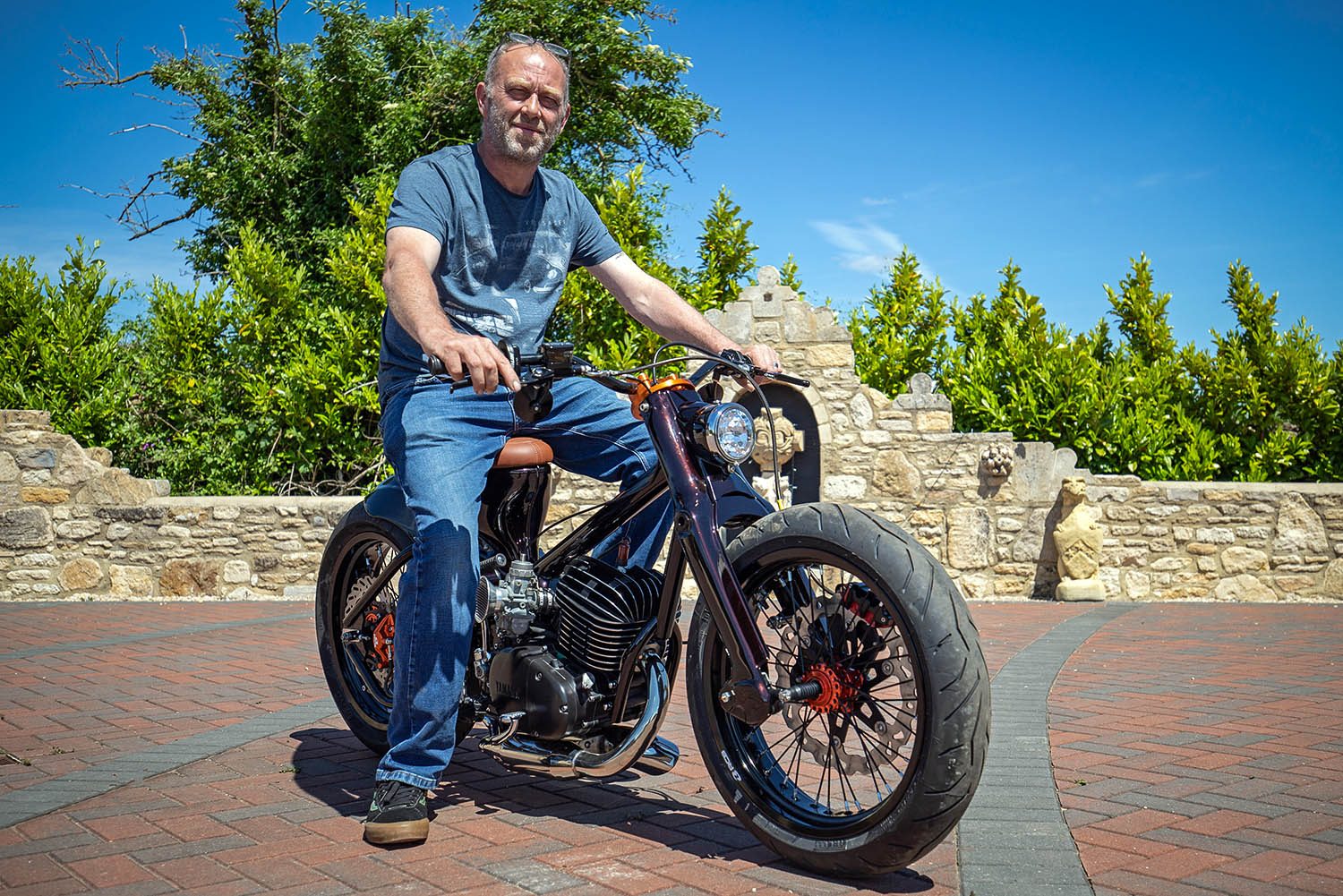
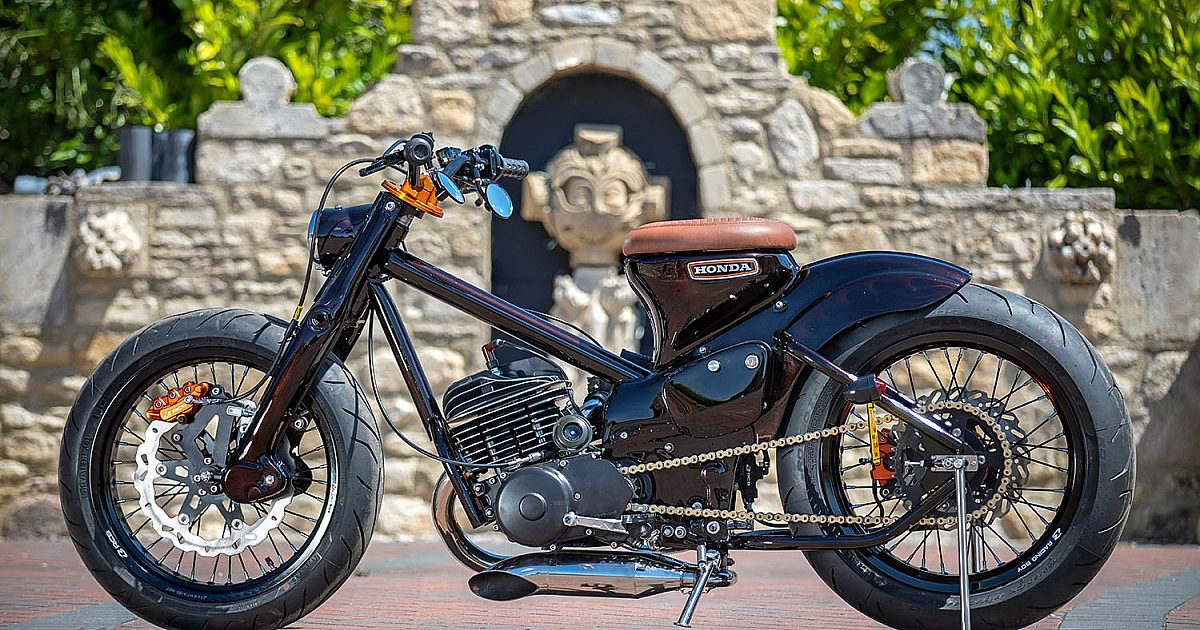
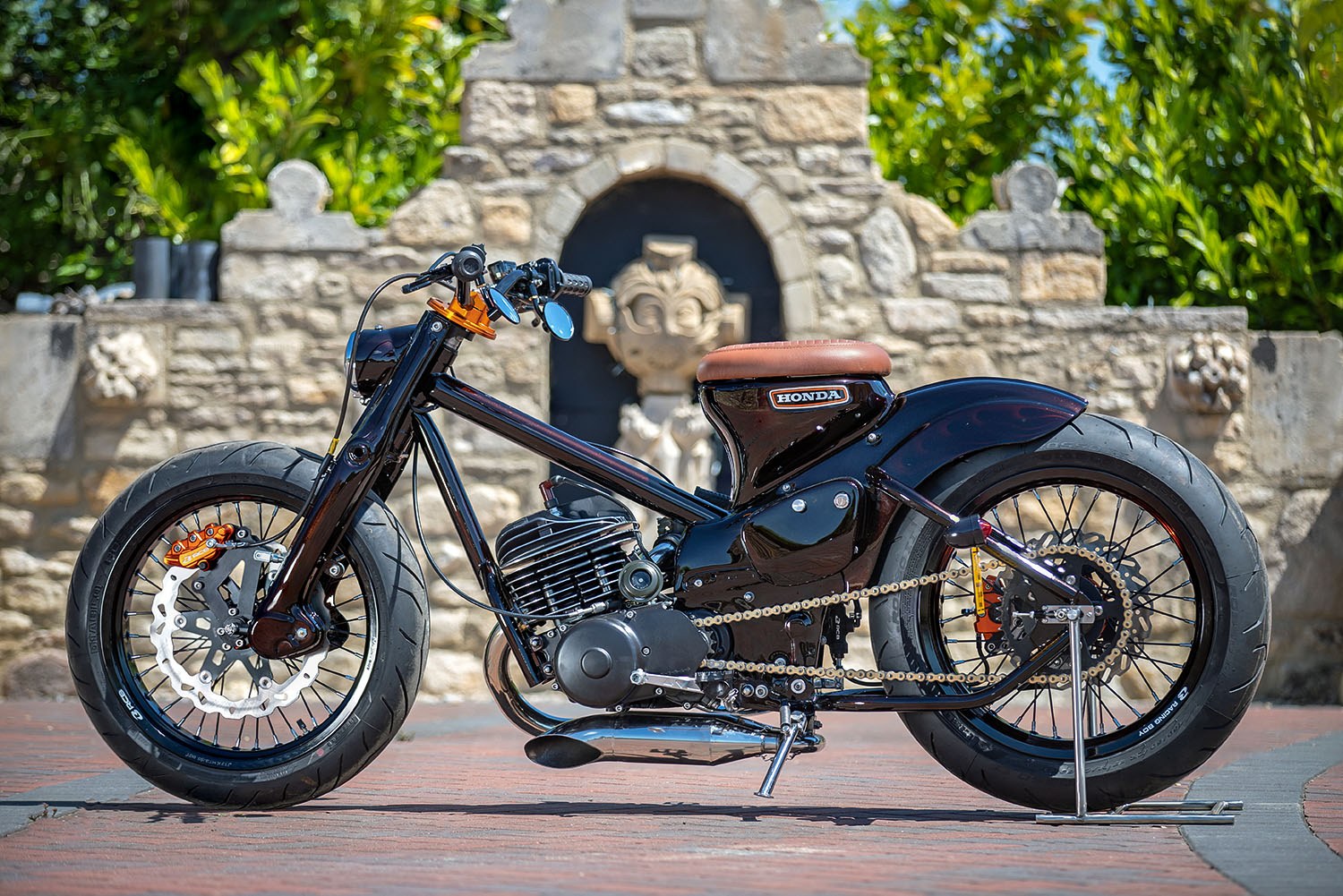
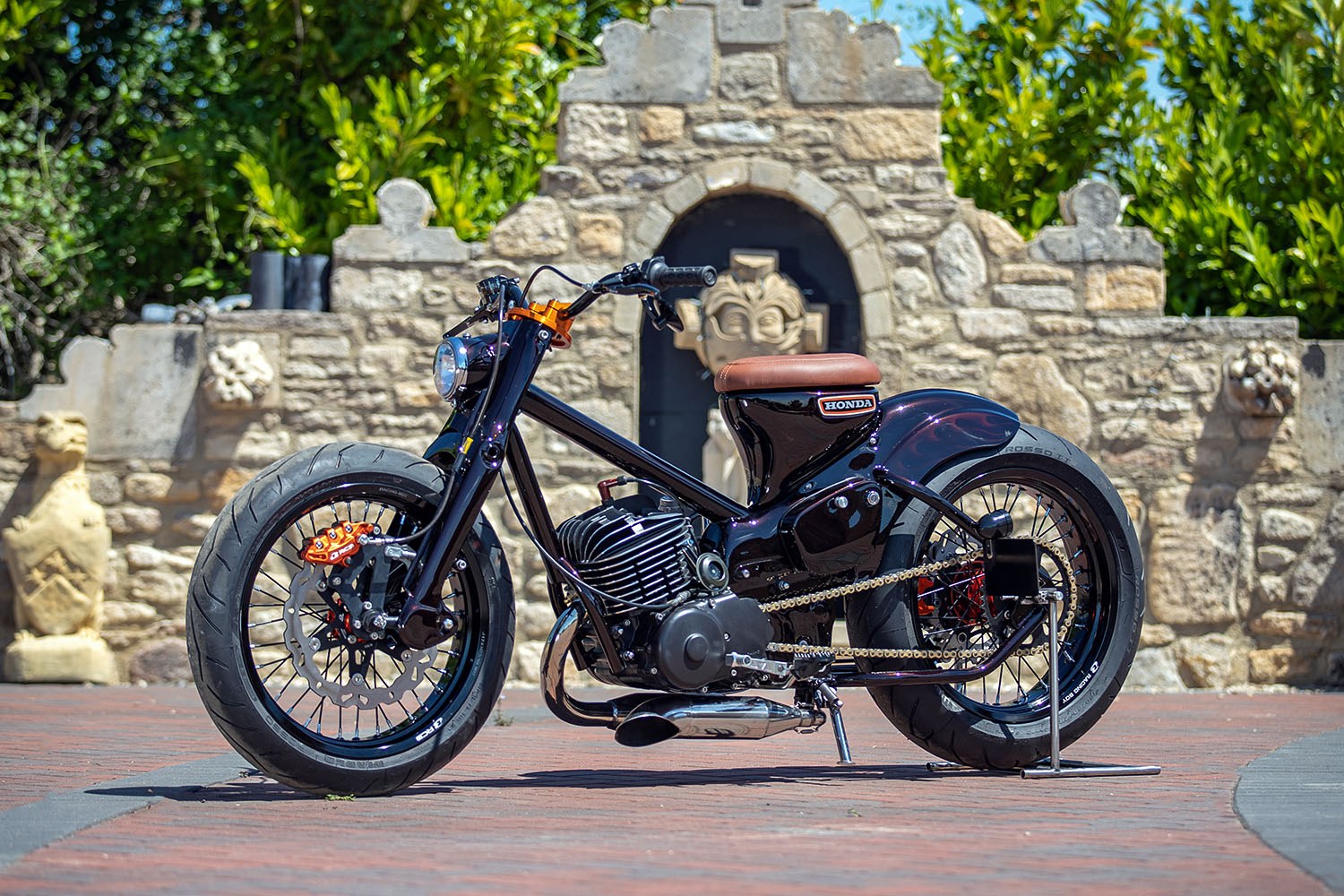
This 1975 Honda C70 started life as a standard commuter before Brian Ricketts decided to push it well past its brief. After building several show bikes, he envisioned a Cub taken to extremes. Aside from the forks, headstock, mudguard and fuel tank, everything else was discarded. All the major parts for the build would be sourced direct from Malaysia.
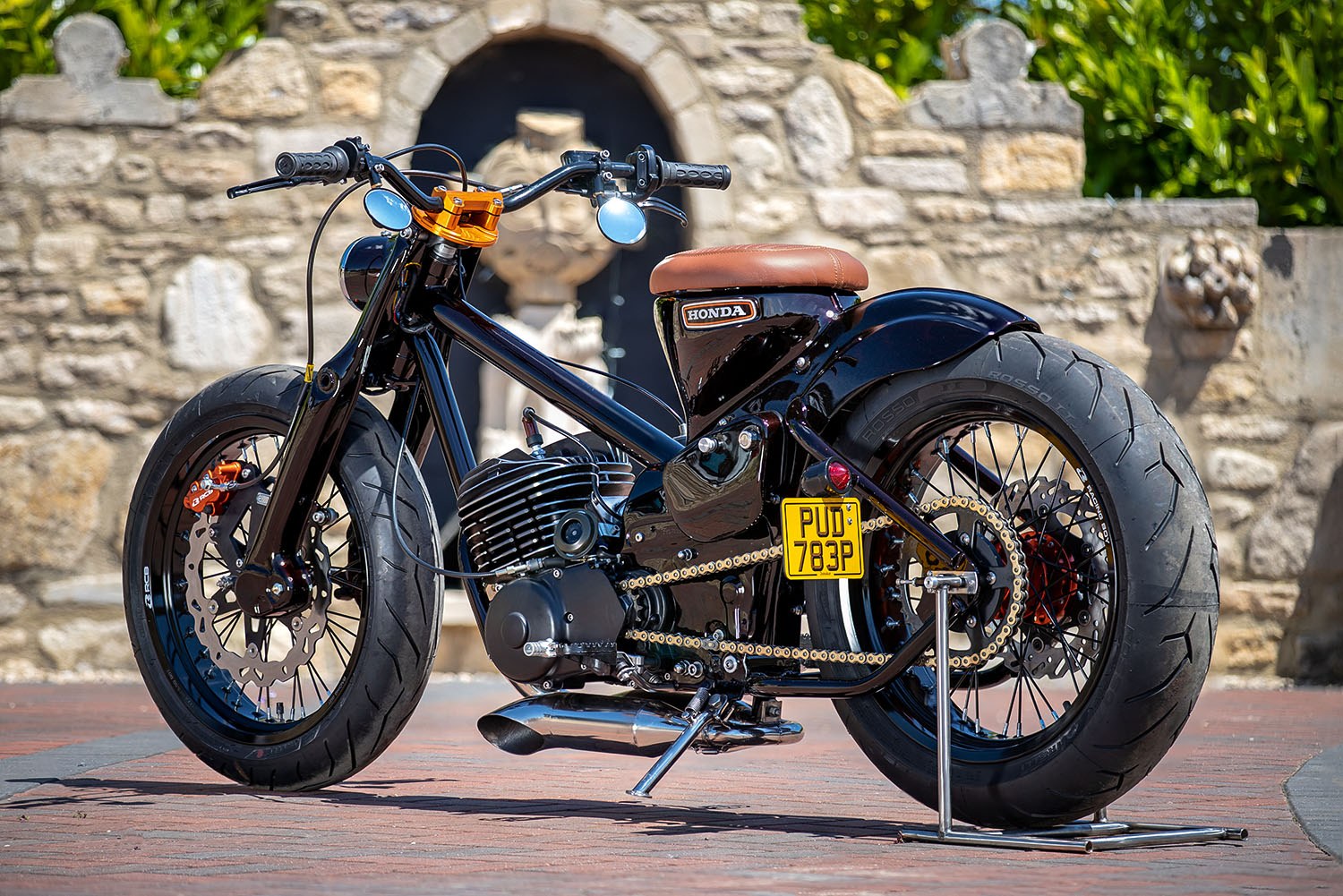
Brian built a frame jig and constructed a new chassis from cold-drawn seamless tube, fully TIG-welded in his shed. The new top tube stretches 60 mm longer than stock with added rake in the neck. The tubes interconnect beneath the original pressed-steel body, terminating in a hardtail rear. Every bend was formed on a homemade air-over-hydraulic tube bender.
Of course, it’s hard to ignore that something a bit more lively has taken the place of the original 72 cc, air-cooled four-stroke. Brian sourced a 1975 Yamaha DT250MX two-stroke single, good for around 24 hp, delivered through a five-speed gearbox. If you’re avoiding mental math, that’s a solid 18 hp boost over the original equipment.
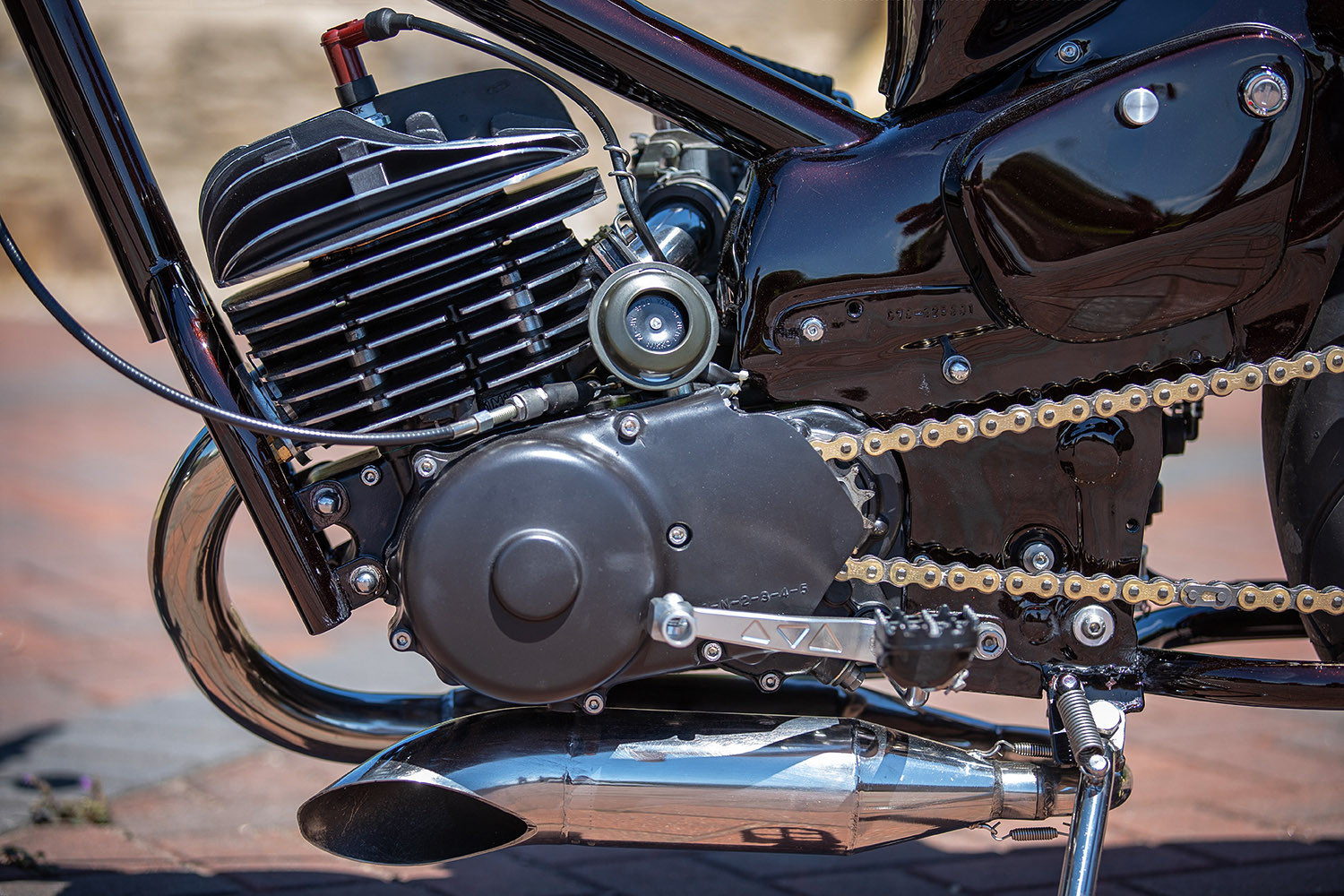
The body had to be reshaped to accept the larger engine, which Brian rebuilt and detailed himself. He notes, with the kind of dry understatement only a home fabricator can, that the engine “comes out to the right but will only go in from the left.” Based on the tight fit and glossy paint, we can assume that’s a nerve-racking experience.
Ignition has been converted to 12 volts using components supplied by Rex’s Speed Shop, supported by a custom loom. The Yamaha single breaths through a round-slide with a 90-degree inlet, and exhaust gases exit via a one-off stainless system incorporating an expansion chamber and a front exit.
The chassis details reinforce that this isn’t just an engine swap. Up front, the original forks have been widened by 60 mm with a bit of preload added to the springs, clamped by modified yokes. A 3.5-inch Racing Boy rim is laced to a modified Y125Z (a moped not offered here in the states) hub, stopped by a 300 mm RCB disc and twin-pot RCB caliper. Brian added a custom counter lever to the caliper mount, designed to reduce front lift under braking.
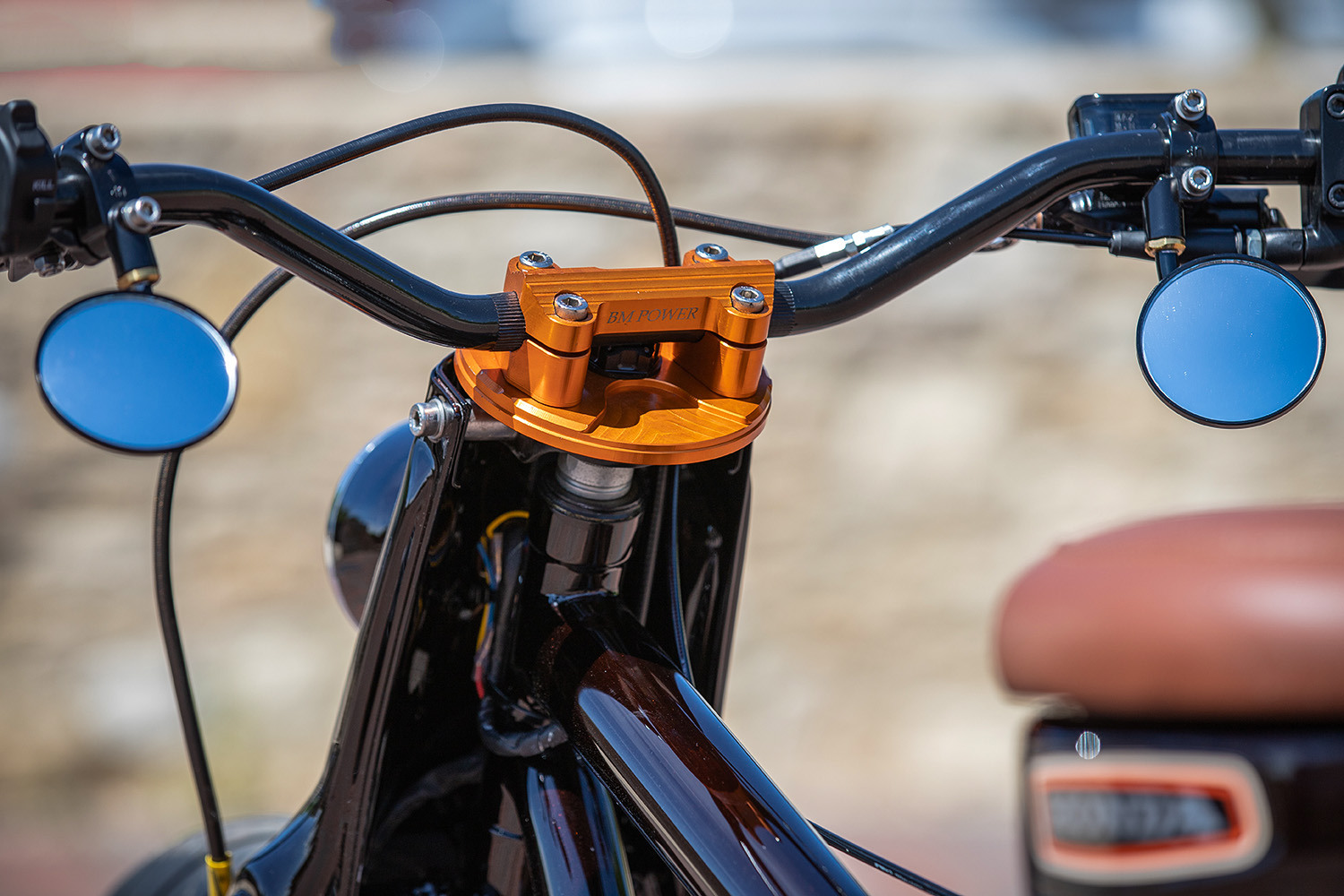
Out back, a 4.5-inch Racing Boy rim mates to a matching Y125Z hub and a 260 mm RCB disc with a single-pot caliper. The torque arm is rose-jointed for easy adjustment, and the chain-and-sprocket setup is bespoke. A Racing Boy master cylinder feeds the system through Goodridge lines. Renthal Moto X bars and minimal switchgear keep the cockpit lean and purposeful.
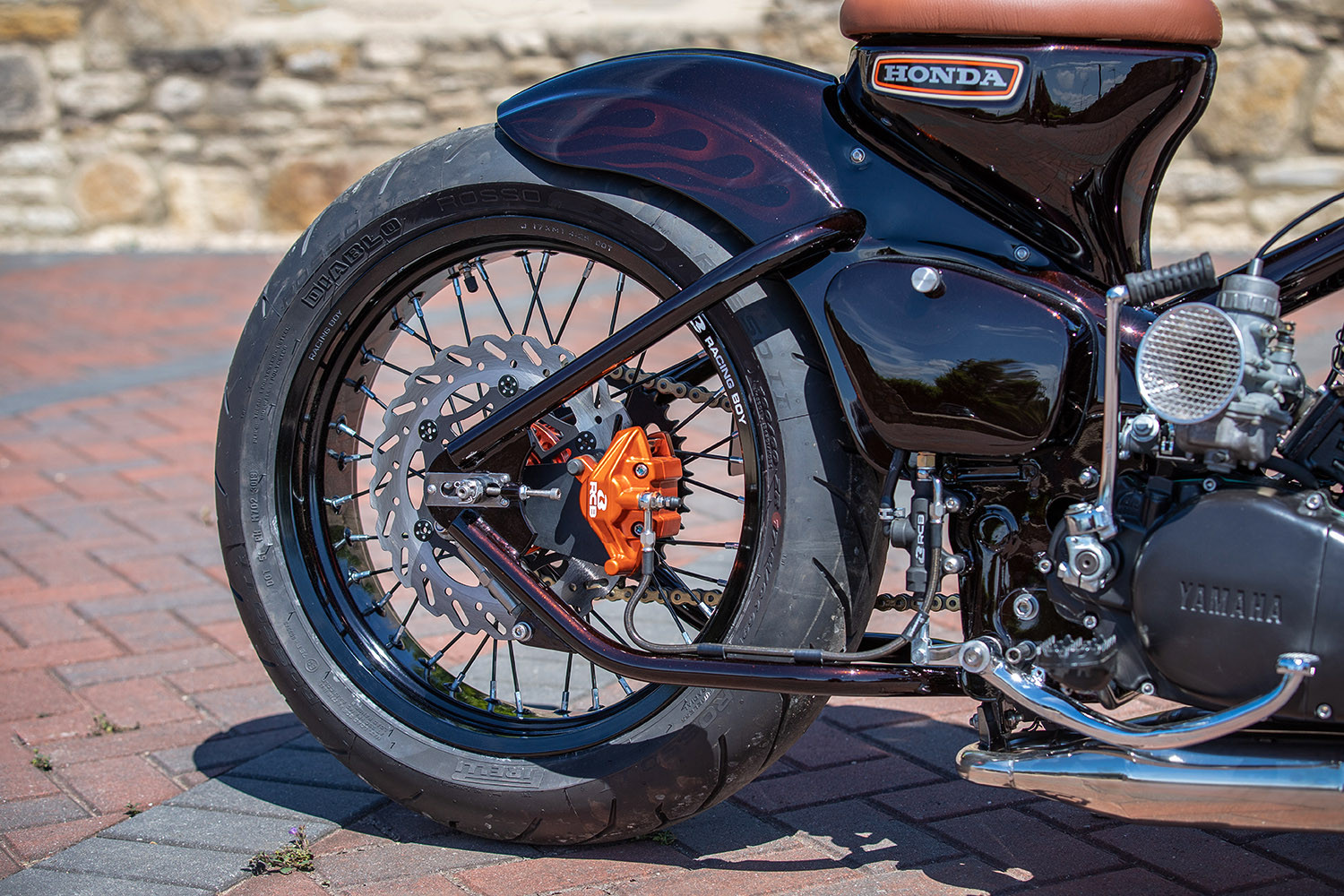
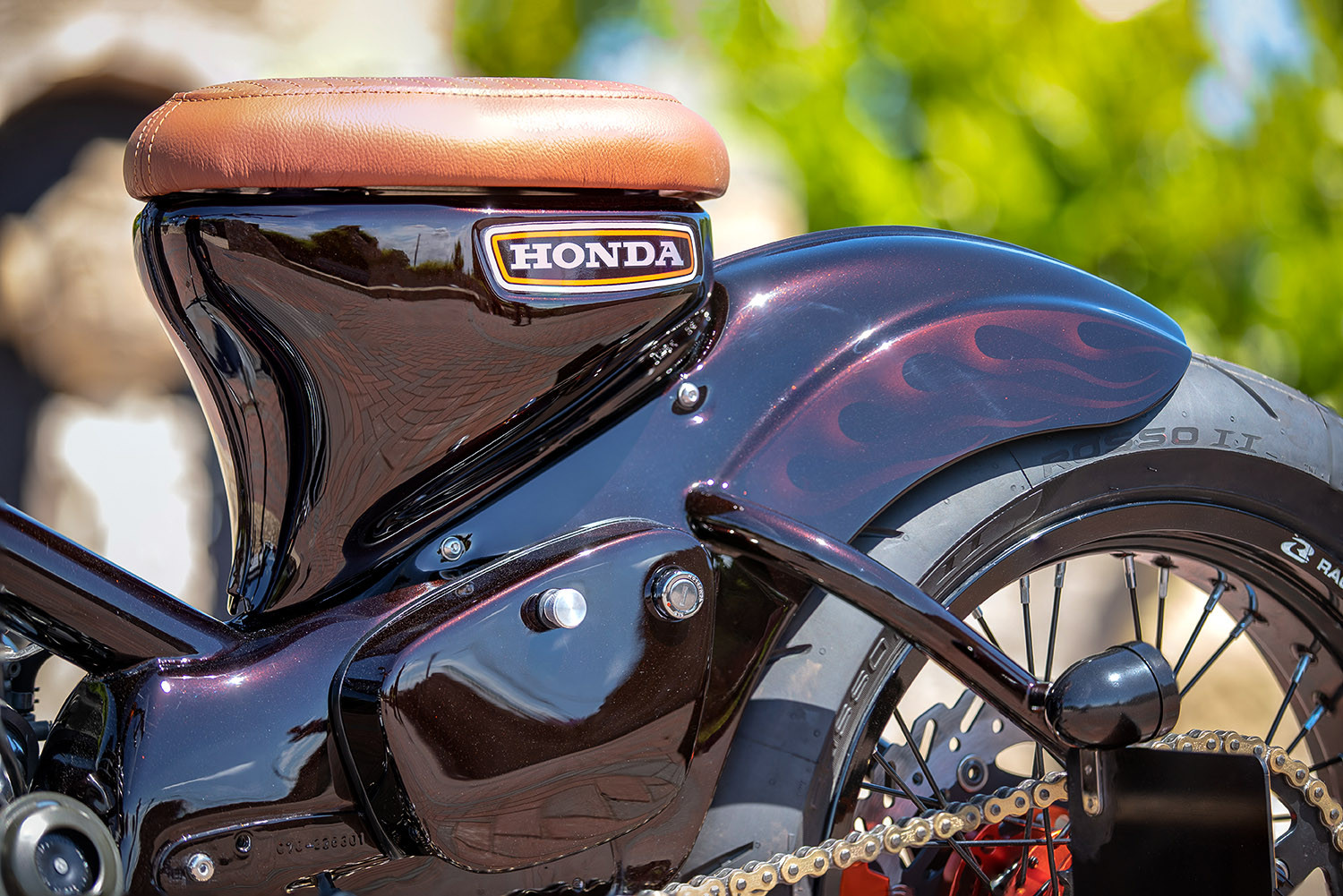
The original rear mudguard has been seriously stretched, and the front guard has been deleted entirely. The stock tank and side panels remain, anchoring the silhouette, while the seat was retrimmed in leather by Sam Trigg. Del Whitaker at DW Automotive laid down Root Beer candy with ghosted flames, while plating was handled by S&T Chrome and polishing completed by Brian himself. At the curb, the finish walks a careful line between show build and street menace.
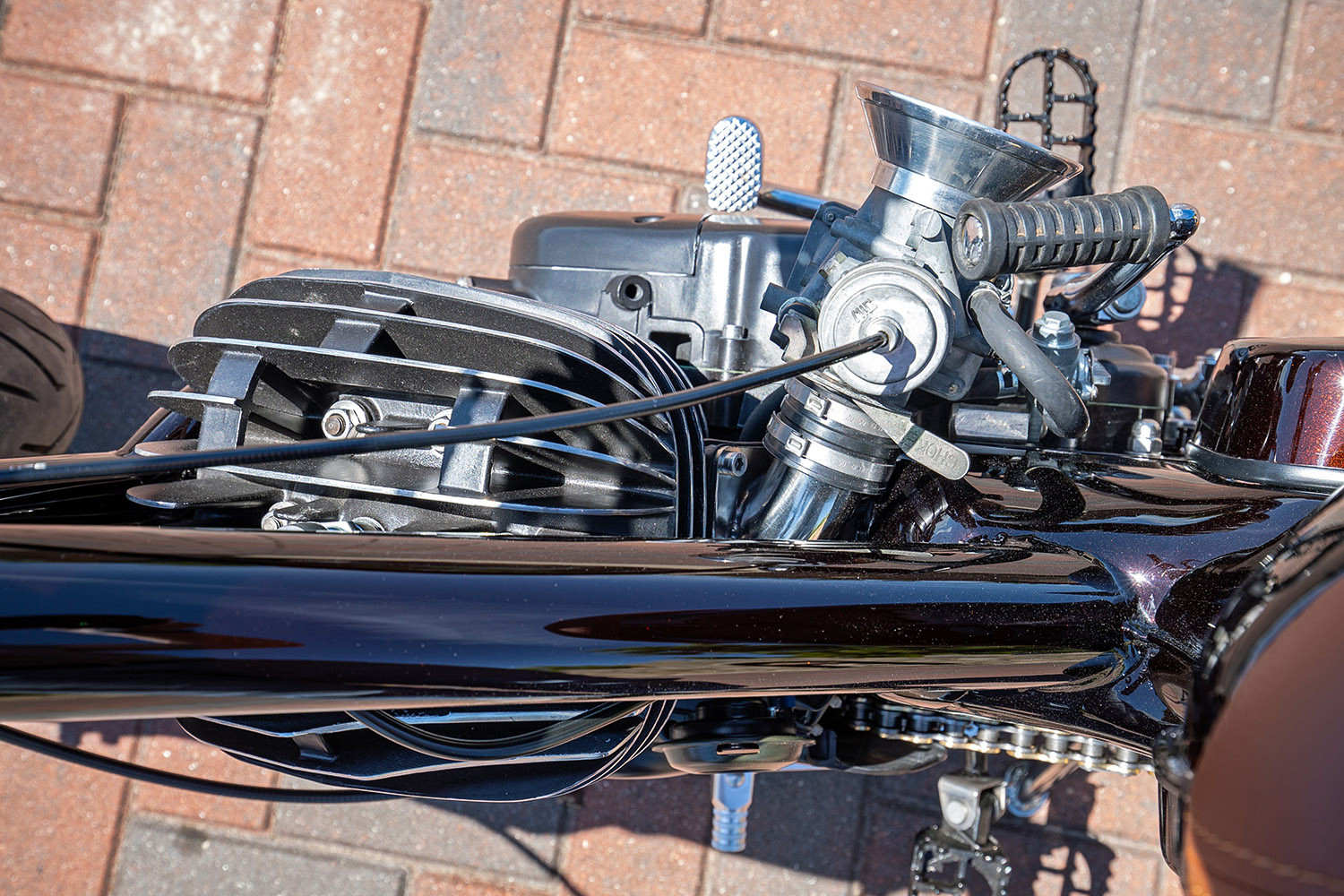
All said and done, Brian’s C70 has retained just enough of its silhouette to read as a Cub, while taking the shape to a whole new level. Its low-slung stance and chunky fitment capture the boy racer spirit, while incorporating go-fast goodies and craftsmanship to make it more than a novelty. The Super Cub was built to mobilize millions, but this one was built to test its limits.
Photos by Del Hickey