
Remember me



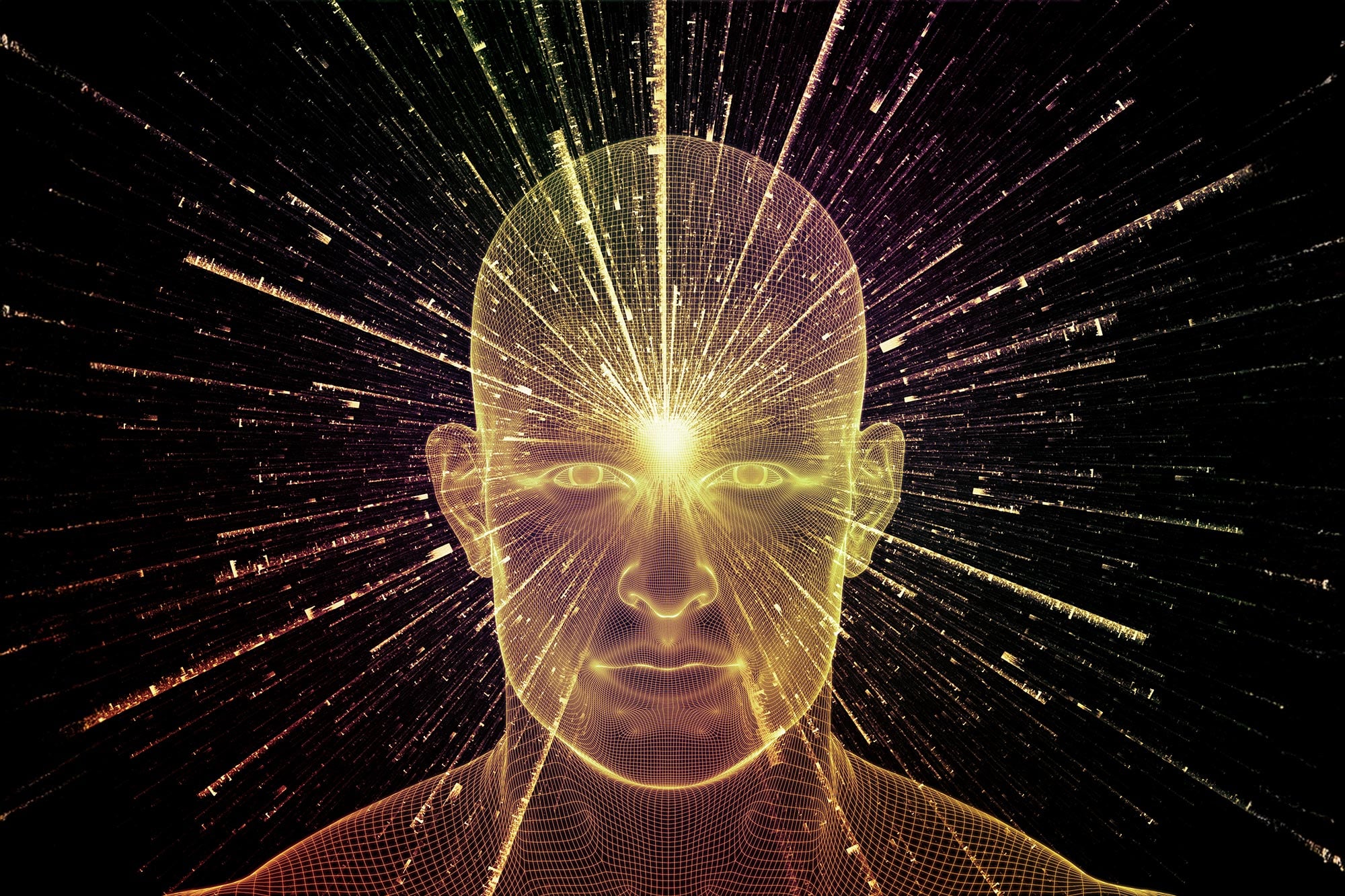 What if the physical world is not the starting point of existence, but something that arises from a deeper layer of reality? A new theoretical framework proposes that consciousness may be more than a product of the brain — it could be the foundation from which space, time, and matter emerge. Credit: Shutterstock
A physicist proposes that consciousness is the fundamental basis of reality, with matter and spacetime emerging from it.
What if consciousness is not produced by the brain, but instead forms the foundation of reality itself? That is the premise of a new theoretical model introduced by Maria Strømme, Professor of Materials Science at Uppsala University, in the journal AIP Advances. In her framework, consciousness exists first, and time, space, and matter emerge from it.
Strømme is best known for her work in nanotechnology, studying materials at extremely small scales. In this new work, she shifts focus to the largest possible questions, including the origin and structure of the universe. Rather than treating consciousness as a side effect of neural activity, she describes it as a fundamental field that underlies everything we observe, including physical matter and the flow of time.
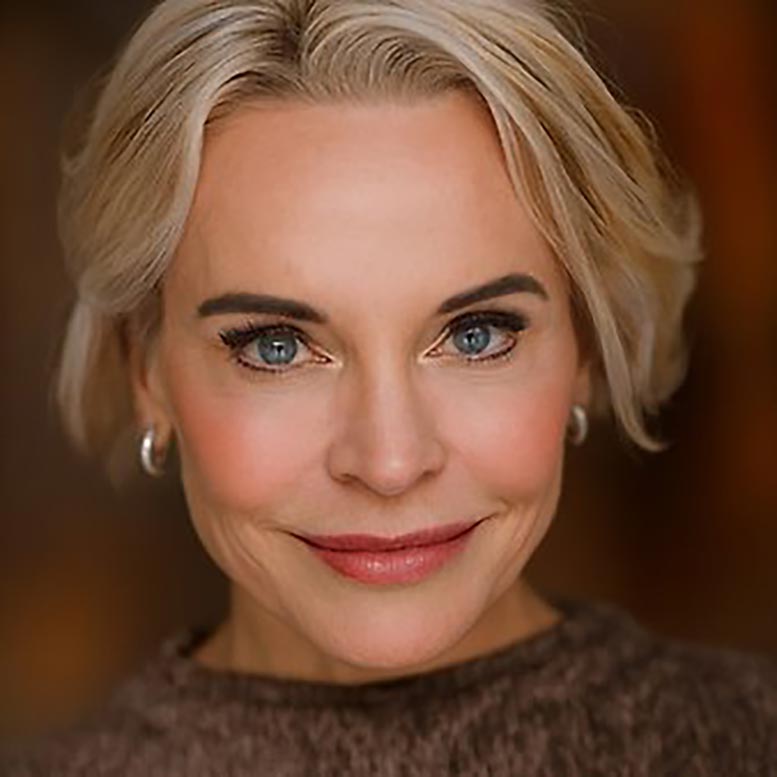 Maria Strømme, Professor of Materials Science. Credit: Uppsala University
Is this a completely new theory of how reality and the universe are structured?
Maria Strømme, Professor of Materials Science. Credit: Uppsala University
Is this a completely new theory of how reality and the universe are structured?
“Yes, you could say so. But above all, it is a theory in which consciousness comes first, and structures such as time, space, and matter arise afterwards. It is a very ambitious attempt to describe how our experienced reality functions. Physicists like Einstein, Schrödinger, Heisenberg, and Planck explored similar ideas, and I am building on several of the avenues they opened,” says Strømme.
Uniting quantum physics with philosophyOver many years, Strømme has developed a quantum mechanical model that connects modern physics with non-dual philosophical traditions. The core idea is that consciousness is the most basic component of existence, and that individual minds are expressions of a larger, shared field.
Within this framework, experiences often labeled as unexplained or unusual, including telepathy or near-death experiences, are interpreted not as supernatural events but as possible outcomes of this interconnected field.
“My ambition has been to describe this using the language of physics and mathematical tools. Are these phenomena really mystical? Or is it simply that there is a discovery we have not yet made, and when we do it will lead to a paradigm shift?”
Strømme compares her proposal to earlier turning points in scientific history. Humanity once believed the Earth was flat, and later assumed the Sun revolved around the Earth. Both views were eventually replaced by models that reshaped how people understood their place in the cosmos.
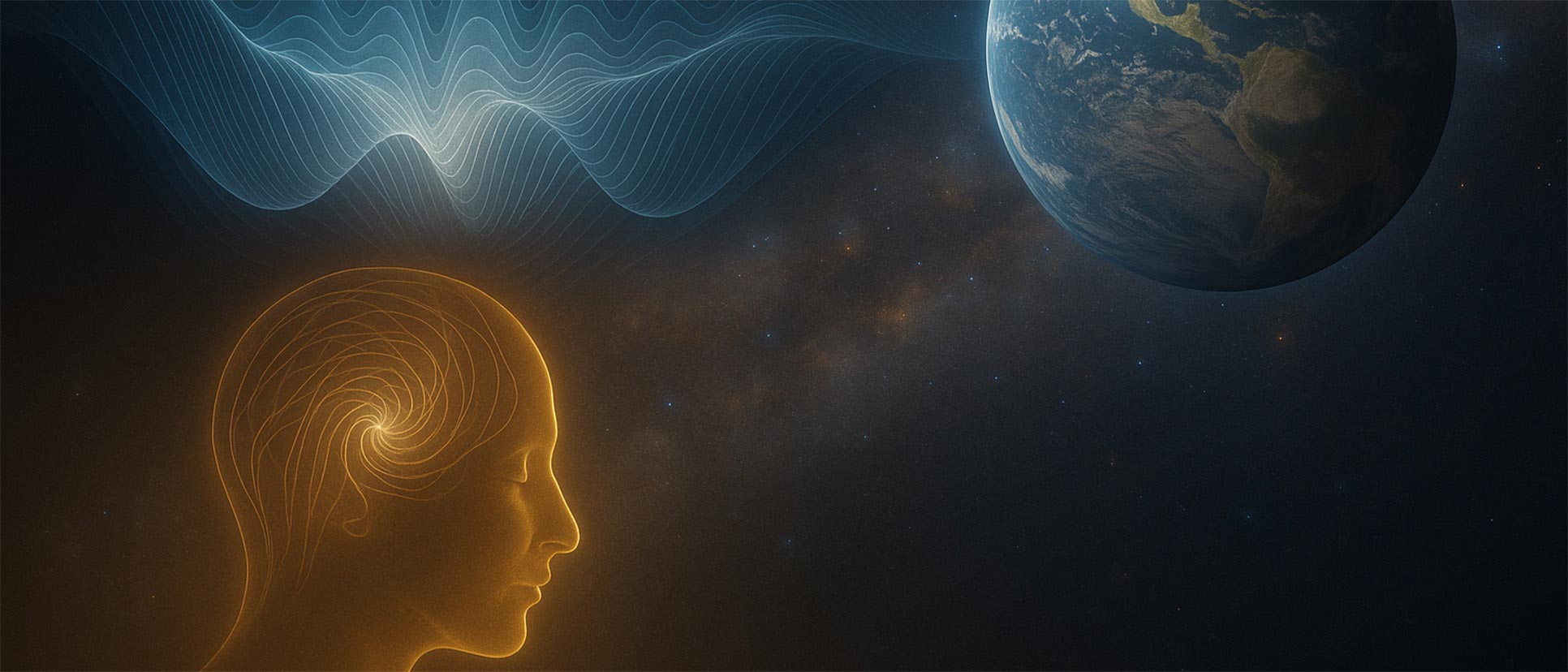 Maria Strømme presents a theory in which consciousness comes first, and structures such as time, space and matter arise afterwards. Credit: AIP Advances
A new picture of the nature of reality
Maria Strømme presents a theory in which consciousness comes first, and structures such as time, space and matter arise afterwards. Credit: AIP Advances
A new picture of the nature of reality
She suggests that her theory could represent a similar shift. The paper outlines several predictions that could, in principle, be tested within physics, neuroscience, and cosmology. By doing so, she moves well beyond her traditional field of materials science into questions about consciousness and the structure of the universe.
The model also proposes that individual consciousness does not end at death, but instead returns to the broader field from which it emerged. Strømme expresses this idea using quantum mechanical concepts rather than religious language.
“I am a materials scientist and engineer, so I am used to seeing matter as something fundamental. But according to this model, matter is secondary – much of what we experience is representation or illusion,” says Strømme.
A theory that reconciles science with ancient knowledgeAlthough the work is presented entirely through mathematical reasoning, Strømme acknowledges similarities with themes found in major religious and philosophical traditions.
“The texts of the major religions – such as the Bible, the Koran, and the Vedas – often describe an interconnected consciousness. Those who wrote them used metaphorical language to express insights about the nature of reality. Early quantum physicists, in turn, arrived at similar ideas using scientific methods. Now, it is time for hardcore science – that is, modern natural science – to seriously begin exploring this,” she says.
Reference: “Universal consciousness as foundational field: A theoretical bridge between quantum physics and non-dual philosophy” by Maria Strømme, 13 November 2025, AIP Advances.
DOI: 10.1063/5.0290984
Never miss a breakthrough: Join the SciTechDaily newsletter.
Follow us on Google and Google News.