
Remember me










 A widely used, low-cost drug may be poised to reshape how type 1 diabetes is managed. In a carefully controlled clinical trial, researchers discovered that while the medication doesn’t work in the way many assumed, it still delivers a meaningful benefit: reducing the amount of insulin patients need each day. Credit: Shutterstock
A clinical trial has found that a widely used and affordable type 2 diabetes medication can lower insulin requirements in people with type 1 diabetes, potentially improving how the condition is managed.
For many years, doctors have prescribed metformin, a long-established and widely used medication for type 2 diabetes, to people with type 1 diabetes in an effort to treat insulin resistance. This practice has largely been supported by clinical experience rather than strong trial evidence.
Now, a randomized clinical trial led by the Garvan Institute of Medical Research has shown that metformin does not directly reverse insulin resistance in people with type 1 diabetes. Instead, it lowers the total amount of insulin required to keep blood glucose levels within the recommended range.
The findings, published in Nature Communications, challenge long-held assumptions about how metformin works in type 1 diabetes. The results may help physicians refine treatment strategies and reduce the daily demands placed on people who rely solely on insulin therapy.
Can we overcome insulin resistance in type 1 diabetes?Type 1 diabetes is an autoimmune disease that affects more than 130,000 Australians. In this condition, the immune system mistakenly destroys the insulin-producing cells in the pancreas. Without natural insulin production, individuals must inject insulin for life to control their blood sugar. Managing glucose levels with insulin is complex and constant.
Estimates suggest that people with type 1 diabetes make approximately 180 additional health-related decisions each day connected to monitoring and adjusting their treatment.
Over time, some individuals with type 1 diabetes develop insulin resistance. In this state, the body’s cells become less responsive to insulin, meaning higher doses are needed to achieve the same blood sugar control. This can complicate treatment and increase health risks.
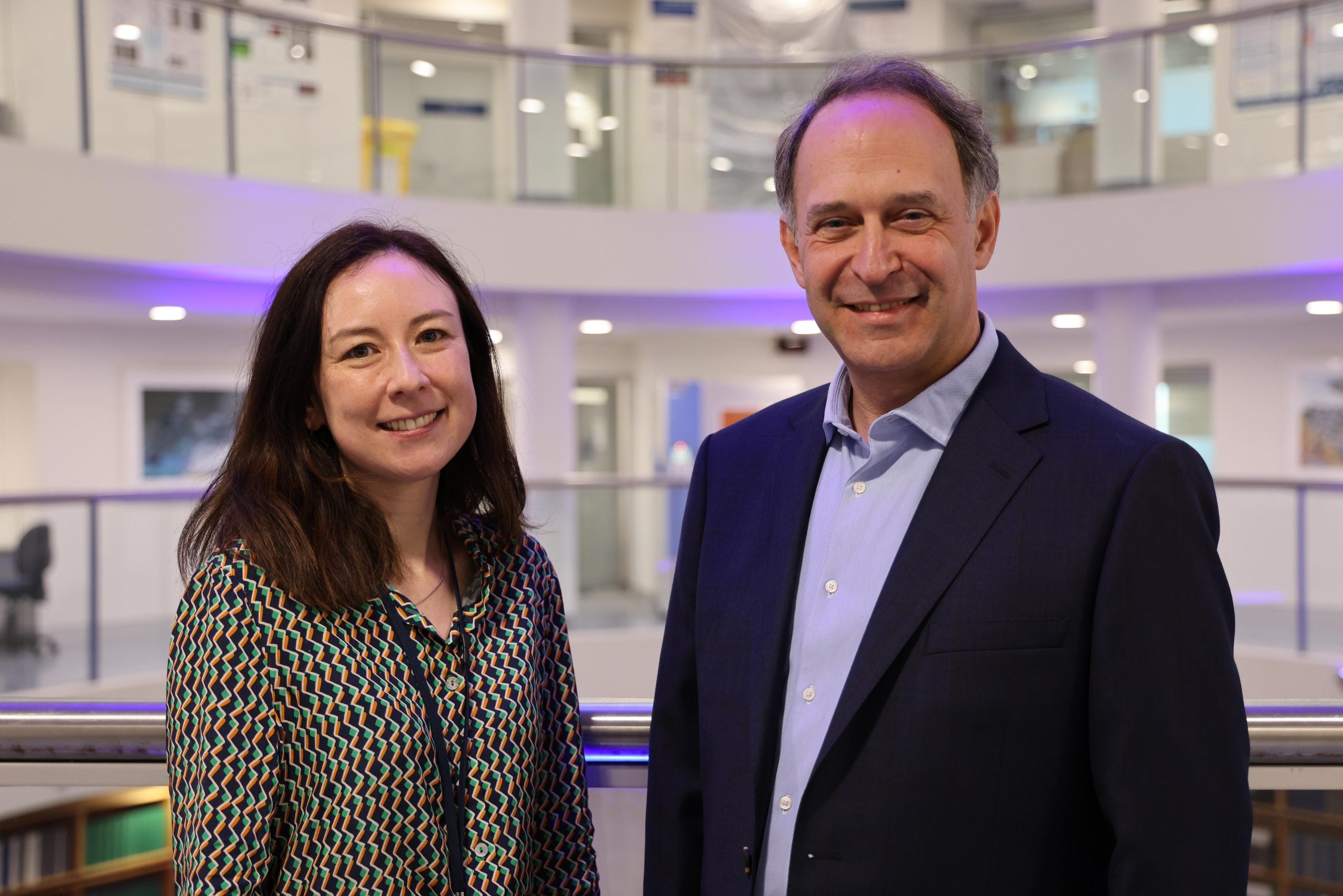 Dr. Jennifer Snaith and Professor Jerry Greenfield. Credit: Garvan Institute of Medical Research
“Insulin resistance is a growing problem in type 1 diabetes. Not only does it make regulating blood sugar levels difficult, but it is an underappreciated risk factor for heart disease, which is one of the biggest causes of health complications and deaths in those with type 1 diabetes,” says Dr. Jennifer Snaith, endocrinologist and co-lead of the study.
To investigate whether metformin could address this issue, Dr. Snaith and Professor Jerry Greenfield led the first randomized controlled trial in adults with type 1 diabetes to test the drug’s effects on insulin resistance. Metformin is an inexpensive oral medication commonly used in type 2 diabetes to improve the body’s response to insulin. Despite its frequent off-label use in type 1 diabetes, including by an estimated 13,000 Australians, its exact mechanism in this group has remained unclear. The study, titled Insulin Resistance in Type 1 Diabetes Managed with Metformin (INTIMET), was designed to provide definitive answers.
“We randomized 40 adults with long-term type 1 diabetes to take either metformin or a placebo for six months. We examined whether their insulin resistance changed over that time through a sophisticated and comprehensive research technique, called a clamp study, that allowed us to map insulin resistance in different parts of the body,” explains Professor Greenfield.
A surprise finding challenges the assumption of metformin’s actionUnexpectedly, the team found that the use of metformin did not lead to improvements in insulin resistance or changes to blood sugar levels. This suggests that, unlike for type 2 diabetes, metformin does not work to counter insulin resistance in type 1 diabetes. However, metformin did decrease the amount of insulin people needed to keep their blood sugars stable.
Credit: Garvan Institute of Medical Research
“Although we didn’t find changes to insulin resistance from the use of metformin, we did show that people taking it used around 12% less insulin than those on placebo. This is an important result. Insulin is a relatively old treatment which, while lifesaving, comes with significant mental and physical burden. This means that lowering the amount of insulin used is a priority for many people living with type 1 diabetes. We have shown that a very cheap, accessible medication may serve this purpose, and this is very exciting,” Dr Snaith says.
A role for gut microbes?The team is now investigating how metformin may work to lower the amount of insulin needed by those with type 1 diabetes.
Professor Greenfield explains: “Metformin has been available in various forms for around 100 years, but it’s mechanism of action remains unknown. We would have expected that the observed reductions in insulin dose induced by metformin in our study would be due to the body becoming more sensitive to insulin, that is, becoming less insulin resistant. But we have shown that is not the case. Our priority is now working out how metformin is achieving this effect.”
“There is increasing evidence suggesting that metformin may act on the gut. This is why we are now investigating how metformin changes gut flora, also known as the microbiome, in people with type 1 diabetes. This has not been studied before in type 1 diabetes. We’re hoping this will provide clues on metformin’s mechanism of action, so that it can be more widely used in the management of type 1 diabetes,” adds Dr Snaith.
Reference: “Effect of metformin on insulin resistance in adults with type 1 diabetes: a 26-week randomized double-blind clinical trial” by Jennifer R. Snaith, Nick Olsen, Jennifer Evans, Greg M. Kowalski, Clinton R. Bruce, Dorit Samocha-Bonet, Samuel N. Breit, Deborah J. Holmes-Walker and Jerry R. Greenfield, 24 November 2025, Nature Communications.
DOI: 10.1038/s41467-025-65951-1
This research is supported by the Diabetes Australia Research Program, St Vincent’s Clinic Research Foundation, UNSW Cardiac Vascular and Metabolic Medicine Theme, National Health and Medical Research Council, Melissa and Jonathon Green, and Dr Leslie and Mrs Ginny Green.
Never miss a breakthrough: Join the SciTechDaily newsletter.
Follow us on Google and Google News.