
Remember me







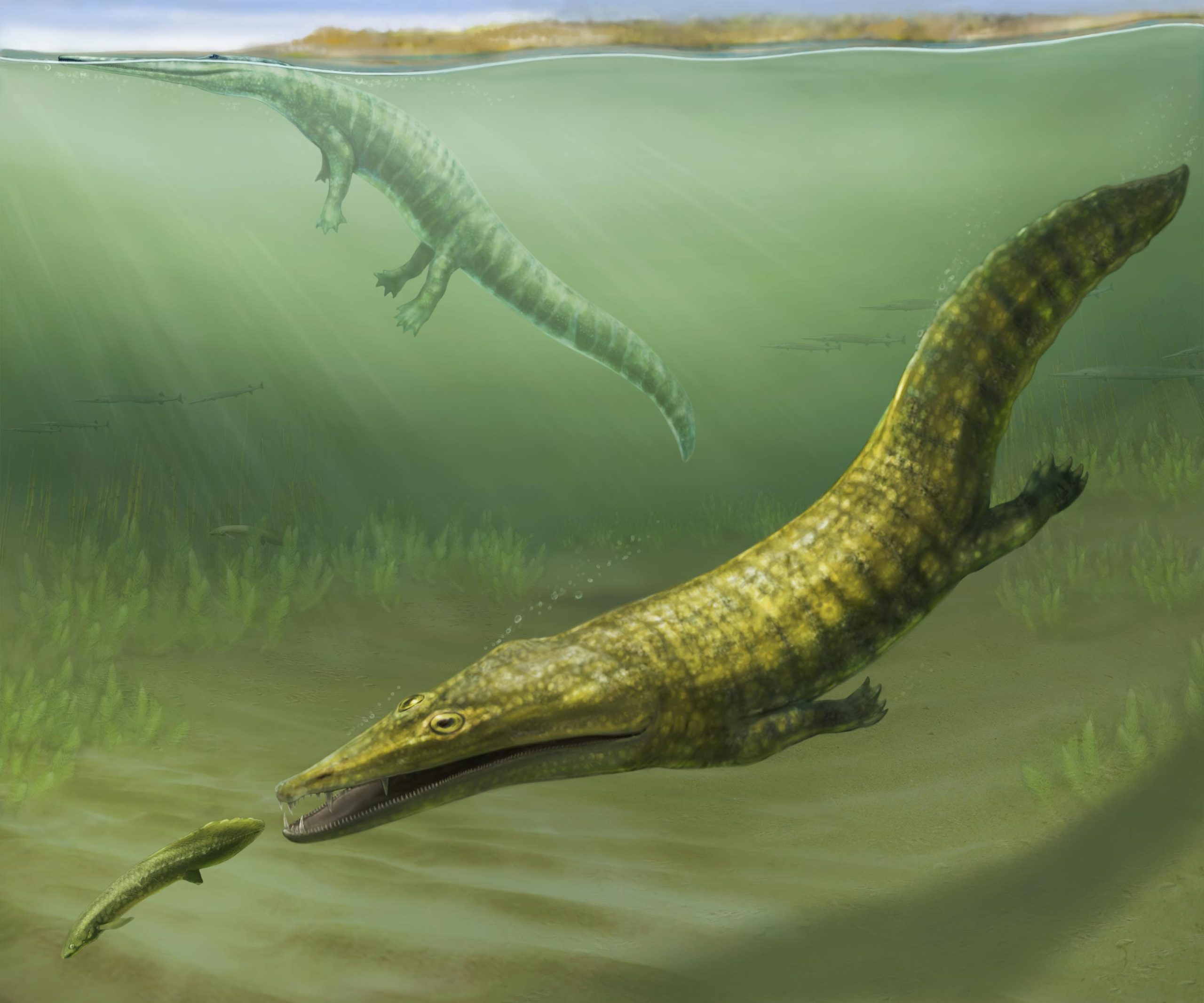 The ancient marine amphibians Erythrobatrachus (foreground) and Aphaneramma (background) swimming along the coast of what is now far norther Western Australia 250 million years ago. Credit: Pollyanna von Knorring (Swedish Museum of Natural History)
Lost fossils reveal that some of the first ocean predators went global astonishingly fast after Earth’s worst extinction.
Roughly 250 million years ago, a part of northwestern Australia that is now an arid desert sat beside a shallow bay connected to a vast prehistoric ocean. Fossils collected from this area more than 60 years ago and largely overlooked in museum drawers are now offering fresh insight into how land animals first returned to the sea and spread across the planet.
Life After the Permian Mass ExtinctionAbout 252 million years ago, the end-Permian mass extinction devastated life on Earth and was followed by intense global warming. In the recovery that followed at the start of the Age of Dinosaurs (or Mesozoic era), modern-style marine ecosystems began to take shape. Among the most important newcomers were early sea-going tetrapods (limbed vertebrates), including amphibians and reptiles, which quickly became dominant aquatic apex predators.
Most fossils of these early marine hunters have come from the northern hemisphere. In contrast, southern hemisphere discoveries have been limited and less well understood.
A new investigation of 250-million-year-old fossils from the Kimberly region of northern Western Australia has revealed a surprisingly varied community of marine amphibians, along with evidence that some of them had far-reaching global connections across ancient oceans.
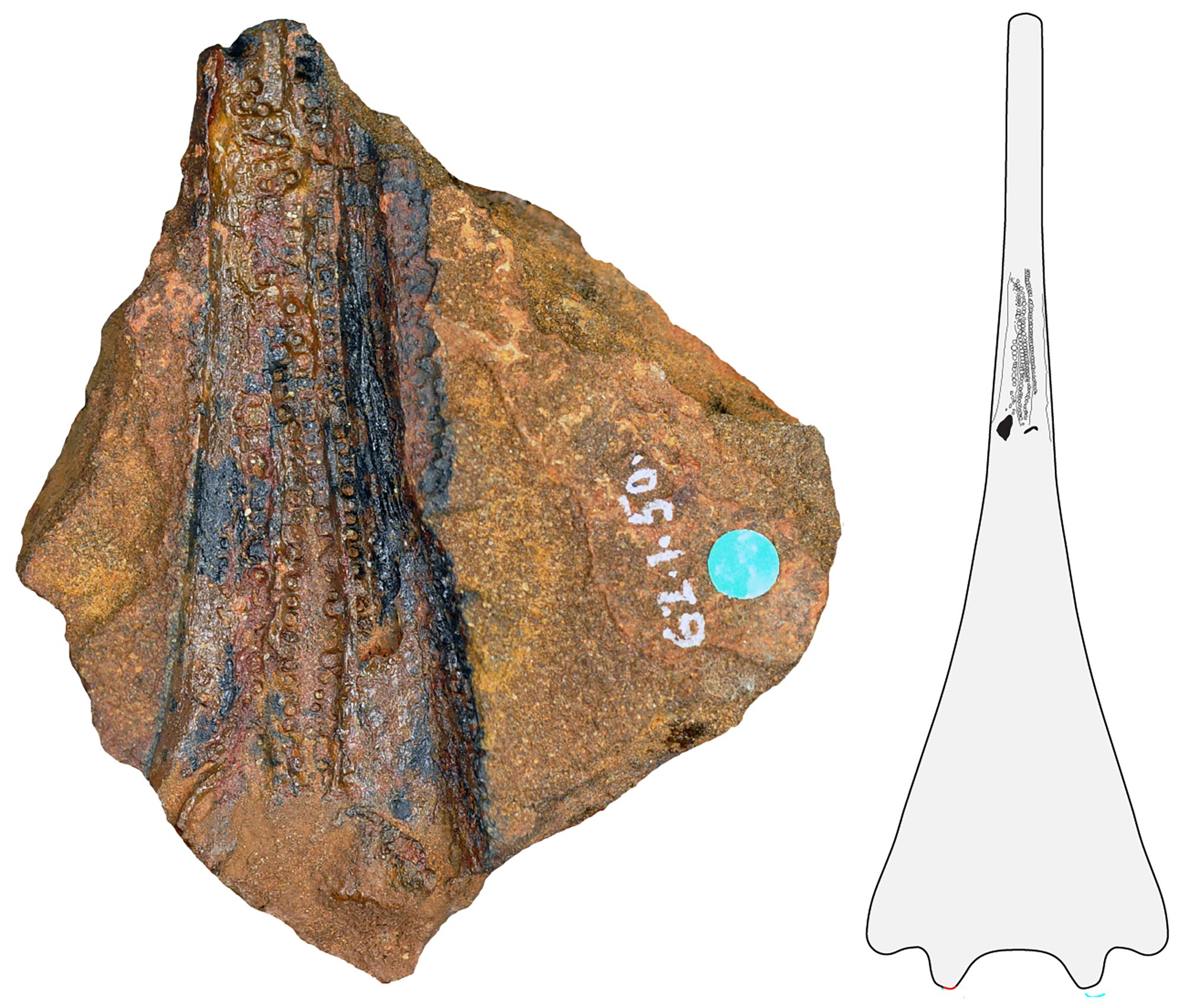 Fossil jaw with teeth from the 250-million-year-old marine amphibian Aphaneramma from Western Australia. Credit: Benjamin Kear (Swedish Museum of Natural History)
Lost Fossils Rediscovered Decades Later
Fossil jaw with teeth from the 250-million-year-old marine amphibian Aphaneramma from Western Australia. Credit: Benjamin Kear (Swedish Museum of Natural History)
Lost Fossils Rediscovered Decades Later
Marine amphibian fossils from this region were first uncovered during expeditions in the 1960s and 1970s. The specimens were divided between museums in Australia and the U.S.A. Research published in 1972 concluded that the remains belonged to a single species, Erythrobatrachus noonkanbahensis. The name was based on skull fragments eroding from a rock outcrop at Noonkanbah cattle station, east of the remote Kimberly town of Derby.
Sometime over the next 50 years, the original Erythrobatrachus fossils were misplaced. Scientists launched a search through museum collections around the world. In 2024, the missing material was finally located and carefully reexamined, shedding new light on these ancient marine amphibians.
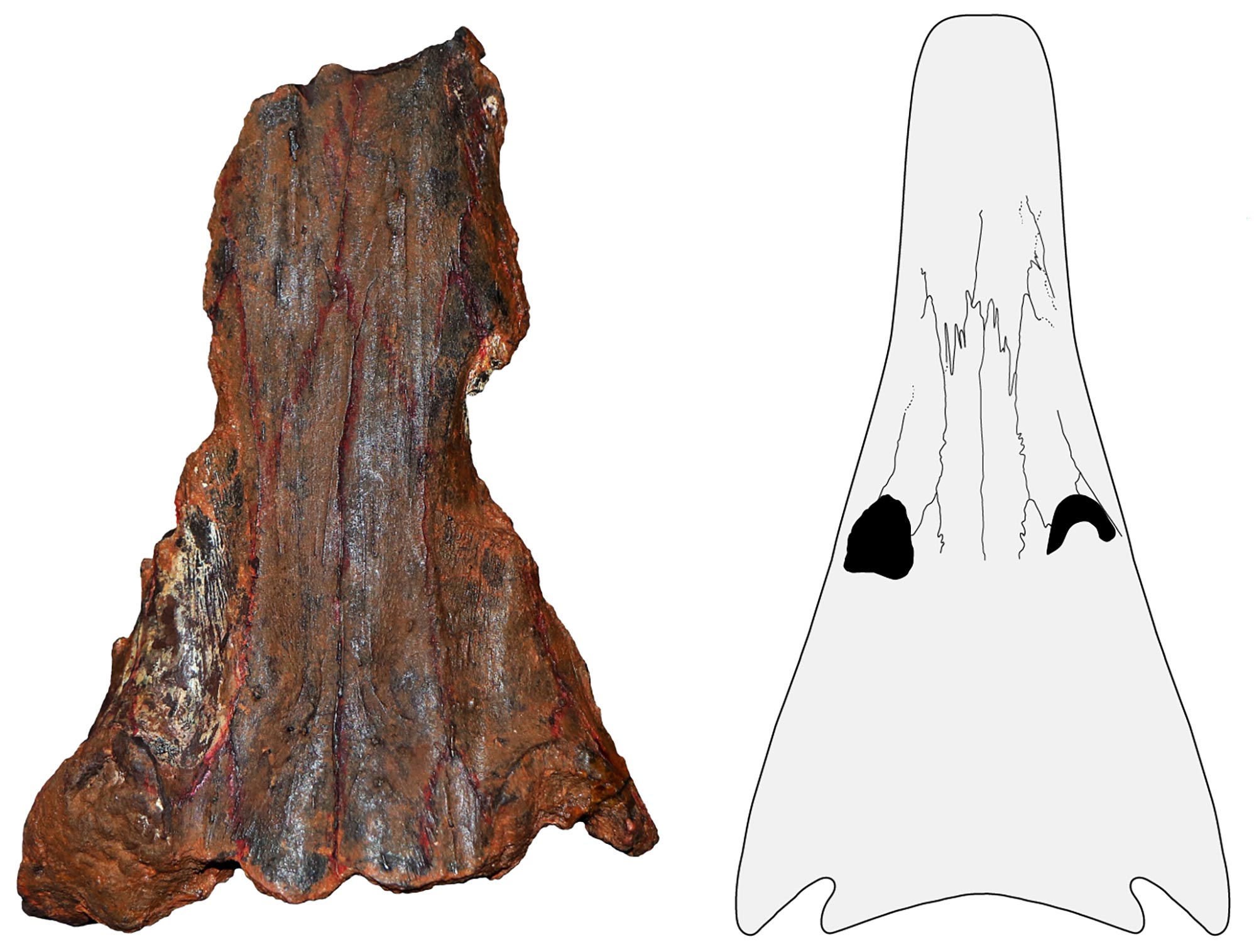 Fossil skull section from the 250-million-year-old marine amphibian Erythrobatrachus from Western Australia. Credit: Benjamin Kear (Swedish Museum of Natural History)
Early Marine Amphibians and Hidden Diversity
Fossil skull section from the 250-million-year-old marine amphibian Erythrobatrachus from Western Australia. Credit: Benjamin Kear (Swedish Museum of Natural History)
Early Marine Amphibians and Hidden Diversity
Erythrobatrachus belonged to a group called trematosaurid temnospondyls. These animals were ‘crocodile-like’ relatives of modern salamanders and frogs and could grow up to 2 m long. Trematosaurids are especially significant because their fossils appear in coastal rock deposits formed less than 1 million years after the end-Permian mass extinction. They represent the oldest clearly recognizable group of Mesozoic marine tetrapods.
Detailed analysis of the skull fragments revealed an unexpected finding. The bones once assigned to a single species actually represent at least two distinct trematosaurids: Erythrobatrachus and another species belonging to the genus Aphaneramma.
High-resolution 3D imaging shows that the Erythrobatrachus skull would have measured about 40 cm when complete and came from a large-bodied predator with a broad head. Aphaneramma was similar in overall size but had a long, narrow snout adapted for catching small fish. Both species swam in open water, yet they likely targeted different prey within the same environment.
Rapid Global Spread Across Ancient OceansErythrobatrachus is known only from Australia. By contrast, fossils of Aphaneramma have been found in rocks of similar age in Svalbard in the Scandinavian Arctic, the Russian Far East, Pakistan, and Madagascar. This distribution suggests that some of the earliest Mesozoic marine tetrapods not only diversified quickly into different ecological roles, but also spread widely across the globe. They may have followed coastal routes along interconnected supercontinents during the first two million years of the Age of Dinosaurs.
The findings are published in the Journal of Vertebrate Paleontology. The rediscovered Erythrobatrachus fossils are now being returned to Australia. Other amphibian fossils from the Age of Dinosaurs are currently on display at the Swedish Museum of Natural History.
Reference: “Revision of the trematosaurid Erythrobatrachus noonkanbahensis confirms a cryptic marine temnospondyl community from the Lower Triassic of Western Australia” by Benjamin P. Kear, Nicolás E. Campione, Mikael Siversson, Mohamad Bazzi and Lachlan J. Hart, 22 February 2026, Journal of Vertebrate Paleontology.
DOI: 10.1080/02724634.2025.2601224
Never miss a breakthrough: Join the SciTechDaily newsletter.
Follow us on Google and Google News.