Blackheath in south-east London has a rich history. It was a rallying point for both the Peasants’ Revolt in 1381 and the Kentish rebellion of 1450. Monarchs through the ages have passed through. But what is less known is that it was also the site for what may have been Britain’s first refugee camp.
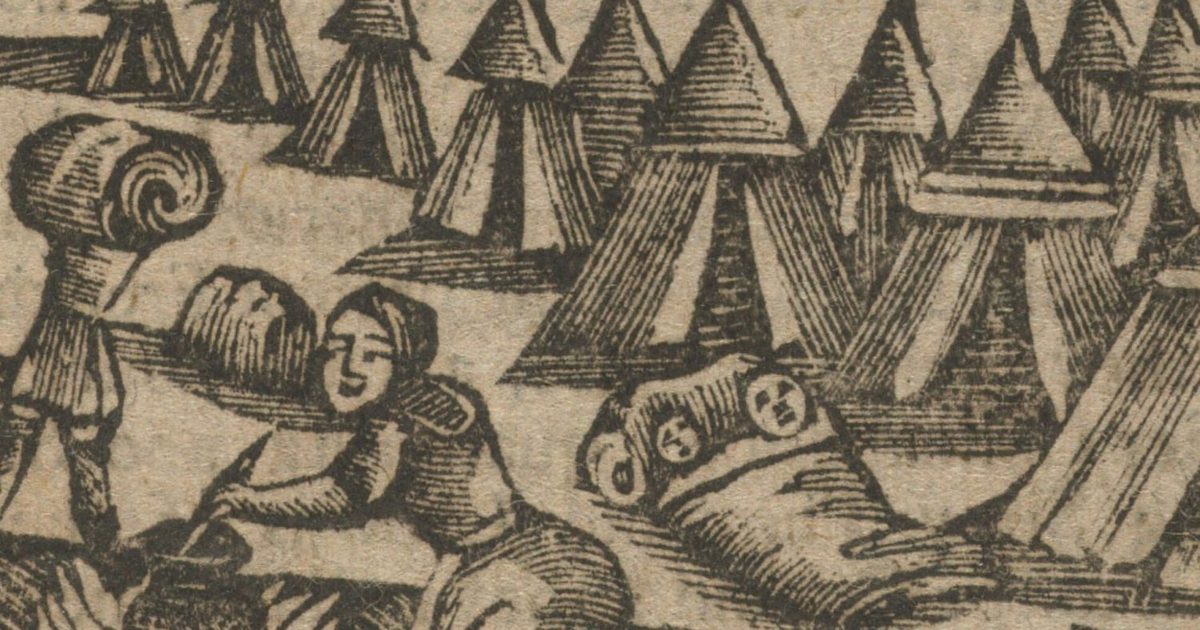
In 1709, army tents were temporarily erected in Blackheath to give shelter to some of the estimated 13,000 German refugees who had arrived in Britain from the Palatinate, which is the modern-day Rhineland. There were also camps in Camberwell, Clerkenwell and Greenwich. Initially, the refugees were supported with charitable donations. Many arriving were poor and they spoke a different language, but they were viewed as Protestants fleeing persecution from oppressive Catholic regimes. English parishes raised around £20,000 to support the Palatine refugees.
The Rhineland had suffered significantly during years of warfare. Most recently, it had been invaded by King Louis XIV of France in 1707. However, when the Palatine arrivals came to England, there was not a particular ongoing dispute making them flee. As part of the Treaty of Westphalia of 1648, the state was tolerant of Catholics, Lutherans and Calvinists. The ruling ‘Elector’ was Catholic, yet both Catholics and Protestants used the most important church in the city of Heidelberg, the Heiliggeistkirche (Church of the Holy Spirit), as a place of worship.
When the British government took a census of the people arriving from Germany, the authorities realised that about a third were Catholic. The reasons they were coming, it turned out, were complex. Many of the refugees had indeed been affected by religious persecution. But others were travelling in search of economic opportunities. They were escaping bad harvests, high food prices, poor prospects. And there were those who wanted to journey on, to America.
Britain in 1709 was also facing its own economic difficulties. The country’s involvement in the War of the Spanish Succession had disrupted trade and pushed up prices. The numbers of people relying on charity through the Poor Law had increased. There were concerns that the Palatines were draining the economy, taking jobs away from the English poor. And although the newcomers were largely Protestants, they were not members of the Church of England and so could pose a threat to the nation’s security.
Tradesmen and the labouring poor were especially suspicious. Politicians amplified a sense of fear that also found expression in pamphlets and newspapers. A report in The Daily Courant in August 1709 said: “They have not left their native land because their prince’s government is more intolerable than others… No, ’tis because their country is so unhappily situate, that it has felt the invenom’d rage of the enemy, and been expos’d to the calamities of war, more than any other.”
In the end, many of the Palatines were eventually resettled across the Atlantic. They joined other German speakers to become the largest single group, aside from enslaved Africans, to enter the American colonies between 1680 and 1780.
Around 3,000 Palatines were shipped to Ireland. Some made their way back to their homes in the Rhineland, preferring to be there than left begging on the streets in England. A few towns, such as Liverpool and Perth, had agreed to take in some settlers. Others found new homes in parts of rural Lancashire, but most local corporations refused to take in any newcomers.
And yet for all the suspicion directed at the Palatines, there were those who tried to emphasise the advantages in offering them a home. A publication of 1710, The State of the Palatines for Fifty Years Past to this Present Time, said: “In the whole they appear to be an innocent, laborious, peaceable, healthy and ingenious people; and may be rather reckon’d a blessing than a burden to any nation.” Debates around immigration in the 18th century, it seems, weren’t so different to today.
This column was first published in the February 2026 issue of HistoryExtra Magazine