
Remember me




Follow our live coverage here.
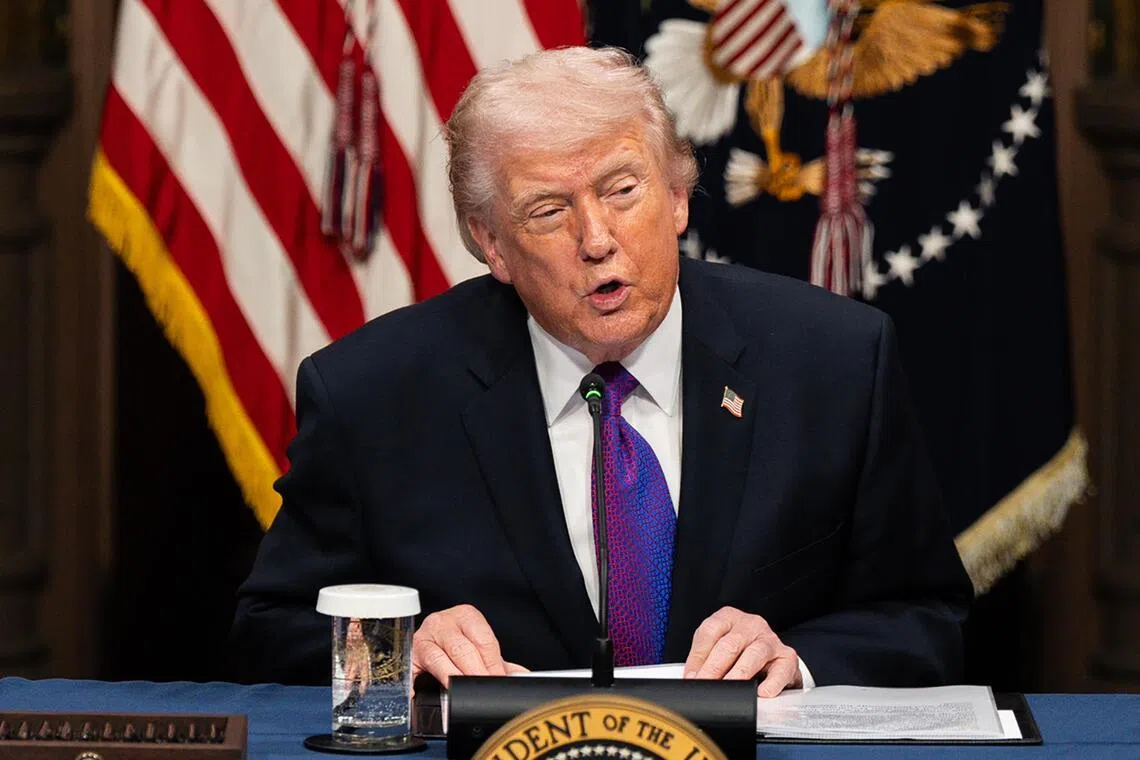
HOUSTON – How far can US President Donald Trump go in remaking a sovereign country like Iran?
Not only did Mr Trump take credit for Supreme leader Ayatollah Ali Khamenei’s death on the first day of the war,
The United Nations charter implicitly outlaws assassinations. Executive orders signed by past US presidents explicitly ban the deliberate, premeditated murder of foreign leaders.
But Mr Trump has shaken off such strictures as he sets new benchmarks with his unprecedented assertion of American power over Iran’s political future.
He declared flatly on March 5 that Mr Mojtaba Khamenei, the son of the assassinated Supreme Leader and the front-running candidate to lead Iran, will not pass muster.
“Khamenei’s son is unacceptable to me. We want someone that will bring harmony and peace to Iran,” Mr Trump said of the 56-year-old hardliner, who is known more for his links with Iran’s security agencies than his religious credentials or public profile.
“They are wasting their time. Khamenei’s son is a lightweight. I have to be involved in the appointment,” Mr Trump said in interviews given to US journalists.
“We want to be involved in the process of choosing the person who is going to lead Iran into the future. We don’t have to go back every five years and do this again and again.”
With this, Mr Trump has embarked on a path that no American president has trodden before.
The most direct US intervention in Iran’s leadership thus far came under president Dwight D. Eisenhower, through the 1953 coup that overthrew Iran’s then prime minister Mohammad Mossadegh and restored Shah Mohammad Reza Pahlavi to power.
But his administration did not go to the extent of publicly announcing a plan to “appoint” the Shah. Rather, the US orchestrated the coup and then cemented his rule with military and economic support that lasted for decades.
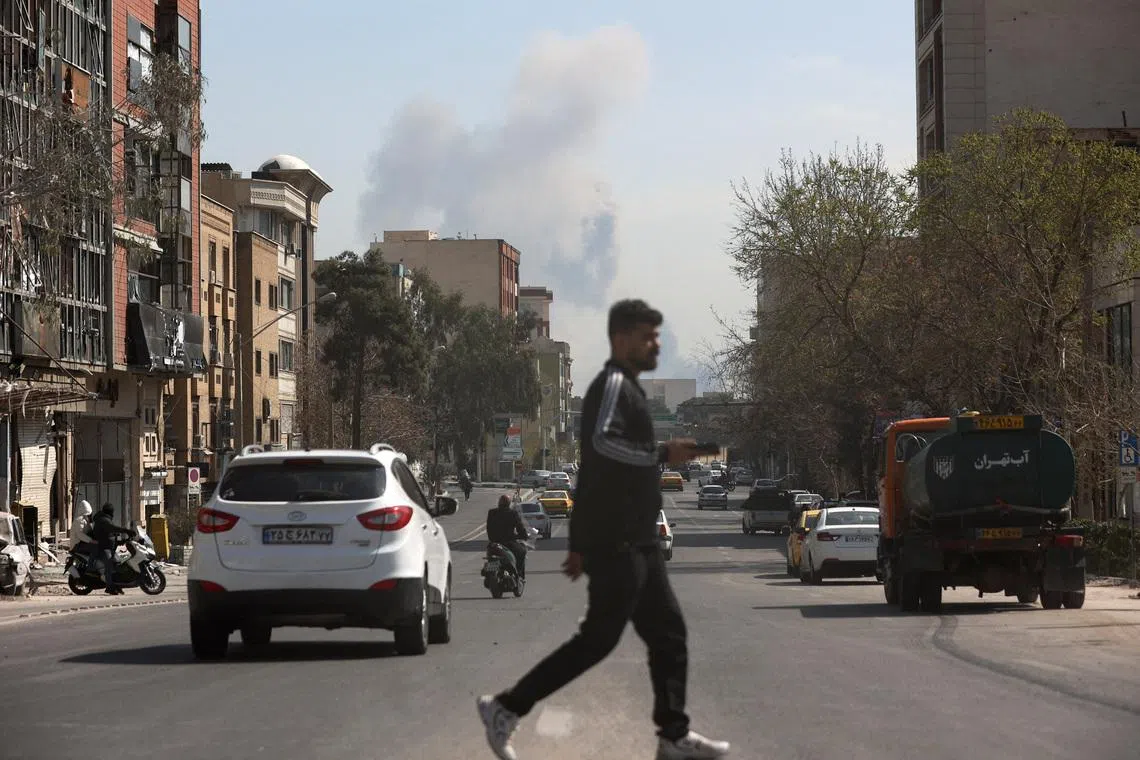
The assassination of the Iranian supreme leader in the US-backed Israeli “Blue Sparrow” strikes on Feb 28 shattered the taboos on the targeting of heads of state.
US analysts told The Straits Times that Mr Trump’s actions would likely go unchallenged.
“If the United States is going to war, killing the head of state is not an option that gets taken off the table,” said Dr Joseph Ledford at the Hoover Institution whose research focuses on the exercise of US power in the world.
“In the case of Khamenei, he was a legitimate military target; the Trump administration has justified it under the imminent threat that Iran posed.”
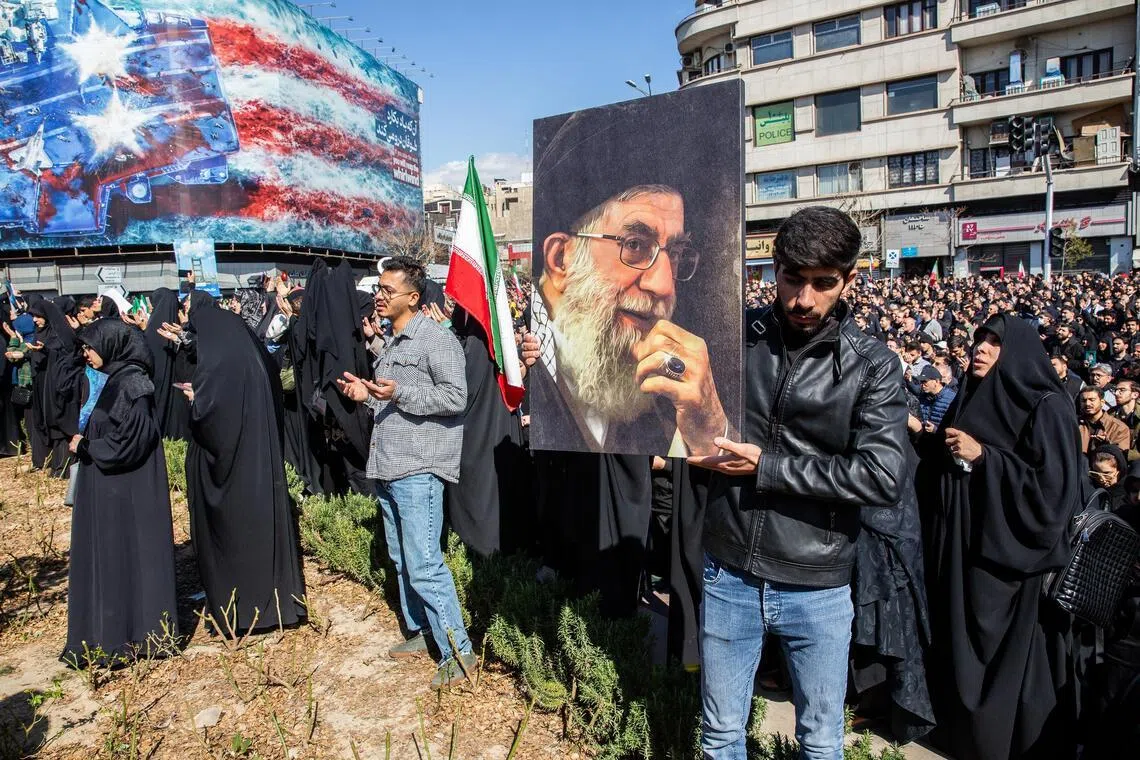
The assassination of Supreme leader Ayatollah Ali Khamenei on Feb 28 shattered the taboos on the targeting of heads of state.
PHOTO: ARASH KHAMOOSHI/NYTIMES
The UN Charter does not exactly constrain American presidents when they decide to act in the national interest, he noted.
“At the end of the day, will Congress impeach Donald Trump for killing the Ayatollah? Will the world mobilise against the United States over Khamenei’s death?” Dr Ledford asked. “Highly doubtful!”
Associate Professor Javed Ali, a national security law and policy expert at the University of Michigan, clarified that the US did not conduct the decapitating strike – Israel did.
Even if the US had done so, it is unlikely that its action can be faulted on legal grounds, he said.
“There’s a series of executive orders, going back 40-plus years, that ban political assassinations,” he noted. “But in a wartime scenario, the action probably would be approved as legal.
“It’s a fine point, I know, but that’s the way the US can make that distinction.”
When the US engages in such operations, there has to be a legal basis for them because the military cannot operate without that, Prof Ali pointed out.
“When they are designing an operation, it has to be reviewed by military lawyers to make sure that the operational objectives also conform with the laws of war and that the US is not in violation.
“In fact, the US goes to fairly significant lengths to make sure that it doesn’t run afoul of the norms and rules of warfare,” he said.
“That doesn’t mean everything is perfect all the time. But this is not the US shooting from the hip. These operations aren’t conceived overnight, there’s a lot of care and planning that goes into it,” he added.
“And even if the US were to target the next person who becomes the Supreme Leader, there would have to be an assessment to determine that a military strike would not violate the legal framework around that.”
The UN Charter does not contain a clause that describes “assassination of leaders” as an offence. But it effectively outlaws such actions through a ban on the use of force and on violation of a state’s political independence.
Article 2(4) of the Charter states: “All Members shall refrain in their international relations from the threat or use of force against the territorial integrity or political independence of any state, or in any other manner inconsistent with the Purposes of the United Nations.”
Killing a foreign head of state, especially in peacetime, is widely seen as a violation – unless it can be framed as a lawful act of self‑defence under Article 51 of the charter.
The US also has its own ban on assassinations.
The key rule is Section 2.11 of Executive Order 12333, signed by President Ronald Reagan in 1981. “No person employed by or acting on behalf of the United States Government shall engage in, or conspire to engage in assassination,” it states.
This built on earlier orders by Presidents Gerald Ford and Jimmy Carter, which initially banned “political assassination”. Mr Reagan’s order broadened the ban to cover all assassinations.
Notably, it is a presidential directive, not a law passed by Congress. This means it can be changed or revoked by a president.
US lawyers have argued that killings carried out in an armed‑conflict framework or under Article 51 self‑defence are not considered “assassinations” defined under Executive Order 12333, even if they target high‑level officials.
“The assassination ban generally had a constraining effect and steered American leaders away from such action, though it did not prevent the targeting of terrorists or leaders,” said Dr Ledford.
Prof Ali said another constraint is the 1973 War Powers Act, which has defined a timeframe for the president’s actions.
“Once the US military engages in armed combat against another nation state, there is a clock that starts ticking. After 60 days, if the military is still engaged in hostilities, then Congress can step in and say that the hostilities have to stop,” he said.
“In order for them to continue, Congress needs to pass an authorisation to use military force or declare war against that state.”
American presidents have been involved in both attempts and authorised operations aimed at killing foreign leaders, usually as Cold‑War era covert plots rather than openly declared assassinations.
In 2011, then-President Barack Obama oversaw NATO-led strikes in Libya, after a broad authorisation from the UN, which disrupted a convoy of President Muammar Gaddafi, contributing to his capture and death.
Washington framed this as a battlefield outcome, not a direct assassination order, even though the operation did remove a sitting leader.
Before Mr Obama, former president Ronald Reagan had ordered air‑and‑naval operations that sought to kill Gaddafi in 1986. The strikes damaged his residence and killed one of his daughters, but Gaddafi himself survived.
The first Gulf War in 1991 included a failed bunker‑bombing attempt on then Iraqi president Saddam Hussein in the early days of the conflict, aimed at decapitating his regime. But he escaped.
And in the lead-up to the 2003 Iraq invasion, the George W Bush administration conducted “decapitation strikes” on locations where Saddam was believed to be. These strikes were conducted under broad congressional authorisation after the Sept 9, 2001 attacks on the US.
Although Saddam survived, he was eventually captured and executed by Iraqis in 2006.
The intent to eliminate the sitting head of state through air strikes marked a significant shift in US practice, breaking with the taboo against directly targeting leaders.
And it helped construct the legal framework under which taking out foreign leaders during war or “counter‑terrorism” operations has now become permissible for an American president.
Comments (0)