
Remember me





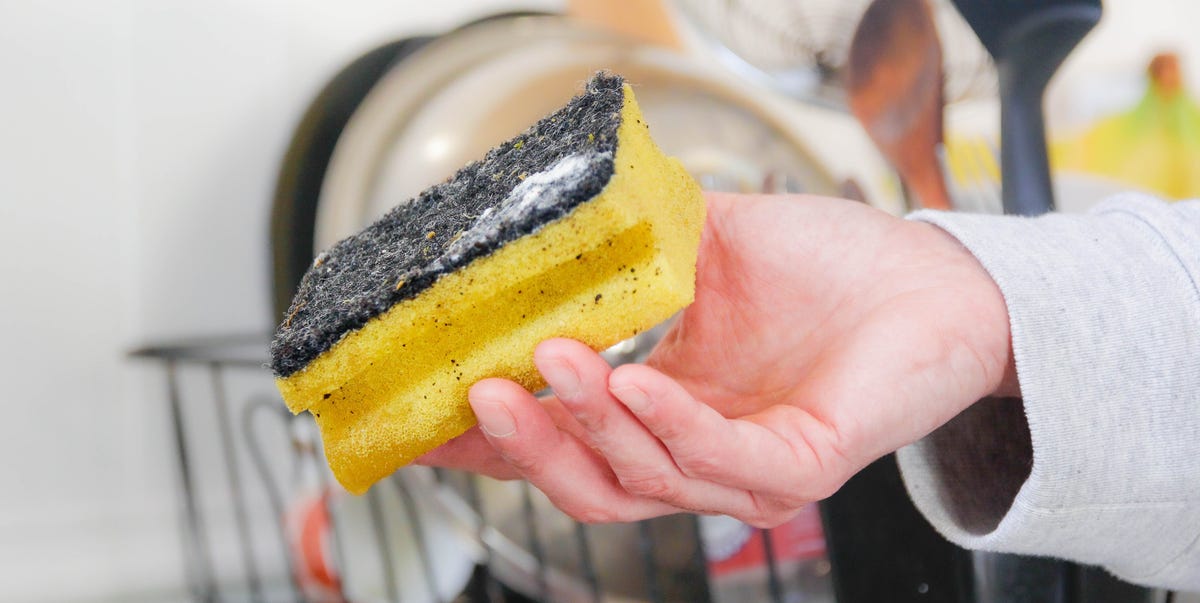
It's not the most pleasant thing to think about, but it's an unfortunate truth: Kitchen sponges harbor bacteria and other icky things even after you've rinsed them. Luckily, there are plenty of methods for killing germs on the sponge. The Good Housekeeping Institute teamed up with with EMSL Analytical Testing Lab in New Jersey to put four popular methods to the test.
We tried cleaning a kitchen sponge by soaking it in bleach, putting it in the microwave, running it through the dishwasher, and soaking it in vinegar. While there's one method that was slightly more effective than the others, the good news is that more than 99% of germs were eliminated by each method.
The Best Way to Clean a SpongeBelow, you'll find the best step-by-step method for cleaning a sponge. But no matter how diligent you are about cleaning, your kitchen sponges won't last forever. You need to clean them weekly, and toss shabby ones every two to three weeks, depending on use.
Mix 3/4 cup of bleach in one gallon of water.Soak the sponge in the mixture for five minutes, then rinse – and that's it!In testing, the bleach solution killed 99.9% of the three bacteria strains from the test sponges (scrub and regular cellulose), which is the benchmark based on the EPA's requirement for sanitization of non-food-contact surfaces.
 3 Alternative Ways to Clean a Sponge
Even though bleach is the most effective bacteria killer, in a bind, these methods are your next best option. They're listed in order from most to least effective, so choose wisely.
Microwave: The microwave was one of the next most effective ways to clean a sponge, zapping 99.9% of germs. Do this by saturating the sponge in water (we used 1/4 cup for scrub sponges and 1/2 cup for cellulose), putting the sponge in the microwave, then heating it on high for one minute (scrub) or two minutes (cellulose).Dishwasher: The dishwasher also killed 99.9% of germs. To use, add your sponge to a regular dishwasher load, using the "heated dry" setting.Vinegar: This method eliminated 99.6% of bacteria. All you have to do is soak your sponge in full-strength vinegar for five minutes, then rinse.
Lauren is a senior editor at Hearst. She was previously the senior editor at WomansDay.com and the home editor at GoodHousekeeping.com and HouseBeautiful.com. Her book club, ramen, and jean jackets are a few of her favorite things.

Jamie Ballard (she/her) is a freelance writer and editor who covers news, lifestyle, and entertainment topics, including sex and relationships, TV, movies, books, health, pets, food and drinks, pop culture, shopping, and personal finance. She regularly contributes to Cosmopolitan, Woman’s Day, Good Housekeeping, and YouGov, among other publications. When she’s not working, you can find her running, traveling, or scrolling TikTok. Follow her on Twitter.