
Remember me





There’s no shortage of memorable dads on movies and TV, from the loudmouth Archie Bunker from All in the Family to the stoic Jack Arnold from The Wonder Years to the warm (if slightly hapless) Bob Belcher from Bob’s Burgers. But what kinds of fathers does Gen Z want to see on screen—and in their own lives?
The Center for Scholars & Storytellers at UCLA has just released a new study that surveyed 1,500 US adolescents (ages 10 – 24) regarding male images they see on TV and in the movies. Researchers found that the number one need expressed by 57.7% of these kids was to see fathers to show their kids love. The study also found that adolescents want to see that dads enjoy parenting and taking care of others. Watching men asking for help, seeking mental health care, and being affectionate were also considered to be positive qualities.
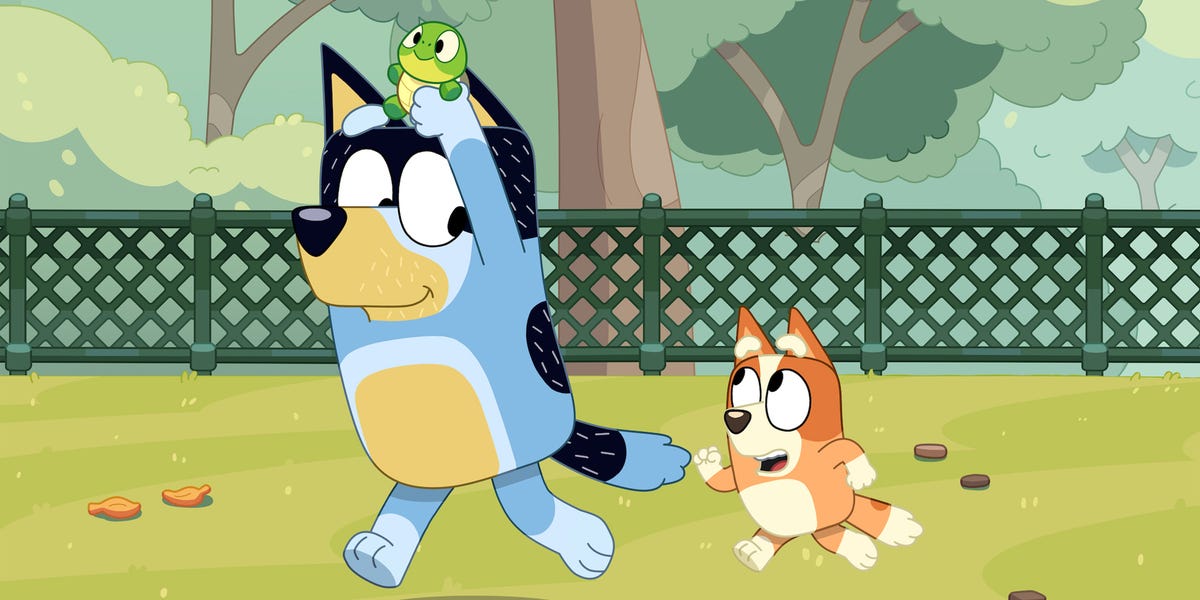
The researchers also report that kids crave “joyful fatherhood,” with dads openly showing love. They also want to see dads demonstrating less traditionally “masculine” behaviors, and instead they want dads to show vulnerability. Imagine a real-life Bandit from Bluey, and you’re on the right track.
“Young people expressed a desire to see fathers who actually talk about their feelings, rather than just offering stoic help with a task or hobby,” says Yalda T. Uhls, PhD, a developmental psychologist, assistant adjunct professor of psychology, and founder and CEO of the Center for Scholars & Storytellers (CSS) at UCLA. “A father saying, ‘I’m feeling a little stressed about work today, so I’m going to take a minute to breathe,’ models that vulnerability is a form of strength, not a liability.”
The desire to see these qualities isn’t limited to just the media, either. “There is often a strong alignment between the qualities young people want to see in male characters onscreen, and the qualities they value in fathers and male role models in their real lives,” Dr. Uhls says. “Media acts as a social mirror. When boys and girls consistently see fathers who are loving, emotionally present, and willing to seek support when they need it, it reinforces the idea that these are normal and admirable qualities in men.”
Why does a father's vulnerability matter to a child's development?Number one, sensitivity is an important part of being human. “We all have vulnerable moments in life,” says Heather Wittenberg, PsyD, a parenting psychologist in Maui, Hawaii and founder of BabyShrink.com. “Allowing kids to see that their dad has those moments builds a sense of authenticity and flexibility. That helps them feel safer. When a dad demonstrates how to roll with life's punches—like getting knocked down, then getting back up to try again—this builds resilience and confidence in his kids.”
If a child only views their dad as a “tough guy,” they miss getting to know his full essence, too. “Children learn what emotions are ‘safe’ to have by watching the adults closest to them,” says Pamela B. Rutledge, PhD, MBA, a psychologist in Newport Beach, CA and professor emerita in media psychology at Fielding Graduate University. “When a child only sees their father model stoicism, they are, in effect, learning that feelings, especially uncomfortable ones, are something to hide from others. When a father shows appropriate vulnerability, it shows that even difficult emotions can be handled.”
A father who’s gentle and loving also eliminates stereotypes for a child. “Children, especially boys, internalize what masculinity means from their fathers,” Dr. Rutledge says. “A father who normalizes asking for help, admitting uncertainty, or expressing affection gives his child permission to do the same.”
Related StoryHow can a dad begin to show more caring and vulnerability?They can start by getting involved emotionally with their children early. Recent research from Pennsylvania State University found that some fathers who aren’t actively attentive to their 10-month-olds are likely to become emotionally withdrawn parents later on.
Even when their children are small, a father can show affection by focusing on their child’s emotions. When watching a key moment in a show or film, “simply asking a child, ‘How did that make you feel?’ and sitting with the answer without immediately jumping into ‘fix-it’ mode is a powerful act of care,” Dr. Uhls says.
A father can communicate great love very simply, too. “He can just say, ‘Hey, kiddo, sitting here next to you on the couch, hanging out together, is the most fun part of my day—I love you so much,’” Dr. Wittenberg says.
A smart dad also isn’t afraid to admit he messed up. “One of the most powerful things a father can do is apologize after losing his temper, or getting something wrong,” says Dr. Rutledge. “Saying, ‘I was too harsh earlier and I'm sorry’ models accountability and honesty, and shows a child that relationships can recover from conflict.”
Related StoryHow can watching a film or TV show bring a dad closer to his kids?The Center for Scholars and Storytellers uses the research they do to help content creators in the entertainment industry reimagine how boys and men are depicted on TV and in movies.
It’s true: Watching a favorite show or film can be a proactive way for a dad to connect with his child or children, because he’s got handy examples both of them can learn from.
“A father might ask, ‘How do you think that character felt when he told his son he was proud of him?’” Dr. Uhls says. “This allows the child to discuss the emotion through a fictional lens first. A father can follow up with, ‘I really liked how that dad listened. Do you think I do a good job of that, or is there something I could do better when we talk?’”
Dr. Rutledge offers five ways fathers can point out onscreen behavior that emphasizes positive emotions:
When an onscreen dad shows affection, a dad can say, "I liked that moment. What did you think?"A dad can reinforce the idea that vulnerability is not weakness by mentioning, “He didn’t try to hide that he was sad. That was brave.”A dad can connect events in a show or movie to validate his child’s experiences. Say, “Have you ever felt like that? I have too.”A dad can let his child project onto characters what they’d like from you. What to say: “If I did what that dad just did, would you feel happier?” This can work because using characters can feel safer for your child than than talking about their own emotions.When a fictional father makes a mistake, a dad can say, "He got that wrong at first. Do you think he handled it well when he fixed it?"The bottom lineThe best news of all: Most fathers treasure their kids, and their role as dads. Pew Research Center’s most recent survey on parenthood found that 85% of fathers say that being a dad is the most important or one of the most important parts of their identity. Excellent, because this indicates how motivated fathers can be to show their kids open and consistent love. As Dr. Wittenberg sums it up: “This generation of parents expects dads to be more emotionally invested in parenting, and rightly so. Kids benefit so much!”
Related Stories
 The Best Gifts for All Kinds of Dads
 60 Essential Movies for Kids
 The Myth of the ”Primary” Parent
Lisa is an internationally established health writer whose credits include Good Housekeeping, Prevention, Men’s Health, Oprah Daily, Woman’s Day, Elle, Cosmopolitan, Harper’s Bazaar, Esquire, Glamour, The Washington Post, WebMD, Medscape, The Los Angeles Times, Parade, Health, Self, Family Circle and Seventeen. She is the author of eight best-selling books, including The Essentials of Theater.