Remember me





Have Russians lost their street cred? Hollywood says no. Last year’s Best Picture was Anora, a film about a Russian-American stripper’s affair with the son of a Russian oligarch. The lowbrow show of 2026, Heated Rivalry, features an affair between a Russian and a Canadian ice-hockey player. This year, arthouse factory A24 will put out Dennis, a film about a love affair in Moscow after the fall of the Soviet Union.
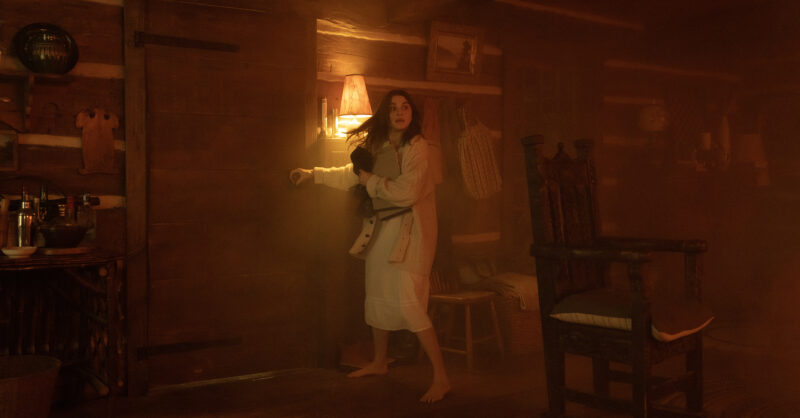
Now there is a Netflix adaptation of Vladimir, a 2022 novel by American writer Julia May Jonas. The unnamed female narrator of Vladimir is a middle-aged academic dealing with the fallout of a years-long open marriage to another middle-aged academic. Her husband has finally drawn disgrace after sleeping with several of his students; his disciplinary procedures and rumours keep affecting her own career. She gets her own back by plotting an affair with a colleague called Vladimir, who is young, married and Russian-American.
Like Lolita, Vladimir is more a narrative tool than a person. He is barely granted any internality and represents everything our narrator wants for herself: youth, beauty, privacy and cosmopolitan literary success. She’s at home in her white, Waspy university setting but occasionally frustrated by her dealings with a black scholarship student, which are always mediated by awkward mutual assumptions of racial privilege. Vladimir’s ethnicity puts him in a desirable borderland: he is just racialised enough to seem sexy, exotic and interesting, and to dodge the minefield of post-BLM campus culture. He is not racialised enough to fall foul of actual racists.
Some supporters of Ukraine are wondering why Russians are everywhere. “An avalanche of positive Russian characters all across Netflix and other American platforms suspiciously coincide[s] with the last year’s change in power in US,” wrote one on X.

Subscribe to the New Statesman today and save 75%
This wouldn’t be the first time. Hollywood was obsessed with Russia in the 1930s. This was partially because the industry had a large workforce of White Russian emigres, and partially because America had just forged tentative diplomatic ties with the Soviet Union. There were lavish biopics of Catherine the Great and Rasputin. Studio bosses decided to make the most of Greta Garbo’s Swedish accent and put her to work playing a series of Russian spies.
Streamlined studio processes in the 1930s meant a film could be written, shot and released in under a year, allowing producers to profit from momentary cultural and political trends.
By contrast, today’s culture industries operate at a glacial pace. Heated Rivalry is based on a series of books first published seven years ago. Jonas’ novel came out the year Russia attacked Ukraine, which means it probably languished at a publishing house for the first two years of the 2020s. A Netflix adaptation has taken four more years to produce. The more likely explanation, however, is that America’s film studios are not even attempting to respond to the war in Ukraine. They are trying to profit from a cultural craze that has already passed.
Online Russophilia has never existed without controversy. The Winter Olympics went to Sochi in 2014, one year after Russia outlawed the dissemination of LGBT “propaganda”, and two years after members of Pussy Riot were arrested for a purportedly sacrilegious performance in a Moscow cathedral. A regime of homophobic persecution in the southern republic of Chechnya became a major concern for human rights activists. These issues faded into the background. Russia became cool online for the same reasons China is cool now. It felt vaguely anti-authority to be interested in it. Its culture featured hard liquor, brutalist architecture, cutthroat beauty standards, and a complicated political legacy that defied the then-ascendant Western split between woke and anti-woke.
The Russian government’s internet censorship measures have never been comparable to China’s Great Firewall. But many Russian citizens were still segregated – they had their own “Runet”, with Russian-language search engines, email clients and social networking sites. English speakers online would only have stumbled across the most Westernised Russians, which made the country seem both impossibly large and impossibly mysterious. If you knew about Russian culture it meant you were operating on a more esoteric plane than everyone else online.
“Cultural appropriation” became taboo, but selectively so. You weren’t supposed to ascribe magical powers to East Asian cultures, or mock their accents, or dress in their traditional clothing. It was basically fine to do all of those things to Russians, who are considered white in the racial logic of the 21st century. Babushkas and tracksuit-wearing gopniks became the decade’s answer to Fu Manchu. “In Soviet Russia…” became a popular meme format. A viral video on the now-defunct TikTok precursor Vine featured a Borzoi wearing a bedsheet as if it were a headscarf. “It’s my little Russian lady,” said the dog’s owner, in an affected Russian accent. “Please, get me some beets.”
Later on, Russophilia stopped being just an aesthetic phenomenon and found a contrarian political home. The zillennial, New York-based “dirtbag left”, who liked Bernie Sanders over Hillary Clinton in 2016, mocked the mainstream Democrats who postulated that Trump won because of Russian interference, and not disempowered rural voters. (Russian troll farms were deployed in the run-up to the election, although to unclear ends). As anti-Russian sentiment became integral to the American centre-left media landscape, the “dirtbag left” signalled its opposition to the Democratic mainstream by embracing Russian culture and identity. One of the biggest influences over the scene was the Red Scare podcast, which featured Russian-American hosts and a soundtrack courtesy of homoerotic Russian girl band t.a.T.u.
In Hollywood, of course, this nonchalant edginess is all about sex. Vladimir ends up a perfect, if delayed, distillation of absolutely everything going on in the entertainment industry. Hollywood reacted slowly to two of its own issues: the industrial-scale sexual exploitation exposed by the #MeToo movement, and the routine dismissal of actresses who hit middle age. It’s remedying both with cougarsploitation, which is becoming as prevalent today as hagsploitation was in the 1960s. A new wave of Hollywood products feature older women obsessing over younger men in a manner that would seem outrageous if gender-swapped. We’ve already seen the Vladimir dynamic in May/December, Babygirl, A Family Affair, and numerous streaming shows, including Netflix’s Italian-language Deceitful Love and the teacher-student drama A Teacher.
American cinema cannot function without its fetishes. The industry has operated on the lure of the unknown since its very beginning. Directors used to signal romance and intrigue to audiences with imagery from the Arab world, Africa and East Asia. Now those cultures are off-limits, and it’s struggling with the only thing it has left – the enormous, mysterious, not-quite-European land of Russia. Hollywood values these bits of sexual shorthand more than it values Ukraine. It barely matters who wins: these films will likely outlast the war.
[Further reading: The new world war]
Content from our partnersRelated