
Remember me






Households are facing brutal inflation-busting council tax hikes just as Britain braces for the fallout from the energy crisis.
Official figures show the average levy in England will rise 4.9 per cent next month, with a typical Band D property paying £111 more.
The overwhelming majority of town halls are imposing the maximum allowed without being obliged to trigger a referendum - with some strugglers given permission to smash the 5 per cent ceiling.
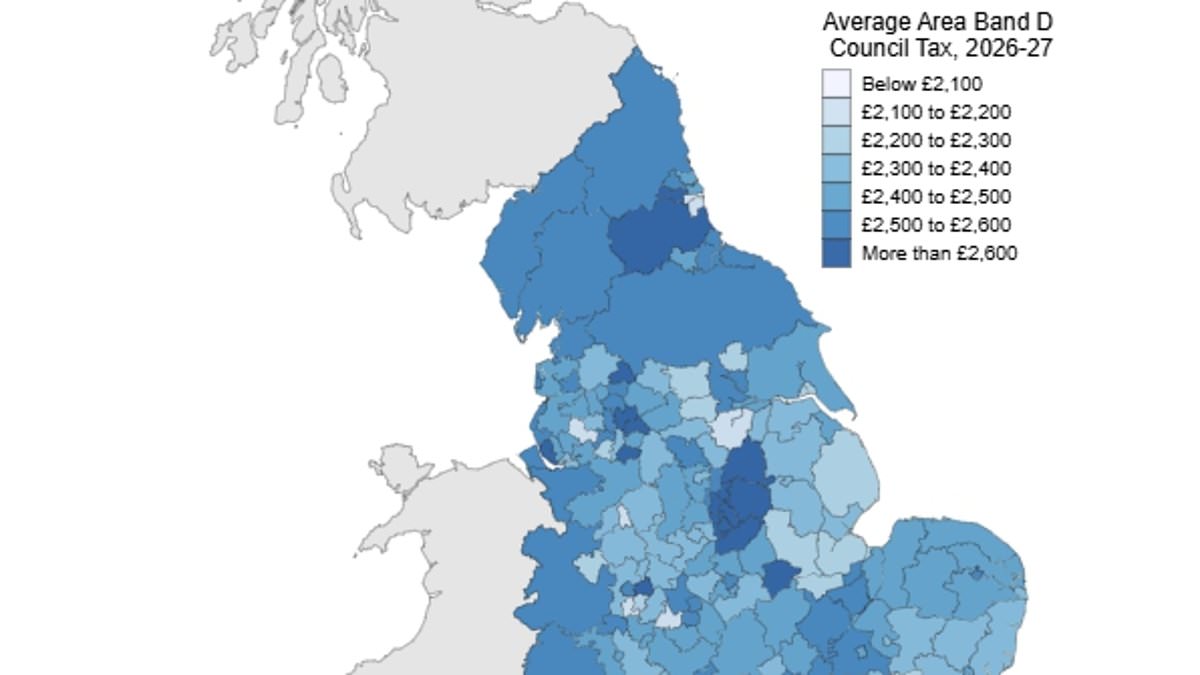
Band D charges will average £2,392 across England, including all precepts such as for adult social care.

Official figures show the average levy in England will rise 4.9 per cent next month, with a typical Band D property paying £111 more

In London the typical figure is set to see a smaller 4.4 per cent rise to £2,068
In London the typical figure is set to see a smaller 4.4 per cent rise to £2,068.
For metropolitan areas the increase will be a 5.2 per cent, ad in shire areas it will be 4.6 per cent.
The figures contrast with headline CPI inflation of 3 per cent last month - although that is now expected to rise in response to the Middle East turmoil.
Shadow local government secretary James Cleverly said: 'Under Labour, council tax is going through the roof, with bills up by £111 on the average Band D property this year alone. These are tax hikes cooked up in Whitehall with town halls left to take the blame.
'Keir Starmer promised to ease the cost of living and freeze council tax, yet families now face back-to-back hikes and a total council tax take rising by £2.7billion - another broken promise.'

Residents in England have seen big rises in their council tax bills ever year for more than a decade
The Local Government Association, which represents councils across England, said they remained under 'financial pressure'.
'Many councils have faced having to increase council tax bills to try and protect services from further cutbacks at a time when they are acutely aware of the financial pressures facing households,' a spokesman said.
'While council tax is an important funding stream, it cannot solve the long-term pressures facing councils, raising different amounts in different parts of the country - unrelated to need.
'Significant new funding, alongside long-term reform of the local government finance system, remains desperately-needed to protect the financial sustainability of councils and ensure they can deliver the services communities expect.'
Share or comment on this article: Households face council tax hit amid energy crisis - with average bills soaring £111 as bulk of town halls impose maximum 4.99% rise