
Remember me







House prices rose in the year to the end of January, according to the latest data from the Office for National Statistics.
Average property prices increased by 1.3 per cent (£3,000) year on year, although they dipped 0.3 per cent in the month between December and January.
The typical home is now worth £268,000.
However, property experts said it was still a buyers' market and this was keeping prices in check.
Richard Donnell, executive director at Zoopla, said: 'The slowdown is due to a greater choice of homes for buyers, which is 6 per cent higher than last year, and fewer buyer enquiries.'
The data doesn't yet reflect the impact of events in the Middle East, but Donnell added that mortgage rate rises in recent weeks had slowed down demand.
'While events in the Middle East have weakened demand in recent weeks, our data shows sales agreed are holding up as those with mortgages secured press on with transactions,' he said.

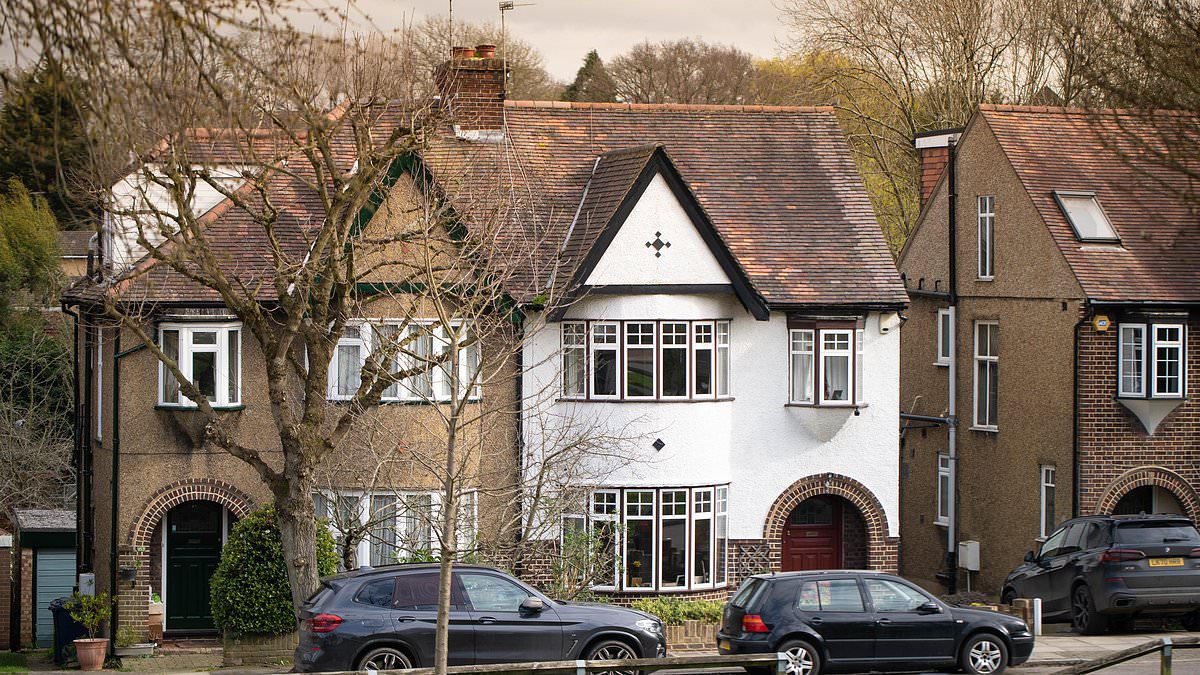
Heading south: House prices across London and the south of England are below what they were a year ago
Yorkshire biggest house price riserSome regions saw bigger price increases than the average.
Average prices have risen 3.1 year-on-year in the North West of England, while in Yorkshire and The Humber home values are 3 per cent above where they were 12 months ago.
But prices have fallen in London, with the typical home in the capital now selling for 1.7 per cent less than it did 12 months ago. This is despite a 0.8 per cent rebound in London prices over the past month.
Home values in the South East and South West are not doing much better, with prices down 0.5 per cent and 0.1 per cent over the past year.
Whether people live in flats or houses also makes a difference, according to the ONS data.
The typical semi-detached house is up 2.7 per cent year-on-year while flats are down 1.2 per cent during the same period.
Jonathan Hopper, chief executive of Garrington Property Finders, said: 'The capital’s annual slide in prices has spread across southern England. Both the south east and the south west also recorded lower average prices in January compared to the same month last year.
'In more affordable parts of the north, the split between different property types is now impossible to ignore. Houses are still inflating; flats are not.'
What next for house prices?This will hinge on the war in Iran. Fears over a spike in energy prices and inflation have changed the future trajectory of interest rates.
Mortgage lenders have been increasing their mortgage rates off the back of this, and the lowest mortgage rates have risen from around 3.5 per cent to 4.3 per cent in just over three weeks.
Andrew Montlake, CEO at London-based mortgage broker Coreco, said: 'When you factor in the events of March, and how the war in the Middle East has impacted mortgage rates, the performance of the property market in the very early stages of the year now feels slightly outdated.
'There was a lot of hope as mortgage rates came down in January and February, but for now at least it's looking like that hope has been dashed.'
How to find a new mortgageMortgage rates have soared after conflict with Iran has driven up inflation expectations and dashed hopes of interest rate cuts.
If you need a mortgage because you are buying a home, or your current fixed rate deal is due to end, you should explore your options as soon as possible.
This is Money has a long-standing partnership with fee-free broker L&C, to provide you with expert mortgage advice.
Use This is Money and L&Cs best mortgage rates calculator to show deals matching your home value, mortgage size, term and fixed rate needs.
Or use L&C’s online Mortgage Finder to search thousands of deals from more than 90 different lenders to discover the best deal for you.
This is Money's mortgage tips
What if I need to remortgage?
Borrowers should compare rates, speak to a mortgage broker and be prepared to act. Homeowners can lock in to a new deal six to nine months in advance, often with no obligation to take it.
Most mortgage deals allow fees to be added to the loan and only be charged when it is taken out. This means borrowers can secure a rate without paying arrangement fees. If you do this and don't clear the fee on completion, interest will be paid on it over the term of the loan.
What if I am buying a home?
Those with home purchases agreed should also aim to secure rates as soon as possible, so they know exactly what their monthly payments will be. Buyers should avoid overstretching and be aware that house prices may fall, as higher mortgage rates limit people's borrowing ability and buying power.
What about buy-to-let landlords?
Buy-to-let landlords with interest-only mortgages will see a greater jump in monthly costs than homeowners on residential mortgages. This makes remortgaging in plenty of time essential and our partner L&C can help with buy-to-let mortgages too.
> Find your next mortgage deal with This is Money and L&C
Mortgage service provided by London & Country Mortgages (L&C), which is authorised and regulated by the Financial Conduct Authority (registered number: 143002). The FCA does not regulate most Buy to Let mortgages. Your home or property may be repossessed if you do not keep up repayments on your mortgage
Share or comment on this article: House prices rose at start of this year but it's still a buyer's market