
Remember me


WHEN ONE PIECE aired its first season on Netflix in 2023, it was lauded as finally breaking the curse of the live-action anime. Even though the original manga-turned-anime series from visionary and much-revered creator Eiichiro Oda didn’t immediately appear to lend itself to adaptation. The manga series (which is the best-selling in history) has run since 1997, and its anime adaptation has aired over 1,155 episodes and counting. The world Oda created is expansive, its lore dense, its physical laws strange, and its population of offbeat characters much, much stranger. So when the second season dropped last month, a new question emerged: Can they pull it off again?
The answer from fans has been a resounding yes—even as the directors, production crew, and VFX team behind this season faced the challenge of adding a talking chibi deer (the fan-beloved character of Tony Tony Chopper), two viking giants, dinosaurs, a new rogue’s gallery of, you guessed it, some strange baddies with, you guessed it again, even stranger supernatural powers. Oh, and a fighting otter.
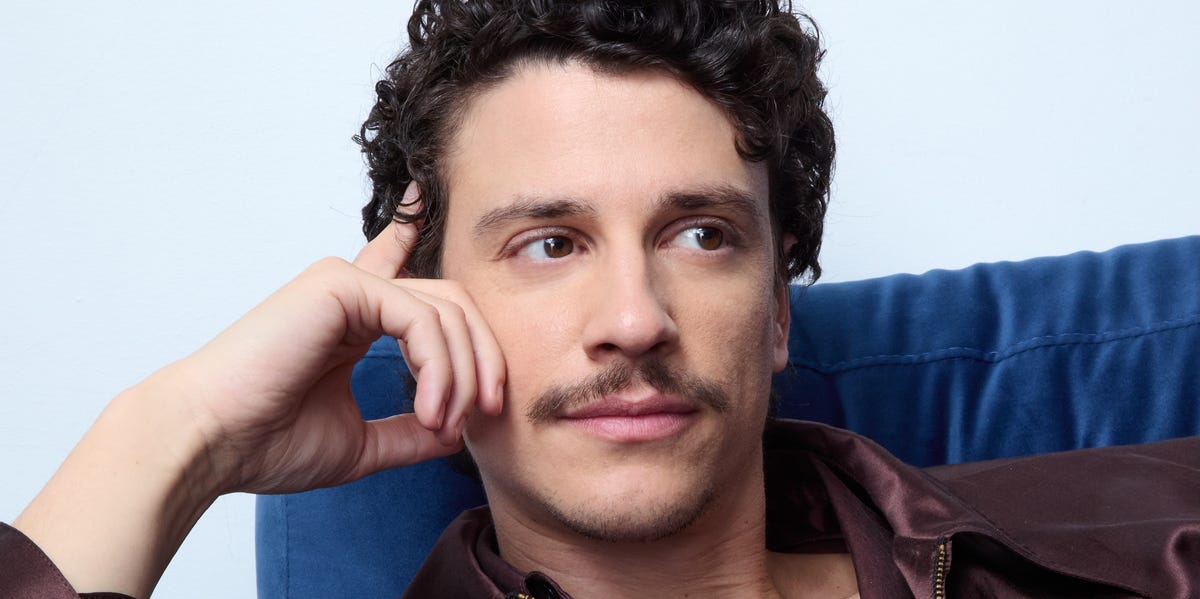
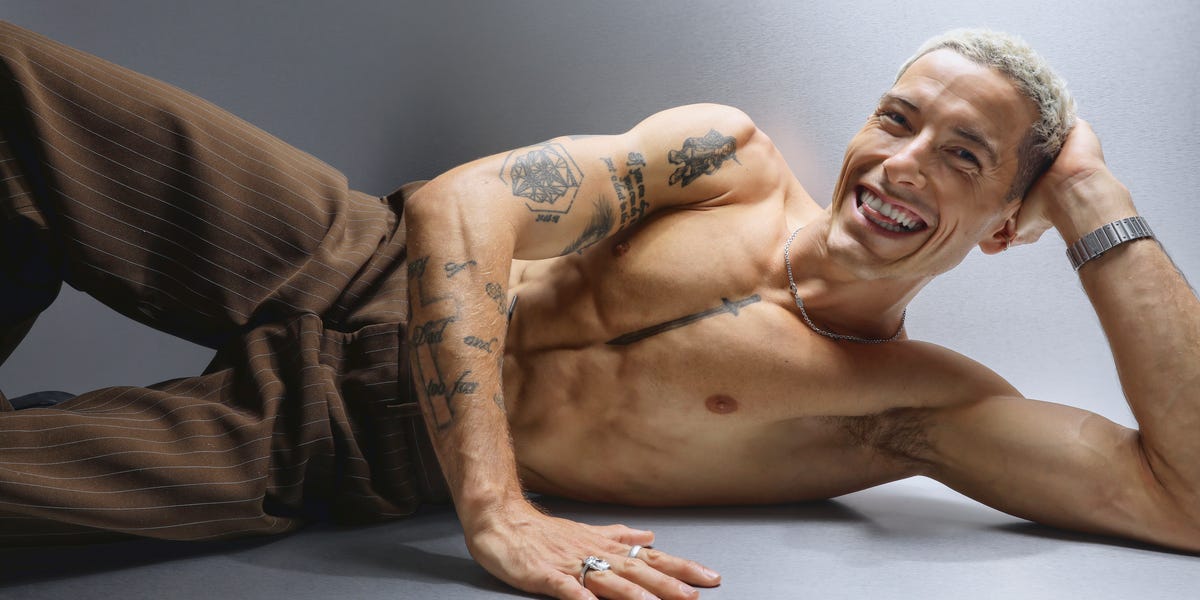
For 30-year-old Spanish-British actor Taz Skylar, the challenges were a bit more grounded. One Piece follows the adventures of a group of misfit pirates, including their magically rubber-limbed leader Luffy (Iñaki Godoy), thief-turned-navigator Nami (Emily Rudd), three-sword-wielding bounty hunter Zoro (Mackenyu), and fabulist sharpshooter Usopp (Jacob Gibson). Skylar plays Sanji, the ship’s cook, whose signature fighting style involves only kicking his enemies.
As he prepared for the role, Skylar became obsessed with capturing the character’s gravity-defying physicality. For the show’s first season, he embarked on an intense training schedule in the months before landing in South Africa, where the series shoots, and then ramped up his training with the show’s stunt team. He then brought in more trainers and stunt professionals and martial arts experts to help him. When he does a roll call of the full team, he can’t help but laugh as he rattles off “and then, and then, and then….”
For the show’s second season, Skylar felt strong in his grounding of the character, but this time, he wanted to up the ante. We talked to him from South Africa, where the cast is already working on the show’s third season, to learn how he prepped, how the series pulled off an even more insane story arc than its first, and how he managed to best that fighting otter in man-to-marine mammal combat.
MH: The world—and production—of One Piece is massive. What were you prepared for in the second season that you weren’t prepared for the first time around?
TAZ SKYLAR: I think I was prepared for how much it was going to hurt! Which wasn't necessarily a good thing. I think naivety can be a real superpower sometimes. Knowing what’s coming can make you tense up a little bit more than when you don't know what’s coming and you just find yourself in the middle of it.
And I was more prepared to keep a hold of my character in a production of this scale. About halfway through season 1, I realized something that nobody tells you, which is that it’s very much your responsibility to keep a hold of the through line of your character—the subtleties and the history and the minutia of your character—because there is so much to keep track of in this world. There are all these sets, all these boats and locations and green screens, there are all these characters with prosthetics and wigs, things are exploding, there's just so much going on! So if you’re not vehemently clear where it is you want your character to go, you will go nowhere. This season, I was more prepared to ask questions before the fact and make my decisions before the fact, rather than figuring them out as I went along.
MH: Sanji has a unique physicality, and you trained extensively to capture the magic of how he moves and fights in the anime. How did you tackle that challenge, and how did your approach change between seasons?
TS: In terms of Sanji’s physicality, during season 1, I was putting in a tremendous amount of effort. But if I'm being realistic with myself—or maybe being harsh on myself, which I usually am—all I achieved was being decent at Taekwondo, which is not a superhuman feat! Plenty of humans have done that before and to a way higher level than I ever will. It just required an extreme amount of effort from me because of the time constraint involved. But sometimes putting in so much effort makes you feel like you’re doing a lot on the other end when you’re actually not doing all that much.
So for the second season, I thought, What tools do I have at my disposal to elevate the character and what he can do? For example, we have [stunt] wires, but the reality of using wires was something that I wasn't accustomed to until I got more experience using them in season 1. I’d never thought of using them creatively because I just didn't know how they worked. I started to think, How can I use wires in a more interesting way, so that it's not just getting me a bit higher but actually creating moves that defy gravity? So I talked to my stunt double, who was more like my stunt coach because I'm so annoyingly obsessed with doing all the stunts myself. We would look at the previs [“Previsualization” software that plays the visual direction of a scene] direction of scenes together and dissect it, and we would ask ourselves, Have we seen it before? If the answer is yes, then we have to change it. How do we play with levels using the same move and make it interesting? How do we put it on a wire and make it interesting? We were asking a lot more questions the second time around.

Florence Sullivan
MH: Did you find that at a certain point, the difficulty of the challenge gave way a bit and you had more room to have fun doing it?
TS: I’m proud of what I accomplished the first time around, and it was absolutely memorable. But I'm not sure I'd categorize it as fun, just because my body was in so much sheer pain! I was really grappling against basic human limitations.
Before season 1, I started training as soon as I got the role, which was maybe three months before I got to set. I underestimated the challenge. I thought I’d be an A+ student, I’d take Taekwondo classes every day, and I’d be ready. But what you quickly start noticing is how the graph of improvement really slows. Then I realized maybe my plans weren’t going to cut it. So I started doing three or four hours of practice a day in between a theater show that I was also doing at the time.
Then when I got to South Africa to start shooting, I realized that you're working against the limitations of the production itself. Even if I want to do more prep, the stunt team also has a lot of other jobs to do and a lot of other people to work with. They can't spend all their time with just me! So I was doing two hours with the stunt team a day, and then just kicking a bag by myself for another two or three hours pretty aimlessly. Then I decided to bring a stuntman over from England, a really talented stunt guy. He would come with me in the morning, watch my morning stunt session, and then do another six hours with me after that. He'd dissect the previs with me. He'd help coach me on the wires. It was just an all-fucking-day thing.
And then I also had another stuntman—who they brought in because I begged them!—a Taekwondo specialist called Matt Esof. Then I also had a master who I would go train with at his own dojo. Then I also had a ballet teacher come in to teach me how to be a little bit more elegant with my moves. Then I had a break dancing teacher who would come in intermittently to help us get more creative with the moves. I'd just commandeer any and all stunt men that were free! Everybody was telling me to calm down, because they could see how quickly and how severely I was getting injured. And those were just the injuries I wasn’t hiding! I didn't want to admit that I was hurt. I knew the damage I was doing, but I was worried that if I chilled out, I wasn’t going to get there in time. So I just kept going.
This second time around I was maybe a little bit more sane because of all the groundwork we had laid. But then the challenge of laying down all that groundwork was replaced with the question of how ambitious we could get.

Florence Sullivan

Florence Sullivan
MH: Okay, maybe “fun” wasn’t the right word. But it does seem like you get a lot of fulfillment from taking on a challenge.
TS: Yes, that is absolutely true. When I'm done, I feel so incredibly proud of what I did, and that infuses everything I did to get there with joy retroactively.
MH: You had a real Tom Cruise-in-Cocktail moment in episode 3, making drinks for the ladies at a bar in Whiskey Peak. Dare I ask how much you trained for that?
TS: I’m so happy you remembered that! I'm so proud of that little scene. I wanted to make the choreo even more elaborate, if I'm honest, but that's just as far as we could get it. There was a local cocktail flair bartending school and I would just go there and spend a bunch of hours working on a choreography. I think I had about six to eight weeks from the point of arrival in South Africa to the point of shooting that scene. We shot the scene of Sanji making the cocktails all in one take, but we didn't end up showing it that way on screen because we needed cut back to the girls’ reactions. But we did shoot it all in one take! So I had the choreography down.
MH: You have a great fight scene this season against Mr. 13, a sunglasses-wearing otter with some sick fight moves. How did it work, filming a fight with an invisible otter before the VFX team got its hands on the scene?
TS: Well, Mr. 13 in particular, is just thin air. We did try to do the standard tennis ball thing, where the ball stands in for the character, but the otter had to move so fast that it actually became too difficult for someone to move the tennis ball around as fast as we needed. So in the rehearsals, we would just decide where he was in the space, and they just told me to make sure I was looking at that spot. Then throughout the final scene, they put him into the scene based on where I was looking.
That fight scene was the last fight I shot, and were were up agains so many different time constraints. We didn’t know if we could shoot a full fight or if the otter would just enter and Sanji would immediately kick it out the window. But I really, really, really wanted to fight an otter!
And coming into season two, I’d learned that each one of us is very much like a parliament member that fights for the party of their own character. So I went to every department and asked them what the obstacle was in making the fight possible in the way that we originally wanted to make it. And one by one, I just took each one of those obstacles down. I spent the whole weekend with Christoph Schrewe, the director of the episode, at his apartment, just going through each beat of the fight. He would film me doing each one of the moves in his apartment, and then we edited together our own little previs, and that's what we ended up shooting.

Florence Sullivan
MH: Speaking of VFX characters, there was a lot of anxiety over whether or not the second season would be able to do justice to Chopper, a hugely important character to the fandom. But the show nailed it! When Chopper wept, I wept with him. I really feel for the little guy.
TS: That one was the biggest leaps of faith that the production had to take. With the T. rex, for example, we built a massive, 30-foot T. rex that we could see and touch. We could see the prosthetics, we could see the blood. It looked great on set, so it wasn’t too hard to believe that it was going to look great on screen. But with Chopper, we really didn't have that much to go off of. We had Mikaela Hoover doing the voice in post-production, and we had N'kone Mametja, the actress standing in for Chopper live on set. She's there in a cream suit with knee pads on, kind of kneeing around and and doing a voice. All you could do was think, Damn, I really hope this looks good!
MH: And thank God it does!
TS: We all like to joke that Chopper is the highest paid actor on the show. Because he requires an army to come to life. We have N'kone, who plays Little Chopper. Then we have Michaela, who does his voice. Then we have Gavin Gomes, who plays the big Heavy Point Chopper. Then we have a little statue of Chopper that has its own whole team and entourage that make sure it looks great. Then we have all the VFX people who iPad the fuck out of it. I don't actually know what they’re doing, but I know they all stand around holding iPads and looking at them really intensely. I'm just so glad that all of that hard work really paid off and that everyone is so happy with how Chopper turned out.
MH: One thing fans of the manga and anime have talked about is the way Sanji’s shall we say, love of women is cartoonishly lecherous in the source material. The joke works in the animated medium, but the live action series has wisely toned it down. He’s still flirtatious, but he’s also chivalrous, and he’s not ever a creep. How did you approach making those tweaks?
TS: I appreciate you asking this because it’s a change a lot of people are talking about. I think flirting in general nowadays has such a big taboo around it because of the ways certain kinds of men approach it. But I think there should be a differentiation. I miss lovable, flirtatious characters on screen, and I think that if you look at those characters, they get away with it because they flirt without any expectation of an outcome or of validation. I think it becomes creepy when there's a need or expectation attached. But when it's done in a lighthearted way, with a little chivalry, and without any need of outcome, that's when it can be likable. Then it becomes more of a tennis match being played for the love of sport. It’s not necessarily about sex, and I think that's how we get away with it.
I'm definitely a bit precious about making sure that the wording of those lines is exact, because sometimes when we get a scene up on its feet, we see how the lines are surrounded by the context of the scene: Where are we? What just happened? What's about to happen? How well do these characters know each other? All of that context is important, and sometimes you feeling it out on the day and realize that maybe one of lines goes too far, so you reign it back a bit. We work really hard on that aspect of Sanji, and I'm glad that he's continuing to come across as a lovable character.
MH: Yet another challenge you seem to have thrown yourself headlong into.
TS: [Laughs] I am a purveyor of problem solving!
This interview has been edited for length and clarity.
Grooming: Emily Amick for Exclusive Artists using Typology
 How 'One Piece' Star Taz Skylar Trains for Kicks
 Inside the Wild Fight Scenes of 'One Piece'
 The Biggest Changes Made in Netflix's 'One Piece'
Nojan Aminosharei is the Entertainment Director of Men’s Health and the Special Projects Editor of Harper’s Bazaar. He was previously the Entertainment Director of Hearst Digital Media, and before that a Senior Editor at GQ. Raised in Vancouver, Canada, Nojan graduated from NYU with a master’s degree in magazine journalism. The late Elaine Stritch once told him, “What the fuck kind of name is Nojan? I’m 89 years old, I don’t have time for that shit.”