
Remember me






Ready to get into the best shape of your life? Get free weekly workouts and no-nonsense training insights delivered straight to your inbox. Sign up here and let the gains begin.
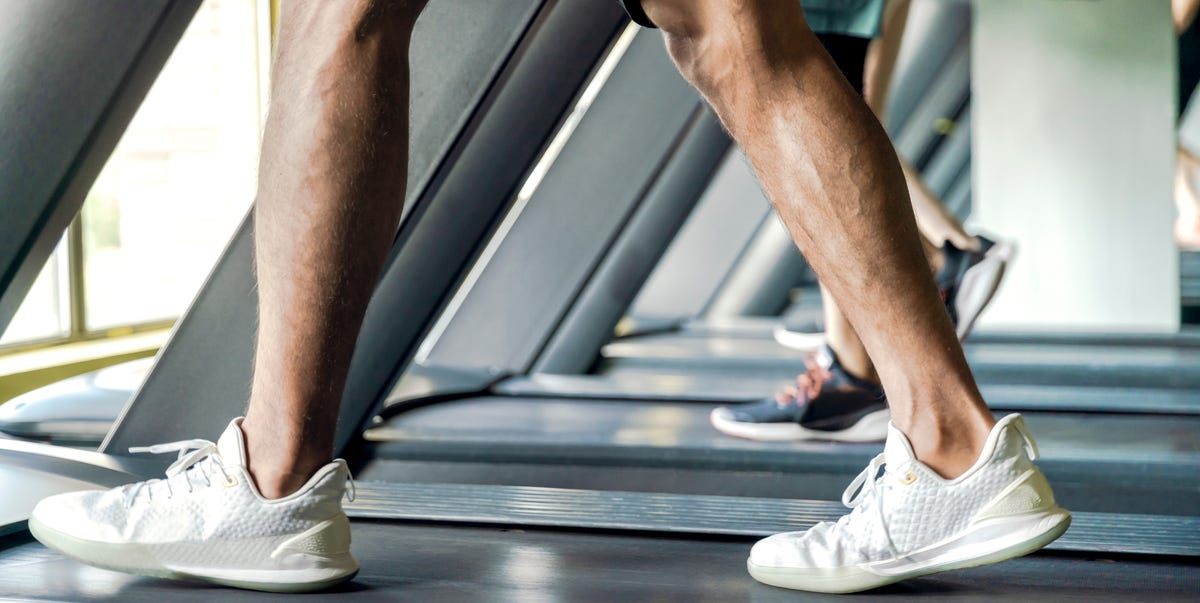
AT FIRST GLANCE, walking seems pretty intuitive. It’s a skill you (and most babies) learn in the first year of life. By the time you reach adulthood, you’ve likely walked thousands of miles. You might not even think of it as exercise—but recently, walking has become a trendy workout thanks to a major wellness glow up.
Social media is flooded with viral walking challenges: from the 'hot girl/guy walk' to all the number-based protocols that have you wondering if you're exercising or back in math class. There's also tai chi walking, backwards walking, Nordic walking, rucking—the list goes on. If you want to add some more focused activity to your fitness routine, how should you start?
Don’t just trial and error every walking trend that shows up on your FYP; there is no singular walking trend that would work for everyone. Janet Dufek, PhD, a biomechanist and kinesiology professor at University of Nevada, Las Vegas, says the most important takeaway is to find a walking style that you can maintain. To help you determine what that might look like for you, it helps to identify a list of “red” and “green” flags for your needs. Here’s how you can do that.
5 Popular Walking Trends and How To Do ThemBackwards WalkingLike the name implies, backwards walking involves people moving in the opposite direction. Reversing your step helps with strengthening the joints, especially for those with knee issues, because it unloads pressure from the front of the knee while still toughening up the quads and hamstrings. Here's how to do it:
Find a clear space (like an open lane of a running track) or a treadmill set at a slow walking pace (recommended 1 mph).Turn around and reach one leg back, landing on the toes and then the heels before straightening your knee.Keep your torso upright and if on a treadmill, use the handrails for stability.6-6-6 Walking ChallengeUnlike other walking trends that promise weight loss results or muscle gains, the 6-6-6 walking trend is a workout to help people stay consistent in their daily movement goals. The walks are one hour, slotted between 6 a.m. or 6 p.m.
Six minutes of warmup stretches.60 minutes of brisk walking.Six minutes of stretching for cooldown.12-3-30 Walking ChallengeThe 12-3-30 workout is one of the most popular TikTok walking challenges (over 11,000 people have posted themselves doing the challenge or showing the before/after results). You’ll need a treadmill, which you’ll set to an incline to ramp up the challenge.
Set a treadmill incline of 12.0.Set a speed of 3.0 miles per hour.Walk for 30 minutes (recommended five times per week).RuckingA strength-based walking challenge is rucking. It was originally a military conditioning exercise. Essentially, it's a long walk with a weighted pack.
You are going to need a bag, though you can technically start off with a backpack. A rucksack should be sturdy, comfortable, and hold weight close to your body to prevent the bag from bouncing or shifting. Weights can be actual ruck plates or you can DIY it with bags of rice, water bottles, bricks, or books. Make sure to keep track of how much weight is packed and adjust as needed.
Japanese Interval Walking MethodSimilar to interval running, this method uses alternating rounds of slow and fast paces. You can do it on a treadmill, walking pad, or outside.
For the first few minutes, start with a leisure stroll to warm up the muscles.For the next three minutes, pick up the pace and get to 70 to 80 percent your maximum heart rate. You may be breathing heavy but still able to hold a conversation or speak in short sentences.Slow down for another three minutes, back to your initial pace or 40 percent of your maximum heart rate.Repeat five times until you hit the 30 minute mark.‘Green Flags’ to Look for In A Walking TrendIt Fits Your Fitness LevelWalking workouts that use specific numbers make the most impact for beginners, says Kyle Sanchez, PT, DPT, CSCS, a physical therapist at Bespoke Physical Therapy. Think 12-3-30 and the 30-minute Japanese walking trend. He finds the structure in numbered workouts is what make these so newbie-friendly, especially since they don’t typically require as much time as other methods. “I found that if I recommend [the 12-3-30 method] to my patients, it’s certainly a good one where people bang it out,” adds Sanchez.
He also notes that a minimum of 30 minutes of movement at least five days a week is enough to meet the recommended 150 minutes of physical activity each week.
It Raises Your Heart RateA leisure stroll is less beneficial for the heart than a brisk walk. Sanchez says a walking trend that promotes fast-paced or purposeful stride can place you in zone 2 cardio. This is where you are at 60 to 70 percent of your max heart rate. “If you're doing it for heart health, maybe use some sort of wearable like an Apple Watch or an Oura ring to track your heart rate zone," he says. Sanchez adds that brisk walks that get the heart pumping is especially beneficial for people with diabetes or high blood pressure.
It Raises Your EnduranceIf your schedule allows you to walk for longer, Sanchez recommends leveling up to a walking protocol that has you moving for an hour or even up to 90 minutes. One example is the 6-6-6 workout, or modifying the 12-3-30 challenge to go beyond 30 minutes.
“Thirty minutes is a good starting point, but if you move into something like the 6-6-6 trend where you do an hour of walking, build up to it,” Sanchez explains. "Set out for a 30-minute walk with your neighbor and try to keep a nice conversational pace. Then bump it up to 60 minutes, then 90 minutes if you can still kind of maintain a good conversation while walking.”
It Relieves StressYour walking activity should not be one you dread. Dufek emphasizes choosing a fun and achievable plan that keeps you motivated every day. Additionally, she recommends walking trends that take you outside or on a scenic route since being in nature calms the body. “If you’re indoors on a treadmill, and you have a visual aid or monitor where you can choose a scene, it can help with stress release,” says Dufek.
It Increases Social ConnectionDufek says any walking trend that encourages having a buddy can be more valuable than just giving you a chance to chat. Making your walks social can help to relieve more stress and serve as a great source of accountability. “You don’t want to be the one that doesn’t show up at six in the morning when three of your other buddies are there,” she says.
‘Red Flags’ to Avoid In a Walking TrendIt Causes PainBoth Dufek and Sanchez advise listening to your body for any unusual soreness or pain when walking. If your knees start to swell or your plantar fasciitis flares up, Sanchez advises stopping or pulling back to a shorter session. Dufek also recommends lowering the intensity of the walk if soreness or pain persists. For example, she says people who jump into high-intensity walking and have never done it before may be more likely to experience prolonged soreness and increase their risk for injury.
If you are someone who occasionally experiences knee pain, Dufek recommends the walking backwards trend. She says the biomechanics of walking backwards differ from walking forward. “Impacts are reduced and ground reaction forces are reduced, specifically at the knee joint,” explains Dufek. “The range of motion is reduced, but it can increase flexibility.” She says that as you increase flexibility in the hamstrings it can reduce tension in the lower back and legs.
Your Weight Is Too HeavyDufek warns carrying a heavy load can affect your posture and cause strain to your muscles. For this reason, she recommends people doing weighted walks to be more conservative in the initial attempts. The goal is to gradually increase to the desired weight instead of piling it all at once.
“I would advocate or encourage people to start slowly, lightly,” she says. “If you're doing something wrong, your body is going to give you signs like pain. Pay attention to those signs.”
What Walking Plan Is Best for Weight Loss?Despite what TikTok influencers may say, there is no single walking trend guaranteed to help you lose weight. According to Dufek, the most important factor in using walking as a weight loss strategy is to stay consistent. Once you establish a routine, she recommends gradually increasing resistance through weights, intensity such as climbing uphill, or increasing duration.
Sanchez says the priority for weight loss isn’t to hit 10,000 steps everyday. Instead, he says it’s important to maintain a pace that keeps a zone 2 or zone 3 heart rate. “If you are [walking] for weight loss, heart rate zone is the most important thing to be vigilant and aware of with your wearable,” Sanchez adds.
You can also try a routine that is specifically programmed with weight loss in mind, rather than jumping on a viral trend. Check out the new MH 4-Week Walking for Weight Loss Plan, which was designed to check multiple boxes for your walking routine to get you up and moving with intention.
What Walking Trend Is Best for Building Muscle?For people looking to increase the intensity of their workouts, Sanchez recommends using a weighted vest or rucksack. Just make sure to add weight according to your fitness level. Dufek recommends starting small with a fanny pack with a light weight or even two bottles of water.
“Find a trend that works for you or simply get up and start walking,” says Sanchez. “Movement is medicine. There's no certified rule for it. Just get moving.”
Related StoriesJocelyn Solis-Moreira, MS is the associate health & fitness for Men's Health and has previously written for CNN, Scientific American, Popular Science, and National Geographic before joining the brand. When she's not working, she's doing circus arts or working towards the perfect pull-up.