EU/Israel: Adoption of death penalty law by the Israeli Knesset requires urgent EU measures
As humanitarian and human rights organisations that have worked for years in Israel and the Occupied Palestinian Territory, we are appalled by the Israeli Knesset’s decision to approve a bill that makes death penalty effectively mandatory in the West Bank and which will de facto apply exclusively to Palestinians.
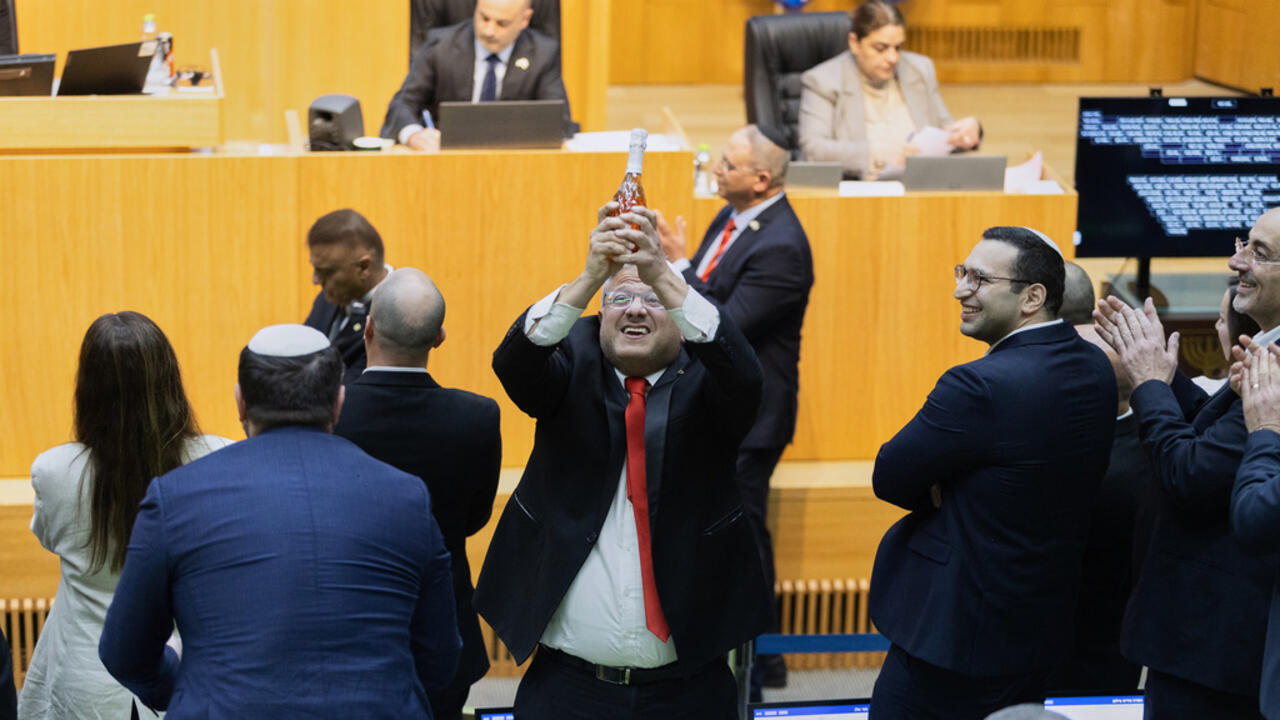
On 30 March, the Knesset approved a bill, introduced by the party of Minister of National Security Ben-Gvir, expanding the use of the death penalty in both military and civilian courts. Although Israeli law has long provided for the death penalty for cases of genocide and wartime espionage, Israel has not carried out executions nor imposed death sentences since 1962. This new legislation not only marks a significant regression: it also does so by imposing capital punishment on de facto ethnic or national grounds and by diluting basic legal safeguards.
In the West Bank – excluding East Jerusalem – the law imposes the death penalty as the default sentence for those convicted of intentional killings classified as acts of terrorism under Israeli legislation, allowing life imprisonment – and life imprisonment only – in “special circumstances” that are not specified in law. Military courts may impose capital punishment by a simple majority, even without a prosecutorial request. Sentences cannot be commuted or pardoned and must be carried out within 90 days. Notably, Israeli settlers in the West Bank are explicitly excluded from the scope of this provision.
Within Israel, civilian courts may impose the death penalty or life imprisonment for intentional killings, if they are committed with the aim of “negating the existence of the State of Israel.”
Therefore, while the law does not explicitly reference ethnicity or nationality, it is effectively designed to target Palestinians exclusively. It also introduces an exceptional execution regime by hanging, characterised by secrecy, and limited access to legal counsel and external oversight.
The European Union has consistently held that capital punishment is cruel, inhuman, and incompatible with human dignity under all circumstances. But even beyond this principled stance, the new Israeli law breaches basic safeguards recognised by the international community to protect the rights of those facing the death penalty. Its discriminatory nature and lack of due process guarantee, violate the right to life and protections enshrined in international humanitarian and human rights law, such as the Fourth Geneva Convention, the Hague Regulations, the International Covenant on Civil and Political Rights, and the Convention Against Torture.
Diplomatic engagement by the EU and its Member States urging Israel to reverse course has so far proven ineffective. This appalling development occurs amid an ongoing manmade humanitarian catastrophe in Gaza, which a UN Commission of Inquiry, multiple Palestinian, Israeli and international organizations, and independent experts have characterised as constituting genocide, and against the backdrop of an accelerating de facto annexation of the West Bank, as acknowledged by the International Court of Justice in its Advisory Opinion of 19 July 2024. The adoption of the death penalty law is thus part of a pattern of discriminatory policies and practices against Palestinians, which in the same Advisory Opinion the International Court of Justice has found to violate Article 3 CERD, which prohibits racial segregation and apartheid.
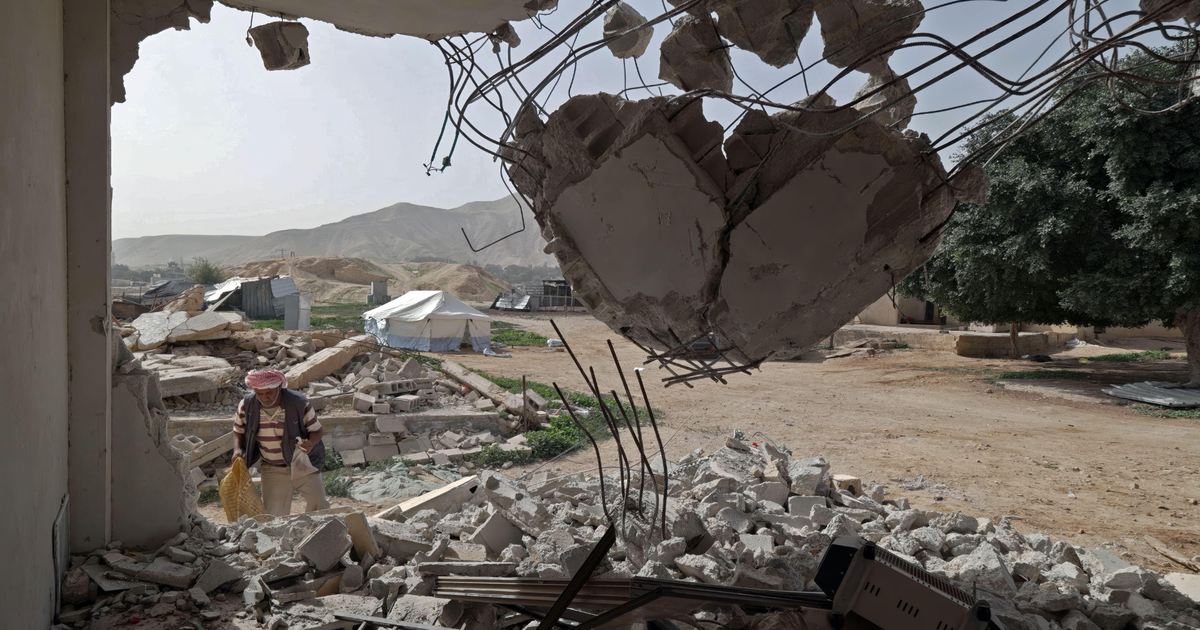
In furtherance of these policies, Israel has already crossed established EU red lines: the advancement of settlement construction in the E1 area, which breaks the territorial contiguity of the West Bank, with the intent to prevent a future Palestinian state; the ban on UNRWA and attacks on its facilities, including schools and clinics built and run with EU contributions; the expulsion of international NGOs through restrictive registration procedures; forced evictions of Palestinian residents in East Jerusalem; forced displacement of tens of thousands of Palestinians and widespread demolitions of Palestinian homes and infrastructure in the West Bank, including EU-funded projects; persistent impunity for abuses by Israeli security forces and state-backed settler violence; reports of widespread and systemic torture and mistreatment of Palestinian prisoners; restrictions on religious freedoms; attacks on journalists; and denial of access to EU officials.
As also recalled by the EU High Representative for Foreign Affairs Kallas in her statement of 31 March, the EU-Israel Association Agreement establishes respect for democratic principles as an essential element of EU-Israel relations. A review conducted by the EU in June 2025 based on Article 2 of the Agreement found Israel in breach of its human rights obligations for serious abuses against Palestinians and violations of the laws of war, both in Gaza and the West Bank, including East Jerusalem.
Nine months on, the time for action is long overdue. The European Union must uphold its stated principles and legal obligations by finally suspending, as a minimum immediate measure, the trade component of the EU-Israel Association Agreement and adopting other measures, as proposed by President von der Leyen in September 2025.
Signatories:
11.11.11
ACT Alliance EU
Act Church of Sweden
ActionAid International
Amnesty International
American Friends Service Committee (AFSC)
Bystanders No More
Caritas Europa
Caritas MONA (Middle East and North Africa)
Child Rights International Network (CRIN)
Children Not Numbers
Christian Aid
CIDSE – International Family of Catholic Social Justice Organisations
CNCD-11.11.11
Cooperazione Internazionale Sud-Sud (CISS)
DanChurchAid
80:20 Educating and Acting for a Better World
EuroMed Rights
Finn Church Aid
Global Centre for the Responsibility to Protect (GCR2P)
Human Rights Watch
Insecurity Insight
International Federation for Human Rights (FIDH)
Lebanese Center for Human Rights (CLDH)
Norwegian Church Aid
Oxfam
Pax Christi International
Public Commitee Against Torture in Israel
Trócaire
United Against Inhumanity
Women’s Centre for Legal Aid and Counselling (WCLAC)





Comments (0)