Remember me

Tomorrow is World Health Day. Across the globe, governments, health agencies, community organisations, scientists, educators, and charities will be marking the day in a variety of ways, setting out plans and proposals to address the theme for the coming year which will be launched at the World Health Organisation forum in France - Together for health. Stand with science.
In 1775, physicians who cared for the poor sick of Belfast at the newly opened Poor House and Infirmary, could never have dreamed that one day healthcare would have a global agenda, that such a thing as a world health day would even exist. The concept of working together to provide healthcare was only just taking shape, and the science of medicine was very much still in its infancy. But as with many elements of life in the rapidly expanding town of Belfast at that time, Belfast Charitable Society was once again at the forefront.
By the start of the 20th century, Belfast’s medical network had expanded to include several hospitals and health-focused charities, many of which could either trace their origins to, or had some form of connection with, the Belfast Charitable Society
— Dr Lauren SmythWhen the Society first opened the Poor House and Infirmary at what is now Clifton House on North Queen Street, there were just seven beds. But those seven beds represented the very first medical facility in the town. Within two years, the bed capacity had increased substantially, and a rudimentary outpatient’s facility had been introduced, whereby poor people of the town, regardless of their status, could visit the infirmary at restricted times to see the medical gentleman on duty.
 In 1873, Edward Benn financed the Ulster Ear, Eye, and Throat Hospital, also known as the Benn Hospital, located on the junction of Clifton Street and Glenravel Street. Picture: National Museums NI
 These medical gentlemen were a handful of physicians working in Belfast as private practitioners who offered their services to Belfast Charitable Society on a rotational basis free of charge. They were philanthropists at heart, who believed in the work the Society was doing, but they also saw an opportunity to develop their own skills, and advance the practice of medicine at the same time.
Records are sparse, but the patients they treated in those early years included John Reben, a young Swedish sailor boy who was brought to the infirmary after suffering a beating at the hands of his shipmates when their ship docked in Belfast Port. Amputations were commonplace, especially on people who suffered workplace accidents. One such patient was John Kinley, whose arm was amputated at the infirmary after it was caught in a machine at a flax mill.
Of all the physicians who worked at the infirmary in those formative years, William Drennan is one of the most interesting. Born in 1754, son of an eminent Presbyterian minister, William was also known as a poet, social reformer, and co-founder of the Belfast branch of the Society of the United Irishmen. But it is his work with Belfast Charitable Society that concerns us here.
 Miniature of Martha McTier née Drennan, William Drennan's sister, was one of the pioneering women who managed the Lying-In Hospital. Picture National Museums NI
 In 1778, after studying medicine at Edinburgh University under the experimental chemist William Cullen, Drennan returned to Belfast and set up a practice specialising in obstetrics. He knew about the Society, its poorhouse and infirmary, and approached the committee to offer his services. As well as providing obstetrics assistance and general medical aid to the poor population of Belfast, Drennan developed an interest in treating smallpox, and with the backing of the Belfast Charitable Society, began to administer an early form of inoculation called variolation.
He used small amounts of actual smallpox in arm-to-arm exposure to immunise patients, often children, against the illness. The concept of variolation wasn’t new, originating in Asia at some point of the 16th century, but it was William Drennan who brought the practice to Belfast. It wasn’t without risk, and it wasn’t foolproof, but through his smallpox clinics at the Poor House, Drennan and the Belfast Charitable Society reduced the mortality rate of people who contracted the disease from 30% to around 2%.
As Belfast expanded, so did the demand for medical care amongst the working classes and the poor. In 1792, Belfast Charitable Society, aided by a group of physicians including William Drennan, James McDonnell, Robert Tennent, and James Drummond, opened the Belfast General Dispensary in a wing of its Clifton House base.
 Through his smallpox clinics at the Poor House, Dr William Drennan and the Belfast Charitable Society reduced the mortality rate of people who contracted the disease from 30% to around 2%. Picture: National Museums NI
 This facility was essentially an early version of today’s GP service, offering both clinic times at the dispensary, and the opportunity for sick people to be visited by physicians in their own homes. In 1797, the dispensary became the Belfast Fever Hospital, relocating to Factory Row, then West Street, then Frederick Street, and finally in 1903 to the Grosvenor Road, where it became the Royal Victoria Hospital. Drennan, McDonnell, Tennent, and Drummond went on to co-found the Belfast Medical School in 1822.
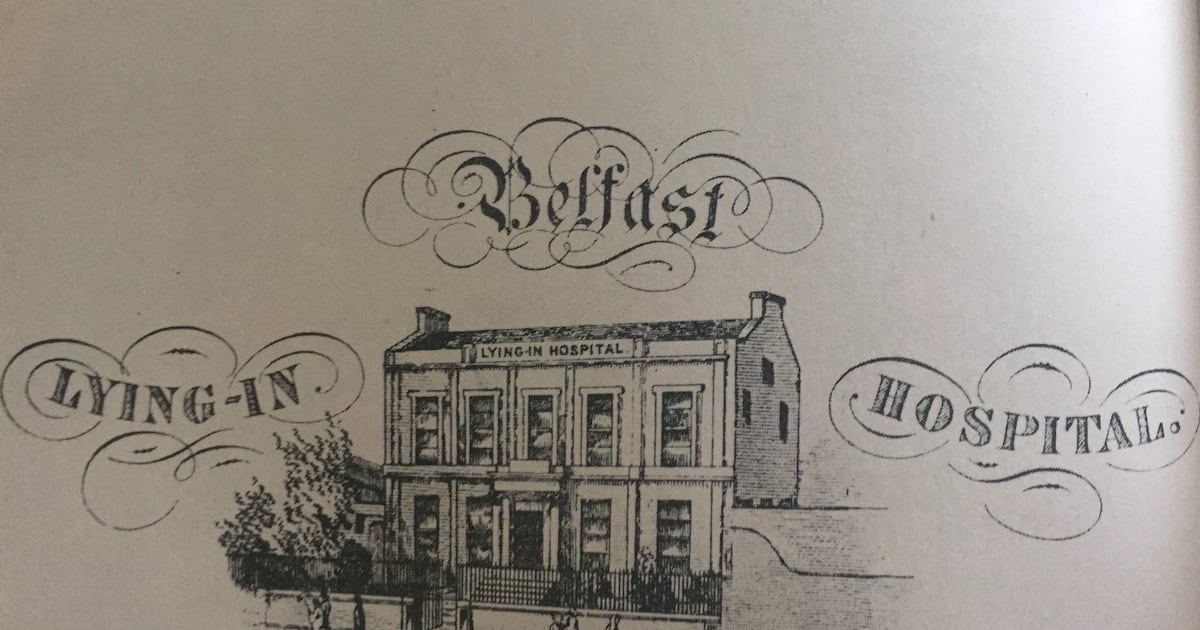
Belfast Charitable Society also played a role in the development and expansion of Belfast’s second maternity hospital. Known as the Lying-In Hospital, the facility was initially established in 1794 as a six-bed ward in a house in Donegall Street, driven and managed by a group of pioneering women, including Martha McTier, who was William Drennan’s sister.
Read more: How Belfast Charitable Society transformed the approach to apprenticeship training – The Irish News
Inspired in part by her brother’s obstetrics work, and by a determination to provide safer childbirth provision for the women of Belfast, Martha approached William for advice on keeping her mothers and babies safe from disease.
“Cleanliness and frequent washing,” was his reply. “WASH AND BE CLEAN should be the motto over the door of every hospital.”
By 1830, Martha and her fellow crusaders had finally raised enough money for a purpose-built Lying-In hospital on Clifton Street. Whilst not directly involved in the construction of the hospital, Belfast Charitable Society provided the land on which it was built, granted access to a clean water supply, and allowed mothers and babies who sadly did not survive childbirth to be buried in the cemetery it owned on Clifton Street.
 Edward Benn donated £3,000 to the Belfast Charitable Society for the building of two new medical wings at either side of the Poor House (J.FERRAN)
 Martha and William are both buried there too, as are many of the physicians and philanthropists associated with the Belfast Charitable Society during that extraordinary era of medical advancement, including Edward Benn.
An active member of the Society, and one of its most prolific benefactors, Benn’s contributions came a century after the Poor House and Infirmary first opened. He had suffered lifelong poor health, and as a result developed an interest in the advancement of healthcare in Belfast. However Benn was a wealthy businessman, not a physician or scientist, and so he gave his money to fund various medical projects.
In 1870, he donated £3,000 to the Belfast Charitable Society for the building of two new medical wings at either side of the Poor House. These wings, still known today as the Benn Wings at Clifton House, provided much needed additional bed and treatment space. In 1873, Edward financed the Ulster Ear, Eye, and Throat Hospital, also known as the Benn Hospital, located on the junction of Clifton Street and Glenravel Street. And the following year, just before his death, he funded a second hospital on the same site, the Belfast Hospital for Diseases of the Skin.
By the start of the 20th century, Belfast’s medical network had expanded to include several hospitals and health-focused charities, many of which could either trace their origins to, or had some form of connection with, the Belfast Charitable Society.
And the Society still maintains links with healthcare in the city today, providing funding for, amongst other things, palliative care nurses through Macmillan Cancer Support, the ABC Trust, a health initiative in Ardoyne, and CLARE, a community wellbeing scheme that operates across North Belfast. In addition, Clifton House itself continues to provide residential nursing care for older people through Radius Housing.
The physicians, philanthropists, and social activists who started the Belfast healthcare ball rolling in 1775, and kept pushing it through the next century, and the next, should be proud of their legacy. Now 250 years on from the placement of those first seven infirmary beds, Together for health, stand with science is a premise they would all approve of.