
Remember me








April 8, 2026 — 12:01pm
SaveYou have reached your maximum number of saved items.
Remove items from your saved list to add more.
Save this article for later
Add articles to your saved list and come back to them anytime.
Got itAAA
Something interesting happened in oil markets in response to Donald Trump’s eleventh-hour announcement of a ceasefire in the hostilities in Iran. Oil prices immediately plunged, but the US price traded above that of global oil.
In fact, since late last week, the West Texas Intermediate (WTI) price has traded at a premium to the price of Brent Crude, the global benchmark.
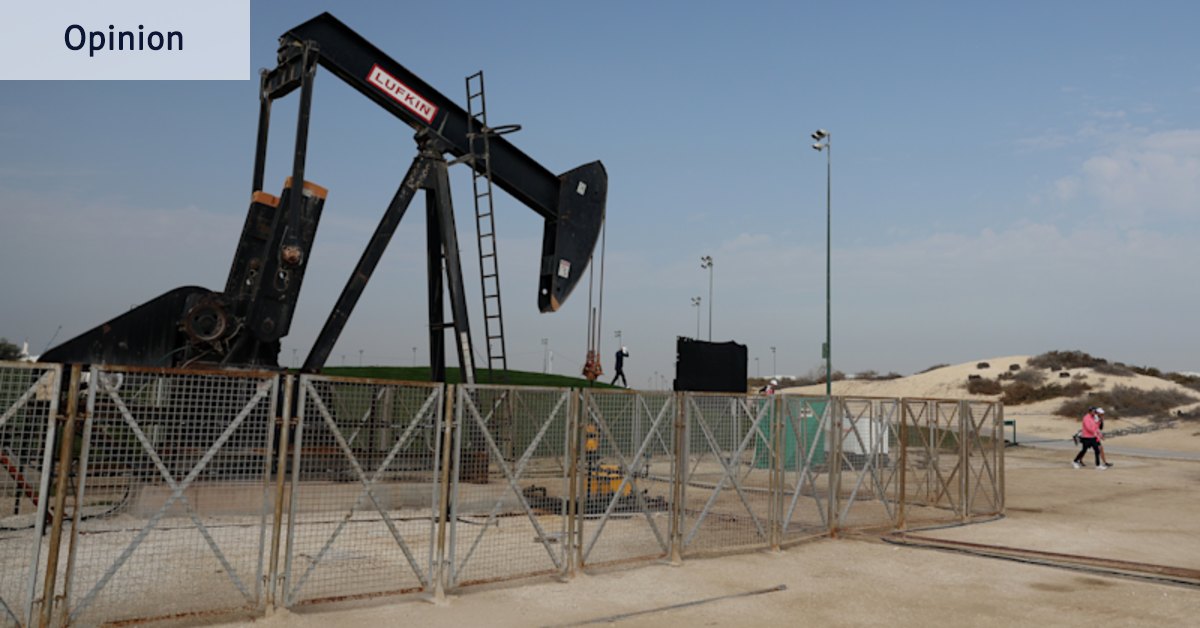
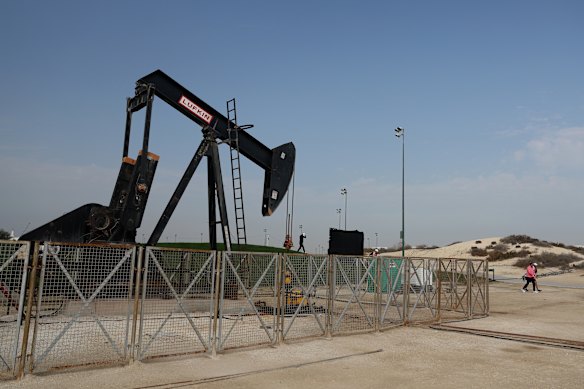 Why has the WTI price traded at a premium to Brent over the past week, a premium that was more than $US3 a barrel ahead of the announcement of the ceasefire?Getty Images
That’s an inversion of the historical relationship, or at least the one that has held for more than a decade, where Brent oil has usually traded at a $US3 ($4.25) to $US6 ($8.50) a barrel premium over its WTI counterpart. The last time an inversion occurred was in May 2022, in response to Russia’s invasion of Ukraine.
Brent has generally been priced higher than US oil because it is the reference point for globally-traded oil flowing from the North Sea, the Middle East and West Africa. It can be shipped and delivered anywhere and therefore the pricing reflects its global reach, liquidity and seamless logistics.
US onshore oil is landlocked. It is piped to a hub at Cushing, Oklahoma, and, where Brent reflects global supply and demand balances and geopolitics, WTI prices are also driven by US domestic influences – production, demand and refining capacity.
Related Article
So, why has the WTI price traded at a premium to Brent over the past week, a premium that was more than $US3 a barrel ahead of the announcement of the ceasefire?
The inversion of the spread between Brent and WTO last week occurred after Trump’s State of the Union address, in which he gave conflicting message about the war – US operations were nearing completion, but he would hit Iran “extremely hard” over the next two or three weeks – that dashed oil traders’ hopes that he would outline a plan to end the war.
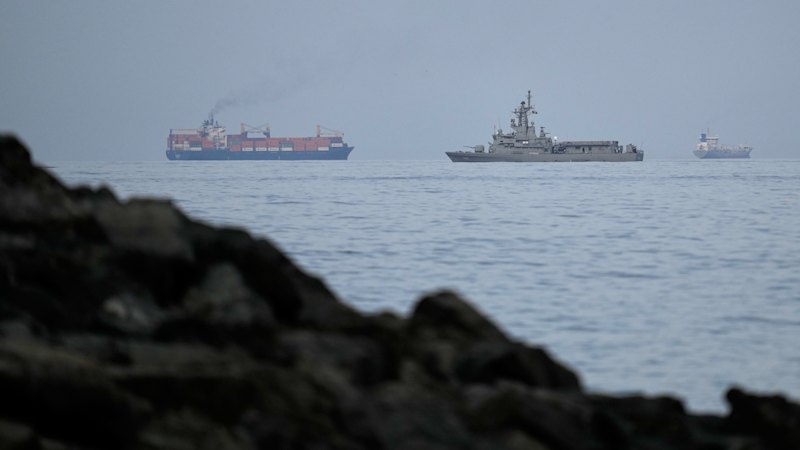
In effect, he was signalling that the war could drag on indefinitely, with implications for a global market that, with the closure of the Strait of Hormuz, has seen about 10 million barrels a day – about 10 per cent of global supply – removed, despite Iran allowing (for a fee) some limited passages for tankers through the strait and Saudi Arabia and the United Arab Emirates ramping up volumes in the two pipelines that circumvent the strait.
Since the onset of the war Trump has been trumpeting America’s energy self-sufficiency. When he hasn’t been telling the rest of the world to go and “get your own oil,” he’s been saying that other countries should be buying their oil and gasoline from America because “we have plenty.”
Trump clearly doesn’t understand the oil market, although that probably shouldn’t surprise.
Oil is traded globally and, after a ban on US exports was lifted in 2015, US prices are strongly influenced by the global oil supply and demand equations.
Timely access to flows of oil, it seems is being prioritised over price, hence the premium at which WTI oil has been trading.
With at least 10 per cent of global supply taken out of the market since the US and Israel attacked Iran, there is a lot less supply and prices had soared from less than $US70 a barrel to more than $US110 a barrel before the announcement of the ceasefire.
It’s not just the price of US oil (and US gasoline and diesel) that has rocketed, but demand for it.
The rest of the world has taken Trump’s advice because, not only is US oil available, but it is a light and sweet (low sulfur) crude, similar to the Middle Eastern oil whose supply has been interrupted. There are a lot of refineries in the world that have been set up to process those grades of crude.
It can also be delivered more quickly. While there have been some sales of what’s called “dated” Brent, or oil that can be delivered immediately – deals have been dome at premiums of up to $US30 to $US40 a barrel over traded Brent, or prices approaching $US150 a barrel – most oil is traded in futures markets.
WTI contracts are for delivery in a month. Brent contracts provide for delivery in two months. Not surprisingly, given the current desperate scramble for oil, that makes US oil particularly attractive.
Timely access to flows of oil, it seems is being prioritised over price, hence the premium at which WTI oil has been trading.
Trump’s complacency about the implications for the US of his war in Iran has proven to be ill-founded. Given he initiated the war, the economic and electoral harm is self-inflicted.
Related Article
US domestic energy prices – and the price of politically sensitive gasoline and diesel – have risen steeply, have helped drive down his already weak popularity, will drive up the US inflation and interest rates and reduce its economic growth rates.
With the ceasefire, if it holds, some oil will, if the Iranians deliver on a pledge to provide safe escort through the strait, presumably start flowing again.
To date, around 40 days’ supply of oil has been removed from the market – at least 400 million barrels – so it could take months to return to a normally functioning market, assuming there can be a permanent end to the conflict that allow free traffic through the strait.
Iran’s response to the war has been to attack US allies in the region, damaging their energy infrastructure in retaliation for the devastation the US and Israel have wrought. That damage, and production in the region that has been shut in because the oil couldn’t be shipped, will take time to be restored.
Qatar’s massive Ras Laffan LNG facility has for instance, suffered significant damage that it says will take two to five years to be repaired. In the meantime, Qatar, which supplies about 20 per cent of the world’s LNG, has lost about 17 per cent of its LNG capacity.
That, like the spike in WTI prices, is good for US shale oil and gas producers, but not so good for US domestic gas consumers– or companies and consumers elsewhere in the world.
It is, of course, conceivable that the ceasefire doesn’t hold and Iran closes the strait again. In any event, the world of oil will never be the same again because Iran has done what it has threatened but never done before and demonstrated its ability to take out a material chunk of the world’s oil supply.
The premium at which WTI traded over Brent could easily become a permanent feature of the market, with oil industry customers, having experienced a deliverability crisis, looking for the security of sourcing their supplies from places other than the now even more volatile Middle East.
Trump, thanks to a war he started, but has yet to provide a coherent rationale for, may have structurally increased, not just global oil prices but US domestic energy prices, raising inflation rates and lowering global and US economic growth rates in the process.
The Business Briefing newsletter delivers major stories, exclusive coverage and expert opinion. Sign up to get it every weekday morning.
SaveYou have reached your maximum number of saved items.
Remove items from your saved list to add more.
 Stephen Bartholomeusz is one of Australia’s most respected business journalists. He was most recently co-founder and associate editor of the Business Spectator website and an associate editor and senior columnist at The Australian.Connect via email.From our partners