
Remember me






Updated April 8, 2026 — 11:57am,first published April 8, 2026 — 9:33am
SaveYou have reached your maximum number of saved items.
Remove items from your saved list to add more.
Save this article for later
Add articles to your saved list and come back to them anytime.
Got itAAA
Prime Minister Anthony Albanese has hailed the US-Iran ceasefire and commitment to reopen Middle East shipping lanes, developments he says could lead to a permanent end to a conflict that has cut off 20 per cent of global oil supplies and sent fuel prices soaring.
“This is positive news. We’ve been calling for a de-escalation for some time,” Albanese told Sky News.
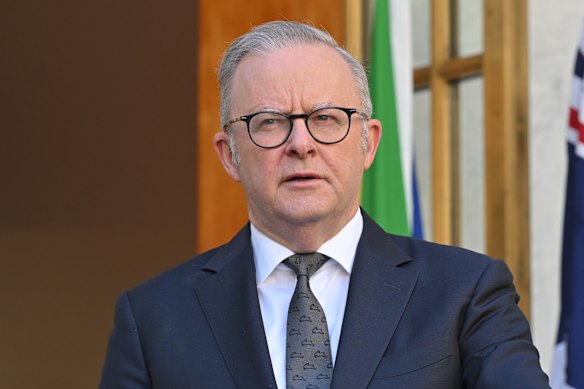 Prime Minister Anthony Albanese.AAP
Economists have forecast the war could force the Reserve Bank to raise interest rates and warned that a longer conflict could raise the risk of a recession.
Sharp falls in global oil markets on Wednesday morning sparked hopes that the two-week ceasefire in Iran may mark the “beginning of the end” for Australia’s record-breaking petrol and diesel prices, so long as the conflict does not resume and ships are allowed to pass through the Strait of Hormuz.
“We’re already seeing a substantial impact of a war which is on the other side of the world, but is having an impact on Australians here, like it is on citizens throughout the world,” Albanese said.
“This is very positive, and we hope that it leads to a permanent de-escalation and an end to the conflict and a resolution that allows the world to go forward.”
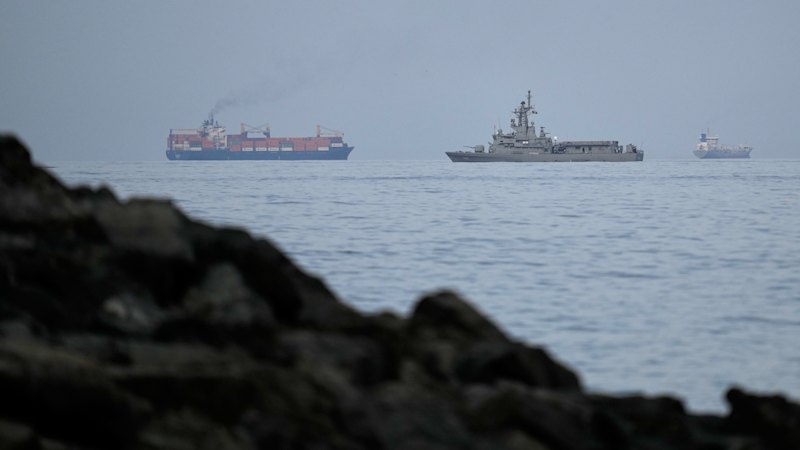
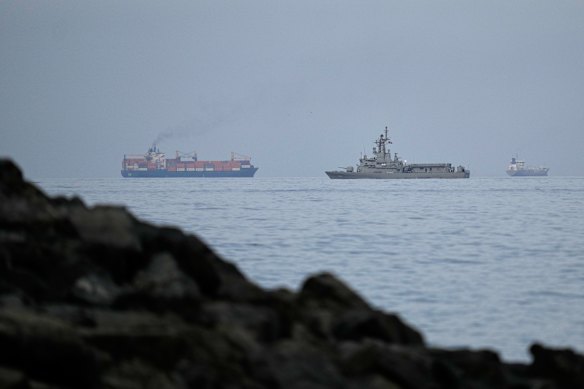 Iran has said it will allow safe passage through the Strait of Hormuz during a two week ceasefire.AP
Immediately after US President Donald Trump’s announcement, the cost of Brent oil, the global benchmark, plunged more than 15 per cent to below $US91 ($130) a barrel, while US-traded West Texas Intermediate was more than 16 per cent lower.
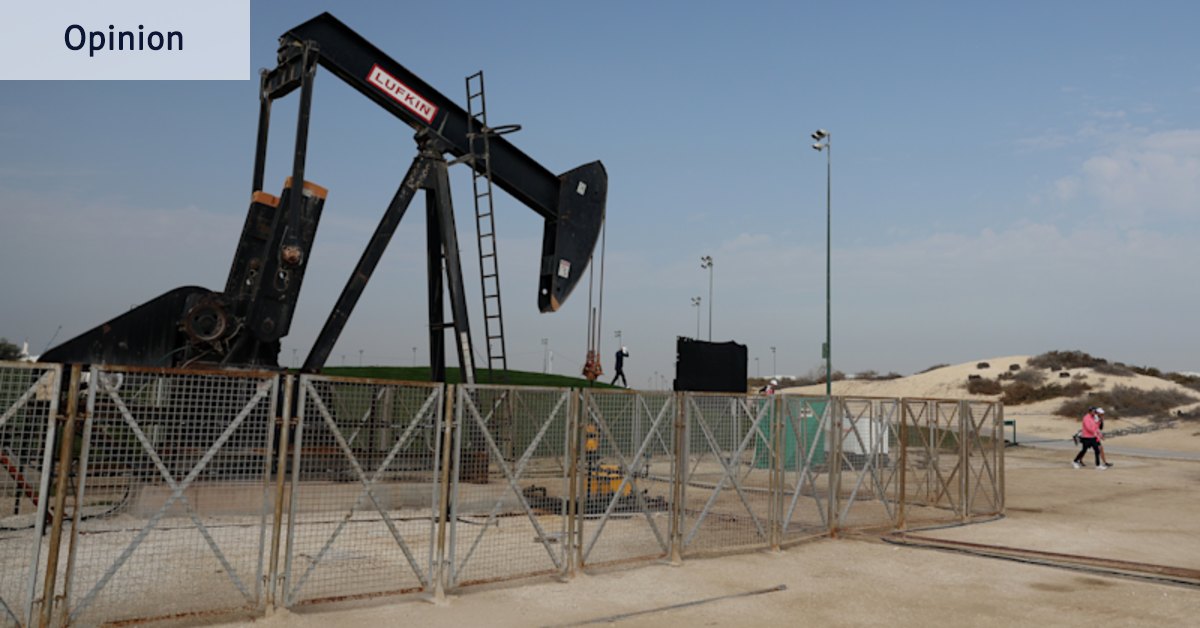
The falls come after Iran’s effective shutdown of the Strait of Hormuz, a vital shipping route for oil tankers, had choked off up to one-fifth of global supplies since the war began on February 28, pushing up the price of petrol and diesel in Australia and around the world. The average price of petrol in Australia has hit unprecedented highs of above $2.50 a litre for regular unleaded.
Energy Minister Chris Bowen also welcomed the ceasefire announcement, but cautioned that it remained to be seen if normal shipping through the strait would resume.
Related Article
“Let’s not get ahead of ourselves. We welcome progress, but I don’t think we can say the Strait of Hormuz is open,” Bowen said after Albanese spoke. “The sooner the Strait of Hormuz open, the better for everyone.”
Bowen said the government was not contemplating an early end to the fuel excise cut, which delivered an immediate reduction to petrol prices last week. “That’s not on our agenda. We told the Australian people three months,” Bowen said.
Investors viewed Wednesday’s ceasefire, and Trump’s announcement that the deal would be subject to Iran reopening the Strait of Hormuz, as the potential “off ramp” that energy markets have been desperately looking for.
If oil price declines hold, and continue falling, they will soon reach Australian petrol stations and cut retail prices for consumers. Each $US10-a-barrel decline in oil prices could cut 10 cents a litre at the pump in Australia.
“We are hoping this may be the beginning of the end,” said Peter Khoury, spokesman for the National Roads and Motorists Association. “But the next few days will be critical.”
Experts and officials say it takes at least seven days for any price swings on global oil markets to flow through to Australian bowsers.
However, analysts and fuel industry leaders warn the damage inflicted on global energy markets over the past few weeks will outlast the conflict. Even if the Strait of Hormuz reopens, and the price of oil and refined fuels ease back from their record highs, they are unlikely to return to pre-war levels for some time.
“Even if a peace deal is reached, the market will between 3 million to 5 million barrels of oil per day tighter for the next few years compared to pre-war expectations, due to damage to oil and oil product export infrastructure that will take months or even years to fix,” MST Financial energy analyst Saul Kavonic said.
Related Article
Trump had threatened to destroy Iranian civilisation before backing down on Wednesday because, he said, the White House had received a 10-point plan that would form the basis for further negotiations.
“This will be a double sided CEASEFIRE!” Trump posted on his social network. “The reason for doing so is that we have already met and exceeded all Military objectives, and are very far along with a definitive Agreement concerning Longterm PEACE with Iran, and PEACE in the Middle East.”
Iran’s Minister of Foreign Affairs Seyed Abbas Araghchi announced in response to Trump’s two-week ceasefire that “safe passage through the Strait of Hormuz will be possible via coordination with Iran’s armed forces and with due consideration of technical limitations”.
There has also been a big shift on currency markets. The Australian dollar, for instance, has climbed by more than a percentage point. It was below US70 cents ahead of Trump’s post, but is now US70.6 cents.
Commodities such as gold and silver have lifted in value as investors now start focusing on the fallout from a possible end to the war.
The Market Recap newsletter is a wrap of the day’s trading. Get it each weekday afternoon.
SaveYou have reached your maximum number of saved items.
Remove items from your saved list to add more.
 Nick Toscano is a business reporter for The Age and Sydney Morning Herald.Connect via X or email.
 Shane Wright is a senior economics correspondent for The Age and The Sydney Morning Herald.Connect via X or email.
 Mike Foley is the climate and energy correspondent for The Age and The Sydney Morning Herald.Connect via email.From our partners