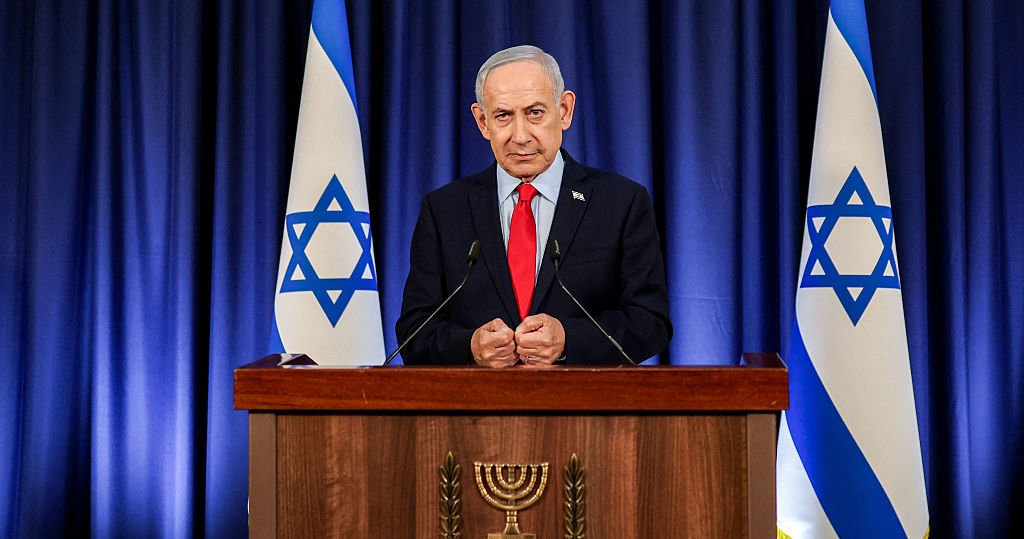
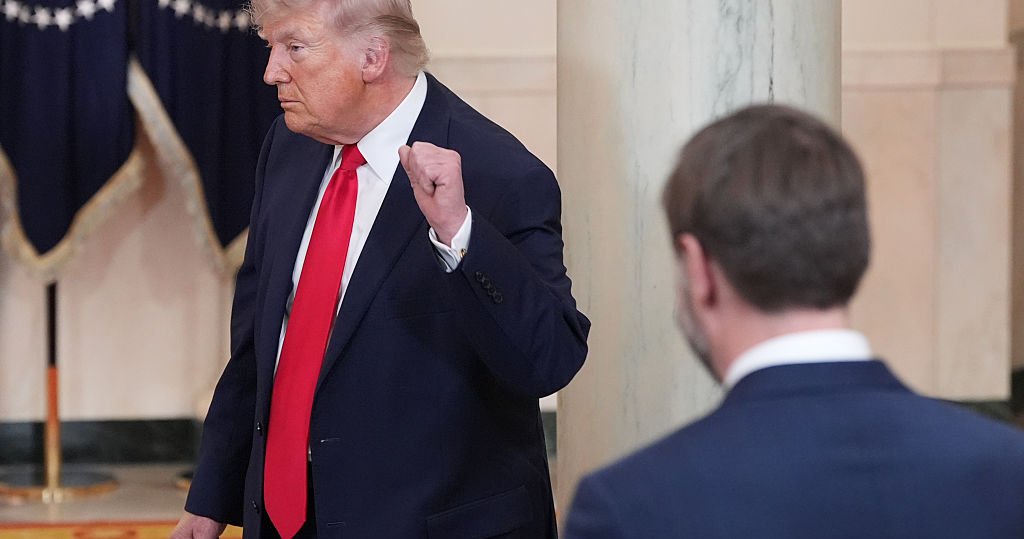
Within hours of Donald Trump accepting a two-week ceasefire in Iran, walking back on his dire threat that “a whole civilisation will die”, Binyamin Netanyahu did his best to wreck any prospect of peace.
Israel launched an intense bombardment of Beirut and other Lebanese towns and cities, with 100 attacks in the first ten minutes. More than 300 people were killed and more than a thousand wounded, according to Lebanon’s Health Ministry.
The Israeli Defence Forces (IDF) also carried out a series of strikes across Gaza, including a precisely targeted armed drone attack on the car of Al Jazeera journalist Mohammed Wishah, the 262nd journalist to be killed by Israel since October 2023.
These massacres serve as a reminder that it was Netanyahu, not Trump, who started the war on Iran and that he continues to pull the strings. For as long as that’s true, the prospects of a lasting peace deal are very low.
Get our free Daily Email
Get one whole story, direct to your inbox every weekday.
Sign up now
Provided the Strait of Hormuz remains open, Trump can now claim victory – even if that claim is far from the truth – but Netanyahu could not.
Trump wanted to kill Ayatollah Khamenei and cripple the Iranian military, including its nuclear ambitions, so Iran could not threaten its neighbours, especially Israel. Of course, the Iranian Revolutionary Guard Corps has not been crippled, but the US president’s self-belief and capacity to lie mean he would likely get away with saying otherwise.
The Israeli PM, however, needed regime change and the irreversible end of theocratic rule. A win over Iran had to be complete, not least to ensure his success at Israel’s general election later in the year.
But the Iranian regime is still intact; the popular Iranian uprising against the theocracy that the US and Israel expected failed to materialise. As such, a peace deal at this point would be a disaster for Netanyahu. If his devastating IDF Lebanon assault fails, he no doubt has more tricks of persuasion up his sleeve.
The extent of Netanyahu’s control of the war agenda, both its origins and its conduct, has been both disguised by Trump’s bombastic attention-seeking and overshadowed by the actions of the IRGC, which has survived intense bombing and developed a clear strategy: attack the eyes and ears of US and Israeli systems.
As Kelly Grieco, a specialist at the Stimson Centre, a Washington-based foreign affairs think tank, puts it, the IRGC is systematically targeting three “distinct functional categories”: radar and communications infrastructure, aerial tankers and airborne early warning.
“Each is a critical enabler of US air operations,” Grieco told Defense News. “That’s not random. That’s a target set derived from an understanding of how US airpower functions and where it is most exposed. The pattern suggests deliberate doctrine, or something close enough to it, not opportunism.”
The IRGC indeed reports that its US targets have included the Bahrain HQ of the US Navy’s Fifth Fleet – the US’s primary hub for coordinating its naval operations in the region – a $1.1bn early warning radar in Qatar, and two radar facilities at sites in the UAE. It also successfully attacked the US’s Prince Sultan Air Base in Saudi Arabia, destroying an E-3 Sentry Airborne Warning and Control plane. Two weeks earlier, it hit and damaged five KC-135 Stratotanker refuelling aircraft at the same base.
It is essential to remember that the IRGC was founded in the immediate aftermath of the 1979 Islamic Revolution and expanded in size and power during the Iran-Iraq War between 1980 and 1988, when as many as half a million young Iranians died resisting Saddam Hussein’s opportunistic invasion of Iran.
Back then, the IRGC managed to prevent Hussein from annexing Iran's oil-rich Khuzestan province and gaining total control over the disputed Shatt al-Arab waterway. It has evolved into an ideological entity rooted in the defence of the revolution and is much stronger than Iran’s conventional armed forces.
The IRGC’s strength continues to lie in asymmetric defensive warfare. It has training, arsenals and weapons suited to survival and the wearing down of its much stronger opponents. The success of this approach against the US and Israel is clear, despite the thousands of Iranians killed or maimed and the billions of dollars of damage inflicted across the country.
Taking control of the Strait of Hormuz has been an obvious move, and even the repeated attacks on neighbouring states have a purpose. They may have shocked and angered leaders in Saudi Arabia, the UAE, Kuwait, and Qatar, but they sent a clear message: we are facing an existential threat from the US and Israel, and you are either with us or against us.
Iran could now continue the conflict with the US and Israel for weeks, if not months, if it so chooses. Despite the claims of the US president, the IRGC is not running out of missiles and armed drones – far from it.
CNN reports that around half of its missile launchers are still intact, as are thousands of one-way attack drones, while armed drones are being produced in backstreet workshops. Even Israel assesses that Iran still has more than 1,000 missiles capable of reaching it, while Hezbollah’s arsenal in Lebanon includes as many as 10,000 shorter-range rockets, according to military briefings cited by Israeli media last weekend.
Given all of this, can the peace talks succeed? Probably not, meaning the US may embark on a huge bombing campaign against the Iranian infrastructure and its very society, to the relief of Netanyahu.
There are still two avenues for hope, though. One is that Trump or the US public comes to realise that Netanyahu has been pulling the strings all along, which would undoubtedly dent the US president’s ego. The other is through the objection of external agents of influence; superpowers such as China or India could make clear that destroying Iranian society is not acceptable.
Extraordinarily, given its small size, the UK is also an external agent with specific influence. A sustained US bombing campaign of Iran requires the mass use of strategic air power – for the US Air Force, that must include the fleet of B-1B Lancer long-range bombers. Only 21 of those are reported to be “mission ready”, 15 of which are at RAF Fairford in Gloucestershire, each carrying more than 30 tons of a wide range of ordnance.
The loss of Fairford wouldn’t stop the war, but it would seriously hinder Trump’s plans. No other comparable European bases are available; only Fairford has the necessary and complex equipment to house the B-2 Spirit stealth bomber and the easy access to a huge munitions depot, which is located at the nearby RAF Welford. In any case, the UK is likely the only European state that would want a US air base like this right now.
A private word from Keir Starmer that the UK may follow Spain and others in closing its airspace to American war planes would have a direct impact. It would certainly help explain Starmer’s unexpected visit this week to the Middle East.








Comments (0)